
Manichaeism: Encounters with Death
View publication
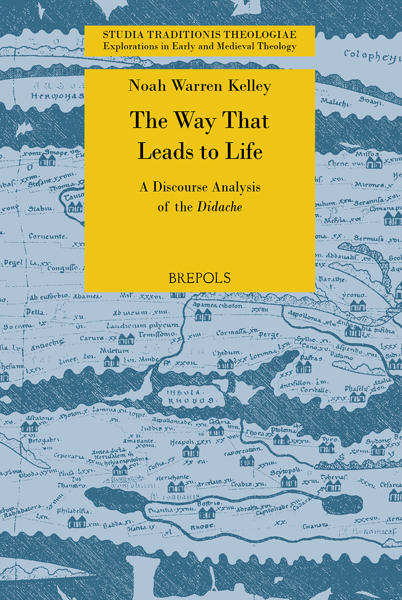
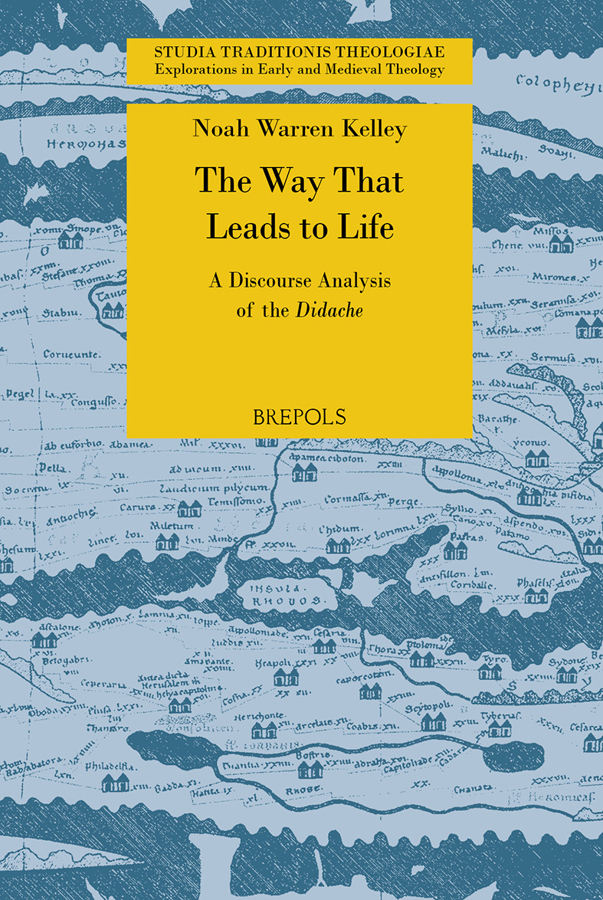
A linguistic analysis of the theme and structure of the Didache read as a coherent unity while acknowledging the complex historical development lying behind its final form.
Noah Warren Kelley specializes in New Testament Greek and the linguistic analysis of ancient Christian documents. He received a B.A. from Carolina University and an M.Div. and Ph.D. from Southeastern Baptist Theological Seminary. He is an independent researcher who teaches Latin at Thales Academy, a private school in Raleigh, North Carolina. He has also taught Greek and Latin at the undergraduate and master's levels.
How should we understand the meaning of the Didache as a whole? Some scholars have focused on the prehistory and the development of the book, often with the result of fracturing it into a series of traditional sources to be studied in light of their own backgrounds and contexts. Other scholars have attempted to read the Didache as a coherent document by denying its historical development, but these interpretations have frequently been unconvincing.
This study is an attempt to provide a unified synchronic interpretation of the Didache while acknowledging that a complex historical development lies behind the text in its final form. Discourse analysis (DA) is used to determine the theme and structure of the Didache by analyzing how the global meaning of the Didache in its final form (theme) is conveyed by its arrangement (structure). The heart of this study consists of a unit-by-unit analysis of the theme and structure of the Didache, beginning from the largest units and working down to the smallest.
While this study is not the first to utilize DA to study the Didache, it is the first to do so with the intention of discerning how the theme of the book arises from its structure. It is also the first to formulate a statement of the book’s theme. It is an attempt to advance the study of the Didache by looking at both its microstructures and its macrostructures according to their syntax, semantics, and pragmatics.
PART I. INTRODUCTION
Chapter 1. The Question of the Theme and Structure of the Didache
Chapter 2. Previous Research on the Theme and Structure of the Didache
PART II. PROLEGOMENA TO A DISCOURSE ANALYSIS OF THE DIDACHE
Chapter 3. Discourse Analysis and the Properties of Texts
Chapter 4. A Method for Analyzing Discourse
Chapter 5. The Situational Context of the Didache
PART III. A DISCOURSE ANALYSIS OF THE DIDACHE
Chapter 6. Analysis of the Macrostructure of the Didache
Chapter 7. Analysis of Part 1 of the Discourse Body Proper
Chapter 8. Analysis of Part 2 of the Discourse Body Proper
Chapter 9. Analysis of Part 3 of the Discourse Body Proper
Chapter 10. Analysis of the Eschatological Conclusion
PART IV. CONCLUSION
Chapter 11. The Theme and Structure of the Didache Suggestions for Further Research
APPENDICES
Appendix 1. The Text of the Didache
Appendix 2. An Original Translation of the Didache
Appendix 3. Macrostructure Outline and Discourse Diagram of the Didache
Appendix 4. Outlines of the Didache
Bibliography
Index