From Stage To Screen
View publication
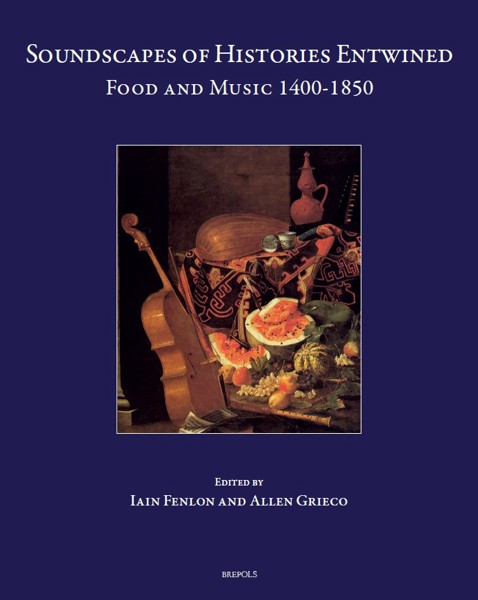
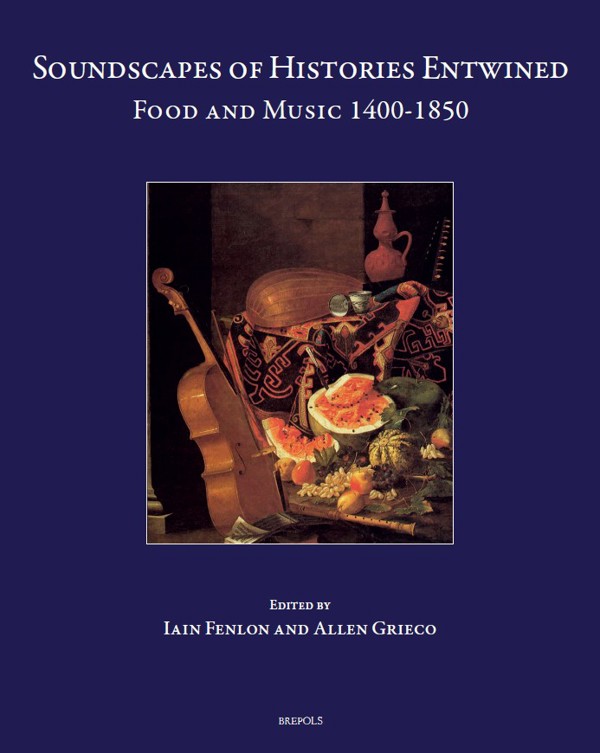
This book aims to explore the soundscape of the works of production, distribution, and consumption of food.
Iain Fenlon is Professor Emeritus of Historical Musicology in the University of Cambridge and a Life Fellow of King’s College. He has also been affiliated to Harvard University, All Souls College Oxford, New College Oxford, the École Normale Supérieure in Paris, and the Universities of Bologna, Heidelberg, Regensburg, and Zurich. He is the founding editor of Early Music History.
Allen Grieco is Senior Research Associate Emeritus at Villa I Tatti (The Harvard University Centre for Italian Renaissance Studies). He has published extensively on the cultural history of food in Italy from the 14th to the 16th centuries in the course of the past three decades. His most recent book is on Food, Social Politics and the Order of the World in Renaissance Italy (Harvard University Press, 2019).
For many, the coincidence of social practices uniting music and food immediately conjure up the Feast of the Pheasant in fifteenth-century Burgundy, or the lavish entertainments at the Este court recorded by Cristoforo di Messisbugo. The picture that emerges from such reconstructions of early modern princely banquets and the music which accompanied them, while presenting a complex and varied picture within the restricted confines of courtly decorum, effectively constitutes a micro-history born of exceptions. At the opposite end of the chain of the production, distribution, and consumption of foodstuffs, rather less attention has been paid to the worlds of work inhabited by those who inaugurated the process, as food travelled to the city from countryside, river, and sea. With the exception of a few much-discussed instances such as the repertories of London and Paris street cries, the same is largely true of the sonic environments of those who provided, distributed and sold food, and the same could be said of the sound worlds of English taverns and alehouses, where visiting hawkers offered oysters and pies, food which crossed social boundaries, for immediate consumption to the noisy accompaniment of ‘popular’ song. The essays in this collection span a wide chronological, geographical and social range stretching from seventeenth-century Rome to contemporary Ottoman food rituals and monastic practices in eighteenth-century Melk in an attempt to present a more nuanced picture of current scholarly enquiry into a rapidly emergent field.
Iain Fenlon and Allen Grieco, Preface
Early Modern
Oliver Doyle, «Per chi si dilecta di cantare»: Regimen, Diet and the Voice in Late Fifteenth and Early Sixteenth Century Italy
Allen Grieco, Convivial Gatherings, Music and the ‘Passions of the Soul’ in Ottaviano Rabasco’s «Il Convito» (1615)
Galliano Ciliberti, Il banchetto barocco romano:musica, arti effimere e rappresentazione del potere
Iain Fenlon, The Soundscape of the Table in Restoration London
The Enlightenment
Agata Meissner, «Ein wenig Citronen-Safft die Zunge viel besser delectiert»: Food as a Source of Images in Eighteenth-Century German Writings on Music
Magdalena Weber, «Tafelmusik» at Melk Abbey in the Eighteenth Century: A Study of the Sources
Late Modern
Jeanice Brooks, Dancing and Dining in the British Home circa 1800
Stephane Crayton, In Search of Seventeenth-Century Characters: Berio, Tropes, and the Cries of London
Marie Helene Sauner Leroy – Salih Demirtaş, Sonic Heritages of an Ottoman Ritual Food: Helva
Abstracts and Biographies
Index of Names