Commentary on the Song of Songs
View publication
An impressive yet underestimated work of Augustine, equally revealing his talents as dialectician, educator, and rhetorician
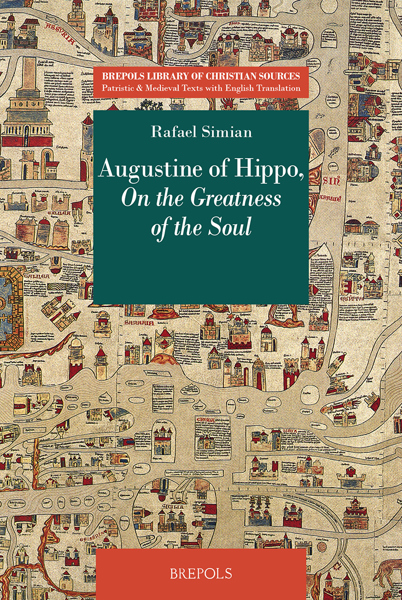
Rafael Simian (PhD) is Assistant Professor in the Philosophy Department at Universidad San Sebastián (Chile). His research focuses on medieval and early modern thought, especially at the intersection of philosophy, theology, and rhetoric. He has published a book on medieval meditation, Inventio meditativa: The Rhetoric and Hermeneutics of Meditation in Hugh of Saint-Victor, Guigo II, and Bonaventure of Bagnoregio (Brepols, 2024), and is currently working on a second monograph centred on stylistic figures, mental images, and the therapy of vices in meditational works of the High Middle Ages.
De animae quantitate ('On the Greatness of the Soul') presents an extended dialogue between Augustine of Hippo (354–430) and his friend Evodius of Uzalis (c. 360–430). Written in Rome in 387 or 388, the work centres on what its title announces, the soul’s greatness, understood in two distinct senses: its supposed bodily magnitude and its power or capacity. In an impressive display of learning, Augustine pursues three interrelated aims. First, he advances a series of arguments to show that the human soul is immaterial, against the views of Evodius and many other thinkers of antiquity. Second, he devises therapeutic exercises meant to moderate and ultimately extirpate the intellectual and affective vices that bind human beings to materialist conceptions of reality. Finally, through a laudatory and exhortative (epideictic) discourse on the soul’s powers, he articulates an understanding of the soul consonant with its true dignity and fulfilment.
Whether or not one ultimately shares Augustine’s assumptions, arguments, and conclusions, this work continues to speak to modern readers through its masterful integration of dialectical reasoning, therapeutic practice, and rhetorical form. These elements, which predate the work and accompany Augustine throughout his career, proved influential for centuries and remain compelling even today. Beyond historical distance and differences in intellectual and affective commitments, they confer upon the text a greatness that transcends its age and still rewards careful engagement.