
Between Near East and Eurasian Nomads
View publication
Sepideh Maziar is a senior researcher at the Goethe University of Frankfurt. She obtained her undergraduate degree in archaeology from the University of Tehran in Iran and achieved her Ph.D. in Southwest Asian archaeology from Goethe university of Frankfurt, Germany. She has led archaeological fieldwork in Iran, Azerbaijan, and Turkey and is currently engaged in excavations at the Prehistory site of Tappeh Balu in Iran and Kültepe II in Naxçivan. Her research adopts an interdisciplinary approach to questions of migration and human mobility, social identity, collective memory, social networks, and social resilience strategies, with a focus on prehistoric communities of southwest Asia.
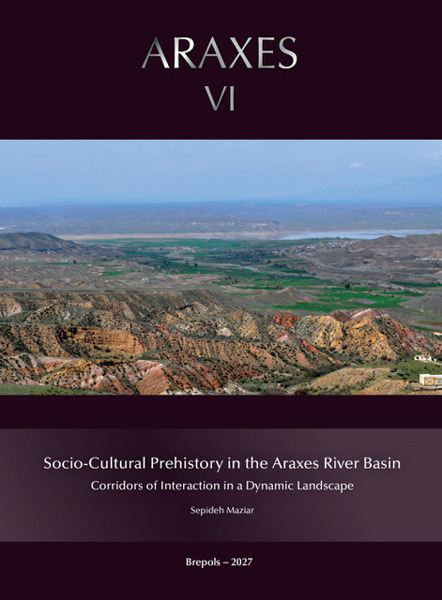
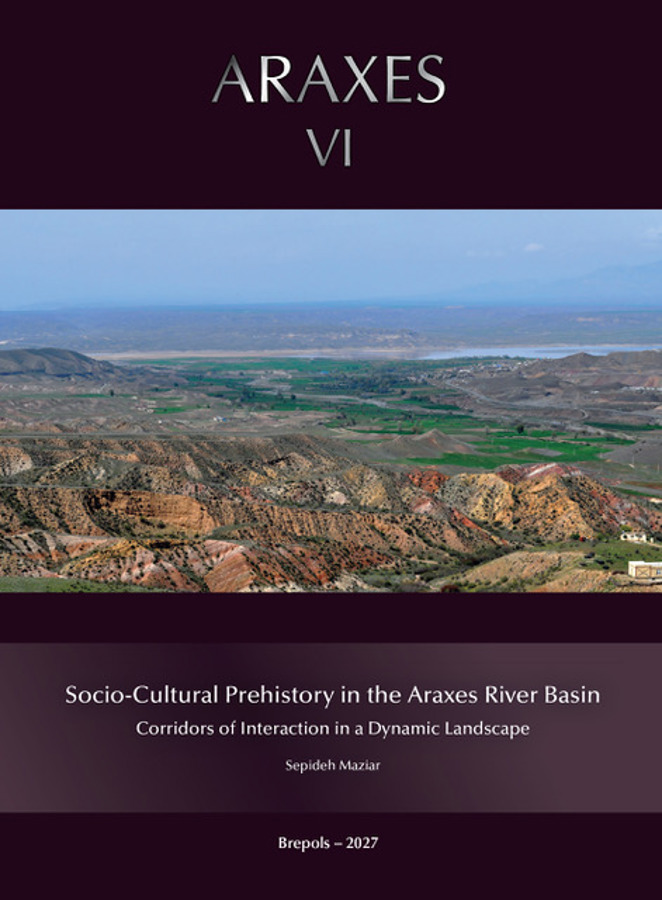
This volume examines the relationship between landscape and human communities in one of western Asia’s major cultural and geopolitical crossroads. Covering the Neolithic to the end of the Early Bronze Age (6000–2500 BCE), it explores how the diverse environments of the Araxes basin shaped — and were transformed by — the communities that inhabited them. Drawing on archaeological evidence from north-eastern Anatolia and the southern Caucasus, the book traces the interplay of environmental change, settlement, land use, material culture, and resource exploitation since the Holocene. It highlights the varied social arrangements that developed across the basin and shows that human engagement with the landscape was marked by continual adaptation rather than stability. While acknowledging the uneven distribution of evidence, the volume offers a synthesis of the Araxes basin as a complex palimpsest landscape, identifies major chronological and geographical gaps, and underscores the region’s potential for future archaeological research.
Foreword by Mitchell Rothman
Foreword — Mitchell S. Rothman, Widener University
A Note on the Spelling of Names and Abbreviations
Introduction
Chapter 1. The Archaeology of Riverscape: The Araxes River and its Intramountainous Valleys
Chapter 2. Overview of the Cultural Traditions of the Sixth to the Third Millennia BCE along The Araxes River
Chapter 3. Movement across the Landscape; The Araxes Valley Archaeological Project (AVAP)
Chapter 4. Becoming in the Riverscape: Cultural Development in the Southern Region of the Araxes River from the Sixth to the Third Millennia BCE
Chapter 5. Human-Animal Interaction in the Araxes Riverscape: Herding Strategies and Resource Management Based on Kohne Tepesi Faunal Inventory
Chapter 6. Landscapes in Motion: Socio-Cultural Dynamics in the Southern Araxes Region throughout Prehistory
Chapter 7. Conclusion: An Overview of the Landscape in Space-Time
Appendices
Bibliography


