Architecture of Territorialisation
View publication
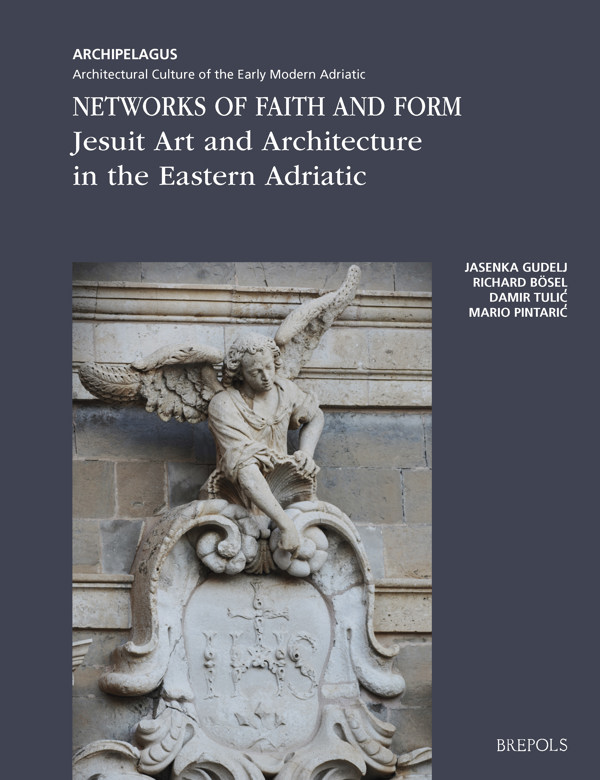
This edited volume explores key architectural-historical questions by examining the networks, contexts, and outcomes of Jesuit strongholds in Trieste, Rijeka, Gorizia, and Dubrovnik.
Jasenka Gudelj is Full Professor of Architectural History at Ca’ Foscari University of Venice and Principal Investigator of the ERC project Architectural Culture of the Early Modern Eastern Adriatic. Her research explores the circulation of artistic and architectural knowledge through different media and networks, encompassing transregional exchange, migrations, and the reception of classical antiquity.
Richard Bösel, former Head of the Architectural Department at the Albertina Museum and Director of the Austrian Historical Institute in Rome, is a leading expert on Italian Baroque and Jesuit architecture in the European context.
Damir Tulić is Full Professor of Early Modern Art at the University of Rijeka. He specializes in the art and architecture of the 16th to 19th centuries, with particular emphasis on sculpture, liturgical furnishings, and Venetian artistic networks.
Mario Pintarić is Senior Assistant at the University of Rijeka’s Department of Early Modern Art. His research focuses on 17th- and 18th-century Venetian marble sculpture, altars, and patterns of artistic patronage along the eastern Adriatic coast.
This book explores how the art and architecture commissioned by the Jesuits along the eastern shores of the Adriatic during the early modern period reflect a distinct cultural identity shaped within a universal and institutionally coherent framework—one that transcended geographical and temporal boundaries. Though diverse in form and style, these buildings were profoundly influenced by the organisational structures and intellectual networks of religious communities. Through enduring traditions and the strategic mobility of their members across regions, the Jesuits fostered an architectural language that was markedly interregional, while also engaging in dialogue with local artistic production. The Jesuit churches of Gorizia, Trieste, Rijeka, and Dubrovnik stand as powerful witnesses to this phenomenon, offering a compelling lens through which to understand the circulation of ideas, forms, and people across the early modern Adriatic—and beyond.
Foreword: Networks of Architectural Culture in the Eastern Adriatic
Jasenka Gudelj
Chapter 1. Topography, Architecture, and Glocal Culture: The Jesuits on the Eastern Shores of the Adriatic
Richard Bösel
Chapter 2. Southbound: The Adriatic Edge of the Austrian Jesuit Province
- Building the Adriatic Edge: Jesuit Architecture in Gorizia, Trieste, and Rijeka
Richard Bösel
- Chiselling Devotion: The Visual Arts in Jesuit Churches on the Adriatic Frontier
Damir Tulić and Mario Pintarić
Chapter 3. Eastbound: The Eastern Adriatic Outpost of the Roman Jesuit Province
- A Bridgehead for Roman Jesuit Architecture: Dubrovnik
Richard Bösel
- Sacred Splendor: The Visual Arts in the Jesuit Church of Dubrovnik
Damir Tulić and Mario Pintarić
Epilogue: Jesuits and the System of Architectural Production in the Eastern Adriatic
Jasenka Gudelj
Archival Sources
Bibliography
Index of Names