Networks of Faith and Form
View publication
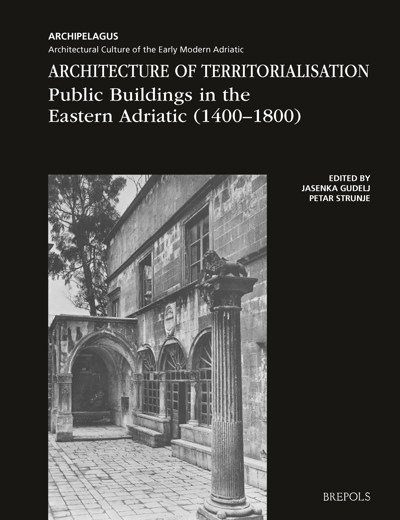
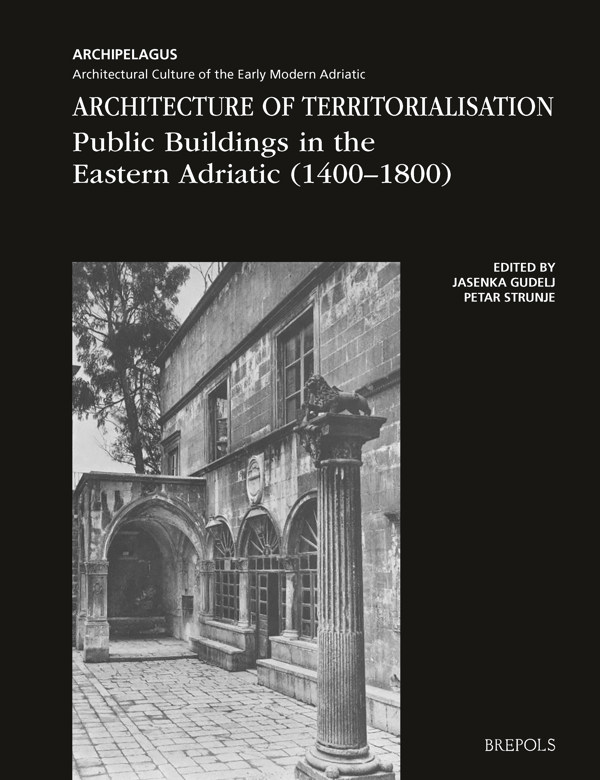
This interdisciplinary edited volume explores architecture and infrastructure at the intersection of politics, economy, and identity on the late medieval and early modern eastern Adriatic.
Jasenka Gudelj is Full Professor of Architectural History at Ca’ Foscari University of Venice and Principal Investigator of the ERC project Architectural Culture of the Early Modern Eastern Adriatic. Her research explores the circulation of artistic and architectural knowledge through different media and networks, encompassing transregional exchange, migrations, and the reception of classical antiquity.
Petar Strunje is a postdoctoral researcher on the AdriArchCult ERC project at Ca’ Foscari University of Venice. His research focuses on early modern architecture and urban history in the Adriatic, particularly public architecture and infrastructure, minority spaces, and cross-cultural artistic exchange on the eastern Adriatic.
This volume investigates public buildings on the eastern Adriatic, a region at the crossroads of various powers in the late medieval and early modern periods. While the area was dotted with old autonomous communes, local self-rule gave way to central consolidation during this period, making it exemplary in the study of European political-administrative evolution. In these territorialisation processes, public architectural and infrastructural commissions by local and state patrons played a central role, producing interconnected systems and politicised urban spaces.
Through eighteen interdisciplinary chapters, ranging from region-wide thematic surveys to specific case studies, this book explores the multifaceted roles of public buildings in the emergence of homogenised territories. To that aim, it considers not only loggias and administrative palaces, but also prisons, cisterns, ports, hospitals, salt and grain depots, citadels, arsenals, and other markers of political, economic, and military consolidation and control between the old and the new, the local and the regional, and the state. By analysing architecture and infrastructure as means of territorialisation, this study not only illuminates that subject in the regions in question but also highlights similar visual, statewide consolidation practices in Central, Southern, and South-East Europe that have shaped the European cultural landscape we inherit.
Introduction
Jasenka Gudelj and Petar Strunje
Part I – Systems of Territorialisation
Historical Context
Irena Benyovsky
Administrations and their Buildings
Nella Lonza and Ana Marinković
Public Buildings and the Architectural Market
Giuseppe Andolina and Petar Strunje
The Iconography of Public Architecture
Beatrice Tanzi, Giuseppe Andolina, and Jasenka Gudelj
Military Architecture in Urban Space
Karla Papeš and Cristiano Guarneri
Infrastructure and Economic Consolidation
Ana Marinković and Petar Strunje
Part II – Case Studies
Centrality
Koper
Renata Novak Klemenčič
Zadar
Laris Borić and Sofija Sorić
Kotor
Tatjana Koprivica and Petar Strunje
Dubrovnik
Jasenka Gudelj
All’antica
Pula
Jasenka Gudelj
Split
Petar Strunje
Šibenik
Jasenka Gudelj
Insularity
Osor–Cres
Laris Borić
Rab
Dušan Mlacović and David Kabalin
New Territories
Stari Bar
Tatjana Koprivica
The Border
Ivan Alduk and Petar Strunje
Royal Power
Rijeka and Senj
Jasenka Gudelj