The Kingdom of Dongola
View publication
Mohamed Ali is an assistant professor of archaeology at the International University of Africa, Sudan, and is currently a visiting associate professor at The Africa Institute, Global Studies University, UAE. He is known for his profound contributions to the understanding of ancient civilizations in northeast Africa, Sudan. His academic journey commenced at Dongola University in Sudan, and he pursued his studies and obtained a PhD degree in 2016 from the University of California, Santa Barbara, USA.
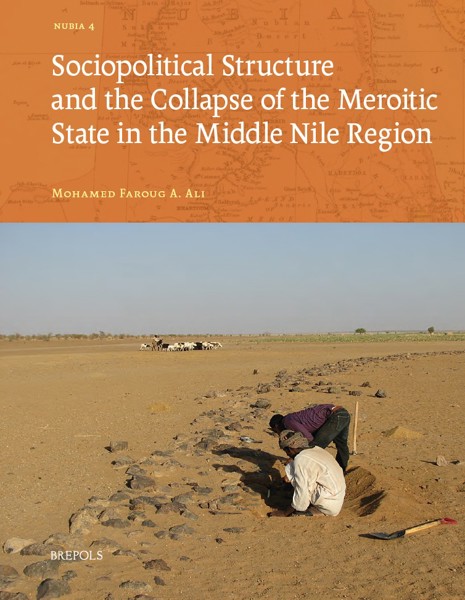
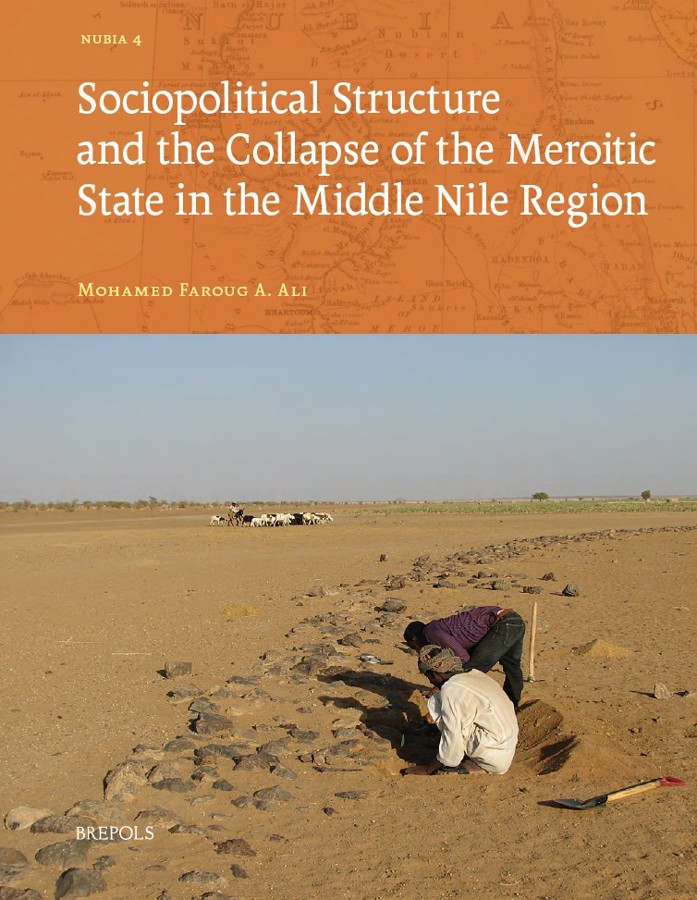
This volume redefines our understanding of Sudan’s Meroitic state, one of northeast Africa’s most intriguing ancient civilizations. Motivated by the need to challenge dominant paradigms, it shifts the focus from elite narratives and urban centres to the often-overlooked rural perspectives that shaped the state’s development and collapse. Drawing on years of archaeological fieldwork, the book examines sociopolitical dynamics on the western frontier, where local communities retained cultural autonomy and limited engagement with Meroitic institutions. The absence of temples, burials, and ritual items in these areas signals weak integration, while control of neglected trade routes during northern economic decline fostered local wealth and power. Similar patterns in the eastern hinterland underscore the fragmented nature of the state. This disengagement proved critical, as failure to unite against the Aksumite threat contributed to Meroe’s demise. Combining data-driven studies with interdisciplinary approaches, this groundbreaking work, written from an African perspective, offers fresh insights into rural agency, economic networks, and the complex interplay of power within the Meroitic world.
List of Illustrations
Preface and Acknowledgements
Chapter 1. Introduction
Chapter 2. Meroe and the Kingdom of Kush
Chapter 3. Historical and Geographic Overview
Chapter 4. The Meroitic Economy and Sources of Power
Chapter 5. Meroe from the East Hinterland Perspective
Chapter 6. The West Bank and Local Identities
Chapter 7. The Collapse of the Meroitic State
Appendices
Works Cited
Arabic Summary