Women of the Past, Issues for the Present
View publication
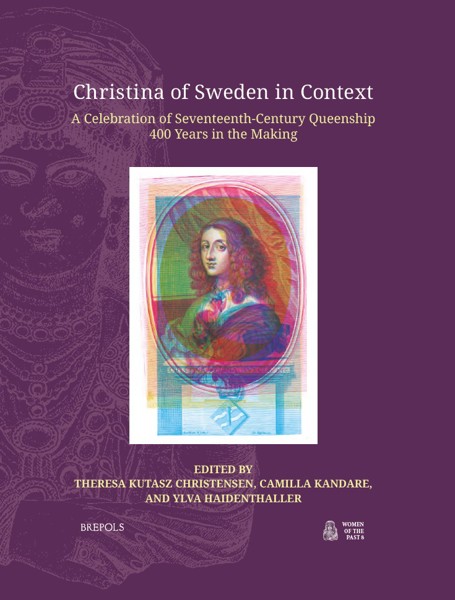
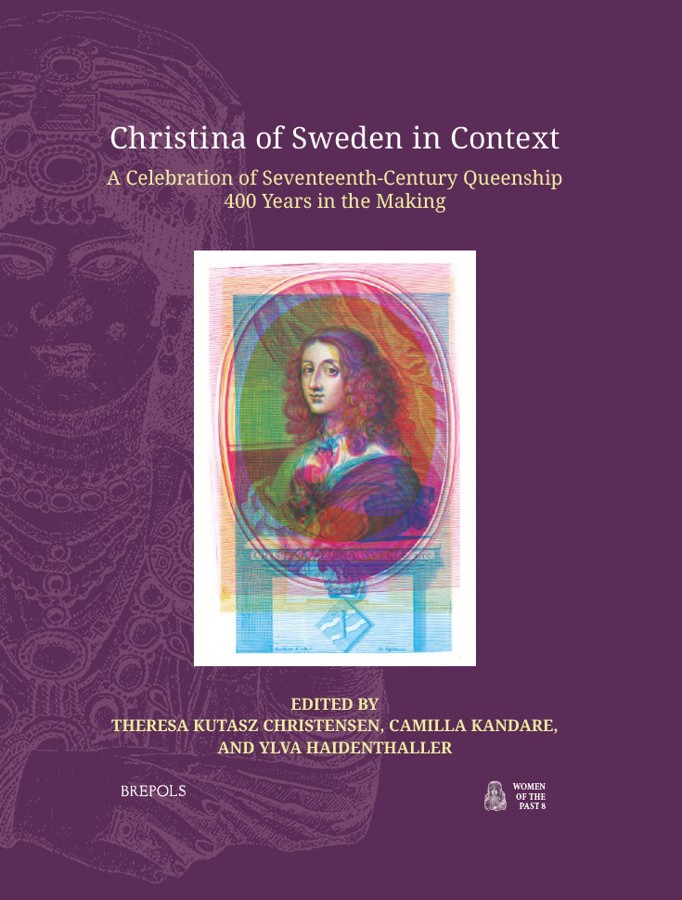
In celebration of Queen Christina of Sweden’s 400th birthday, this volume highlights and expands scholarship on Christina within the context of her own time, demythologizing and broadening the foundations of her enduring legacy.
Theresa Kutasz Christensen holds a PhD in art history from Penn State University. She is a provenance researcher and curator who specializes in women's roles in the historical art market.
Camilla Kandare holds a PhD in Dance History and Theory from UC Riverside. She specializes in kinetic practices and modes of embodied performance in 17th-century Rome.
Ylva Haidenthaller holds a PhD in art history from Lund University. She specializes in early modern visual culture and numismatics in Sweden and Northern Europe.
Queen Christina of Sweden (1626–1689) has long captivated scholars and the public alike. Her abdication of the throne in 1654, refusal to marry, and decision to change her faith, together with her determination to shape her own intellectual and political path, have secured her a place among the most studied women of Early Modern Europe. Four centuries after her birth, her life and reign continue to inspire sustained and wide-ranging inquiry.
This volume, produced in honour of Christina’s 400th birthday, reassesses her legacy by placing her firmly within the cultural, political, and intellectual contexts of the seventeenth century. The essays explore how she negotiated the expectations imposed on her as both a woman and a queen, and how her self-fashioning shaped her reception during her lifetime and beyond. By examining her networks, movements, and influence across social, religious, artistic, and intellectual spheres, the collection counters long-standing narratives that highlight only her exceptionalism or rely on mythologized accounts of her life. Through interdisciplinary and transnational perspectives, and by revisiting both primary sources and foundational scholarship, this volume offers a nuanced and contextualized portrait of Christina, providing an essential resource for future research on this remarkable historical figure.
List of Illustrations
List of Abbreviations
Acknowledgements
Foreword by Princess Christina, Mrs Magnuson
Foreword by Malin Grundberg
Introduction
Theresa Kutasz Christensen, Camilla Kandare, and Ylva Haidenthaller
Section 1. Examining Expectations: Seventeenth-Century Queenship and the Idea of Christina
1. Queen Christina, A Fashion Icon? The Look à la Christine in Late Seventeenth-Century Europe
Valerio Zanetti
2. Christina in French Media after 1654: The ‘libelles’ and Popular Prints
Martin Olin
3. Christina in Paris, 1652: The Queen of Peace Amid War in France
Carrie F. Klaus
4. The Swedish Huntress: Queen Christina and the Pursuit of Hunting in Early Modern Sweden
Dustin M. Neighbors
5. Queen Christina and the Art of Courtly Horseback Riding in the Seventeenth Century
Kari Lawe
6. Christina as Minerva: Empowerment, Expectation, and the Challenges of a Divine Alter Ego
Ylva Haidenthaller
Section 2. Power Play: Performance and Agency in Christina's Public Persona
7. Queen Christina’s Freethinking in Response to Early Modern Subjectivation
Carin Franzén
8. Queen Christina in the Mirror of the Philosophers
Susanna Åkerman
9. Queens at the Crossroads: Gender, Rule, Pietas, and Passion in the Coronation Tapestries of Christina
Merit Laine
10. Queen Christina of Sweden: Greco-Roman Heritage and Literary Patronage
Stefano Fogelberg Rota and Antonis Pontoropoulos
11. Status Concerns or Enthusiasm? Queen Christina as a Patron of Music
Lars Berglund
12. Music and Musical Encounters at the Court of Christina in 1654
Maria Schildt
13. ‘La regina di Svetia si diletta assai di medaglie e circa l’antichità di quelle se ne intende mediocramente bene’: The Famous ‘Nummophylacium Christinae Reginae Sueciae’ in Rome
Maria Cristina Molinari
14. Christina’s Kunstkammer in Stockholm: Formation, Organization, and Arrangement
Mattias Ekman
Section 3. Christina’s Contemporaries: Women's Networks and Influence
15. Royal Encounters and Architectural Splendour: Unveiling the Triumphal Entry of Queen Christina of Sweden into Turin (1656)
Valentina Burgassi
16. ‘Con special familiarità’: Queen Christina's Patronage of the Process of Canonisation for Chiara Maria della Passione
Camilla Kandare
17. Kinship, Collecting, and the Kunstkammer: The Matrilineality of Queen Christina
Lisa Skogh de Zoete
18. Possessing Roma: Queen Christina of Sweden and Women’s Agency in the Early Modern Antiquities Market
Theresa Kutasz Christensen
Section 4. Impressive Impact: Christina’s Posthumous Early-Modern Legacy
19. Another Christina: Queen Maria Kazimiera d’Arquien Sobieska in Rome, 1699–1714
Jarosław Pietrzak
20. Sculptural (Re)Collections: Elisabetta Farnese’s Self-Fashioning after Christina of Sweden
Aoife Cosgrove
21. ‘King's Gems’. Estimation and Influence of the Sculpture Collection of Queen Christina of Sweden on Spanish Court Art
Virginia Albarrán and Manuel Arias
Index