
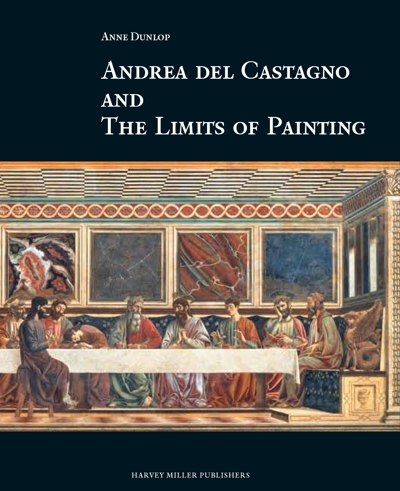
Andrea del Castagno and the Limits of Painting
View publication
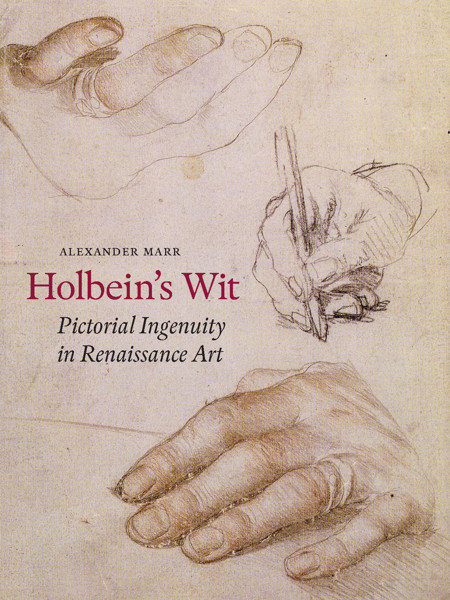
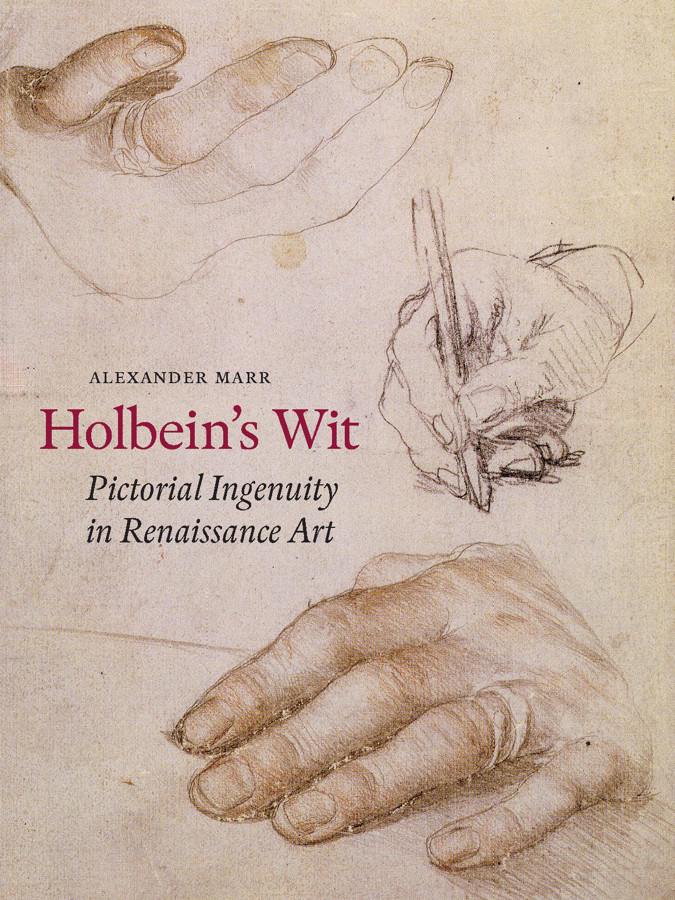
Spanning Holbein’s career in Basel and London and embracing his portraits, altarpieces, prints, and designs for the decorative arts, this book charts the artist’s profound engagement with ingenuity as a kind of innate talent, mental acuity, generative capacity, and character.
“This book is bound to become essential reading for anyone interested in Holbein, early modern portraiture, Renaissance humour, or the relationship between literary classical revivals and the emergence of pictorial art as liberal art.”
Shira Brisman (University of Pennsylvania)
"What does it mean for a picture to display wit? To answer that question Alexander Marr tracks barbs, puns and insider-jests, pointed paradoxes and teetering uncertainties of all kinds in Holbein’s oeuvre and the humanist culture that nourished it. The result is a riveting study of visual and verbal wit, which drills down into the very nature of pictorial intelligence. Never short on wit of its own, this much-needed book is a bold new account of the powers of mimesis in Northern European art."
Mitchell B. Merback (Johns Hopkins University)
"Marr’s book goes right to the heart of understanding Holbein’s work, with its multiple layers of ambiguity. It is full of unfamiliar insights into familiar works. Elegantly written, it is a pleasure to read."
Susan Foister (The National Gallery)
Alexander Marr is Professor of Renaissance and Early Modern Art at the University of Cambridge. His previous publications include Rubens’s Spirit: From Ingenuity to Genius (2021) and (with Raphaële Garrod, José Ramón Marcaida, and Richard J. Oosterhoff) Logodaedalus: Word Histories of Ingenuity in Early Modern Europe (2019).
Hans Holbein the Younger (1497/8–1543) is renowned as an outstandingly realistic painter—the acme of Renaissance naturalism. In fact, he was a purveyor of cunning ambiguity. Holbein’s Wit: Pictorial Ingenuity in Renaissance Art reveals the artist at play, juggling the uncertainties and paradoxes that arise in the enterprise of imitation. Spanning Holbein’s career in Basel and London, and encompassing his portraits, devotional paintings, and designs for prints and the decorative arts, the book explores this celebrated artist’s subtle pictorial wiles. Holbein was immersed in the multi-faceted world of Renaissance ingenium or ‘wit’, which could mean innate talent, mental acuity, generative capacity, and a person’s unique nature. In dialogue with witty patrons such as Desiderius Erasmus and Thomas More, Holbein advanced an ingenious kind of artmaking characterised by visual jokes, puns, and internal contradictions. Responding to humanism’s literary conceits with an inventive visual language, he upended conventional assumptions about naturalism and the status of painting to assert the worth of an autonomous artistic intelligence.
Prologue: Holbein’s Angels
Introduction
Chapter 1: Verbal and Visual Wit
Chapter 2: A Father’s Figures
Chapter 3: Hans the Jester
Chapter 4: Ludic Illusionism
Chapter 5: Death ad vivum
Chapter 6: Mimics and Critics
Chapter 7: More or Less a Smile
Chapter 8: The Mindful Hand
Chapter 9: Inherent Ingenuity
Epilogue: The Ambassadors’ Policy