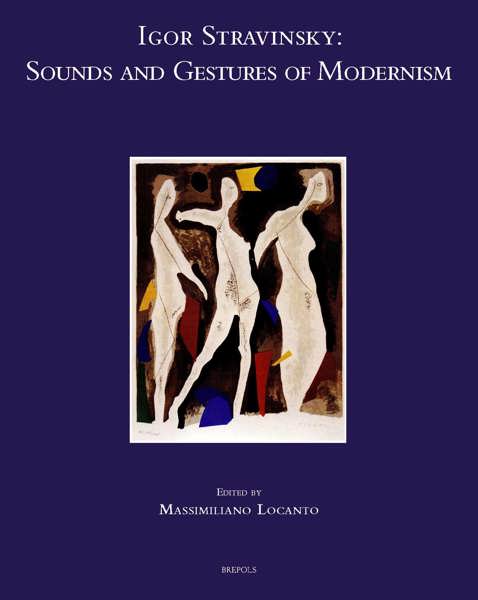
Igor Stravinsky: Sounds and Gestures of Modernism
View publication
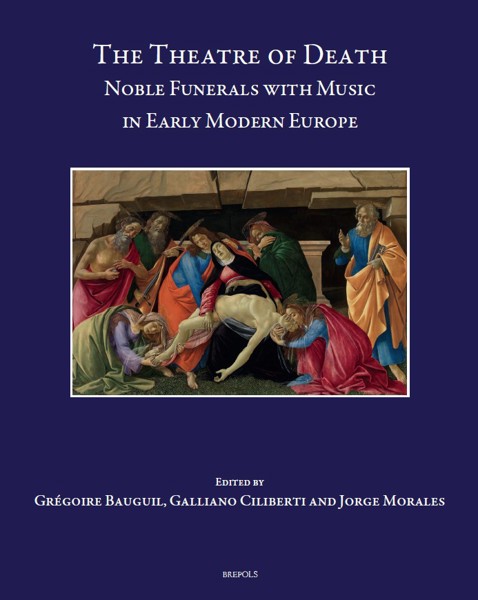
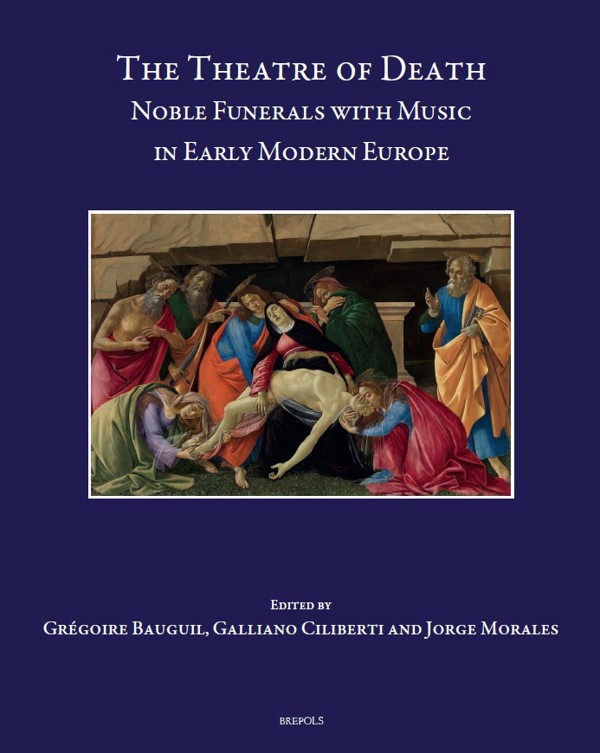
This volume analyses the development and reception of funerary practices designed to assert and perpetuate power.
Grégoire Bauguil holds a PhD in musicology from the Universities of Poitiers and Pavia (Cremona). His thesis focuses on musical modes in France and Italy between the Renaissance and the Baroque periods. He is currently a postdoctoral researcher at the University of Versailles-Saint Quentin (Paris-Saclay) and is working on patronage in music in France through the study of dedications in printed works (1550-1650).
Galliano Ciliberti is a Professor of History of Music at the ‘Nino Rota’ Conservatory of Monopoli. He obtained a Ph.D. in Musicology at the University of Liège and a Post-Doctoral degree at the EPHE in Paris. He has received several contracts as research director funded by the National Research Council, he was a research fellow at the University of Pavia, and has obtained several teaching contracts at the University of Perugia, Paris and Bari.
Jorge Morales holds a PhD in Musicology from Sorbonne University and La Sapienza University of Rome. He currently holds the chair of junior professor at the University of Versailles-Saint-Quentin (Paris-Saclay). He has published Sigismondo D'India et ses mondes, un compositeur italien d'avant-garde (Brepols, 2019), co-edited the volume Il Cardinale. Maurizio di Savoia, mecenate, diplomatico e politico (1593-1657) (Carocci, 2023) and edited the collective volume Les cardinaux et l’innovation musicale à l’époque moderne (Classiques Garnier, 2024).
The public nature of funerals for the noble elite was a new phenomenon in early modern Europe. During this period, sophisticated, solemn rituals and theatrical ceremonies were deployed, in which music played an important role in the political, ideological and memorial instrumentalisation of death, in terms of its liturgical, acoustic, conceptual and performative aspects. Combining social history, cultural art history, urban musicology and historical anthropology, this volume studies the production and reception of these funerary practices designed to assert and perpetuate power. Taking music and sound as its starting point and spanning a long period of time (from the 16th to the 19th century), this work explores the meaning, perception and transformation of these funeral events, which lie at the origin of the ritualisation of urban space — a place where the collective imagination is forged and where the various strata of society at the time intersected.
Grégoire Bauguil – Galliano Ciliberti – Jorge Morales, Introduction
Musical Repertoires and Places of Sound as a Representation of Death
Antonio Chemotti – Riccardo Pintus, Recovering Lost Music through Funeral Books: Requiems in 17th-Century Venice and Padua
Enrico Scavo, «Mortali pietà». Oratorios for the Suffrage of the Souls in Purgatory in Ferrara Between the Seventeenth and Eighteenth Centuries
Nathanaël Eskenazy, Élever un tombeau, restituer le sonore: musique et commémorations en l’honneur de Louis xvi et de Marie-Antoinette au début de la Restauration (1815-1817)
Urban Space and the Political and Ideological Instrumentalization of Death
Jorge Morales, La musique perdue des funérailles de la princesse Isabelle d’Este-Savoie (1626). Contexte culturel et mise en scène de la mort à la cour de Modène
Maria Cristina Paciello, «...scudi 30 e baiocchi 20 alli Musici per le Esequie». Funerali e luoghi simbolici a Roma nel XVII secolo
Galliano Ciliberti, La costruzione rituale della morte pubblica. Le esequie barocche tra Napoli e Roma nelle relazioni a stampa
Matteo Marni, Il funerale da nobile nella Milano del Settecento: musica, illuminazione e apparati
The Musical Rhetoric of Death and Interfaith Space
Isabelle His, Quel contexte pour «L’aer funebre sur la mort lamentable de tres-vertueux, tres illustre & tres-invincible Loys de Bourbon, prince de Condé» d’Ubert Philippe de Villiers (1569)?
Matthias Range, Thomas Tudway’s Burial Service for the Funeral of the Marquess of Blandford, 1703
The Memory of Death, Musical Institutions and Liturgical Functions
Claudio Cardani, Between Norm and Exception: the Role of the Music Chapel of Milan Cathedral and Instrumental Music in Some Funeral Ceremonies Between the 17th and 19th Centuries
Biancamaria Brumana, Esequie regali in epoca restaurata: la «Messa da requiem» di Francesco Morlacchi per Federico Augusto di Sassonia (1827)
Funeral Rituals with Music in Portugal
Luís Neiva, Conviction, Doubt and Faith: Polyphony and Subjectivity at a Royal Funeral
Rodrigo Teodoro de Paula, Sound and Musical Models for the Portuguese Royal Funeral: The «Ritual Sonority» of the Funeral of King John v of Portugal (1750)
Abstracts and Biographies
Index of Names