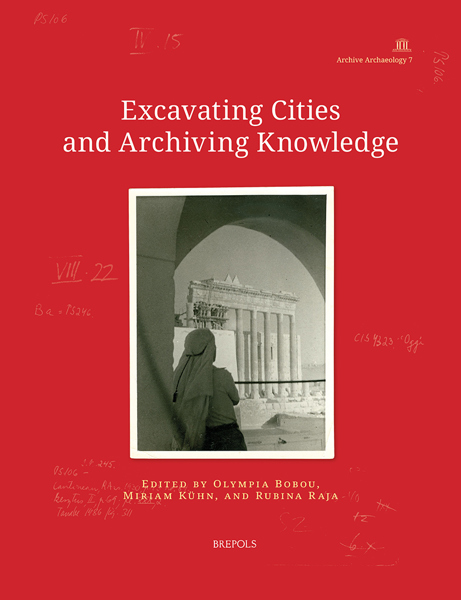
Excavating Cities and Archiving Knowledge
View publication
A nuanced exploration of how archaeological archives reshape our understanding of past practices, present responsibilities, and future research.
Rubina Raja (Aarhus University) is Professor of Classical Archaeology and Art and Head of the Unit for Eastern Mediterranean Archaeology, History, and Legacy Data at the Department of History and Classical Studies. She heads numerous research projects, including the Lost Cities Rediscovered project.
The rapidly evolving field of archive archaeology has, in recent years, been shaped by global concerns. These include the decolonization of archaeological practice, the protection of cultural heritage in conflict zones, and the accelerating impact of climate change. Yet this field is far from new, and long before these pressures emerged, scholars recognized the unique value of archaeological notes, records, and documentation, even when they were scattered, unprocessed, and never intended to form coherent archives. Such materials offer far more insights into excavated objects than often acknowledged: they reveal the histories of research agendas, personal and political networks, institutional dynamics, and the very making of archaeological knowledge.
Based on a conference devoted to excavations in the Eastern Mediterranean, Middle East, and Egypt during the nineteenth and early twentieth centuries, this volume highlights both the methodological innovations and the enduring challenges of working with archival collections. Contributors explore the responsibilities inherent in accessing and interpreting archival materials, the soft power exercised by the institutions that hold them, and the ethical imperative to ensure accessibility. Together, they chart a path towards more transparent, comparative, and critically informed approaches to archaeological archives, illuminating both their remarkable potential and their complex legacies.
List of Illustrations
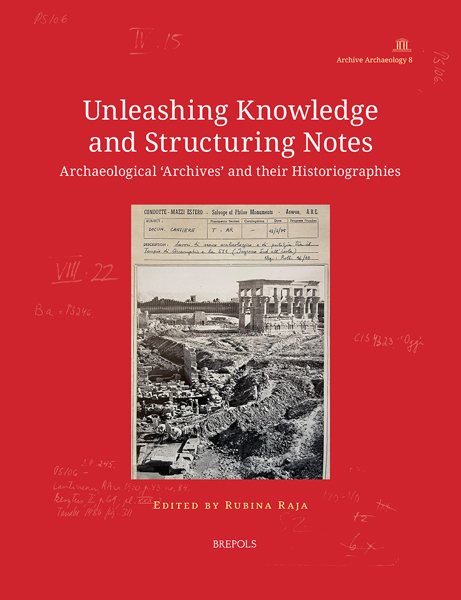
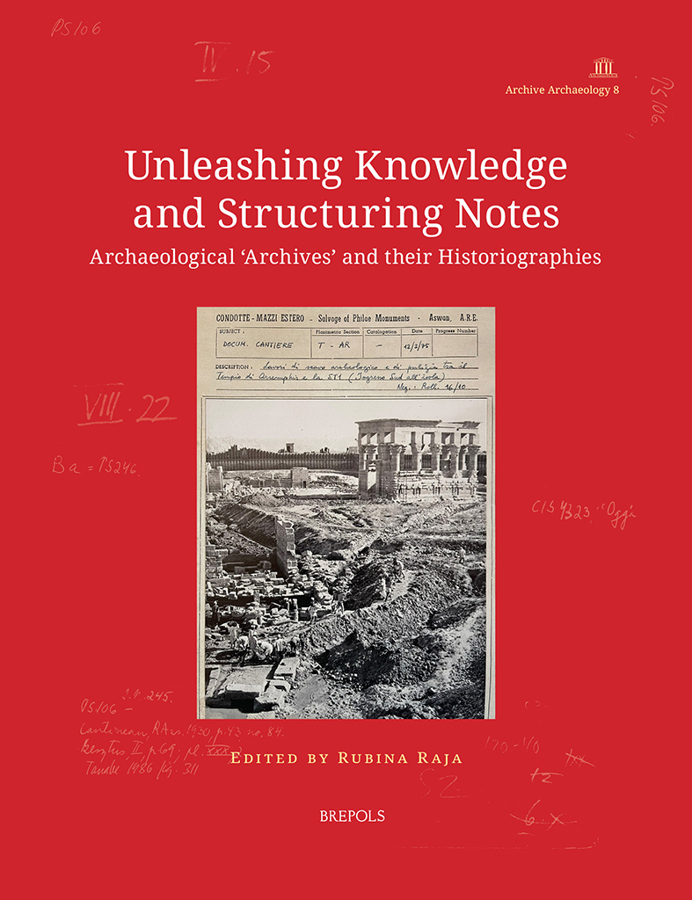
1. Unleashing Knowledge and Structuring Notes: Archaeological ‘Archives’ and their Historiographies
Rubina Raja
2. Archival Backdirt
Jennifer A. Baird
3. Reconstructing the ‘Minoan Room’ using the Ashmolean’s Sir Arthur Evans Archive
Renée Trepagnier and Andrew Shapland
4. Structuring Office Notes: Microhistories of Archaeology in Early Modern Greece
Yannis Galanakis and Polina Kapsali
5. Access, Legacy, and Power: Digital Futures for the Archives of the British International Research Institutes
Konstantina Georgiadou and Amalia G. Kakissis
6. Lost Record, Marginalized Sites: Archival Gaps in Seleucia and Apamea
Michael Blömer, Olympia Bobou, Eleanor Q. Neil, and Rubina Raja
7. Mapping the Field: Herzfeld’s Sketchbooks from the 1907–1908 Journey in the Euphrates-Tigris Region
Miriam Kühn
8. Managing Knowledge in Past and Present Times: The Case of Shiloh
Birte Lundgreen
9. The People Dispersing Gerasa: Local, Regional, and Global Circumstances as Reflected in a Mandate Excavation Fieldwork Diary
Rubina Raja
10. The Egyptological Archives of the University of Milan: Work in Progress and Future Challenges
Patrizia Piacentini
11. The So-called Steindorff List on Nazi Egyptology (‘J'accuse’) in the Context of Historical Archival Sources
Susanne Voss
12. Finding Pottery from Al Mina, the Beazley Archive Pottery Database and Forty-Five Years of Recording Objects
Thomas Mannack