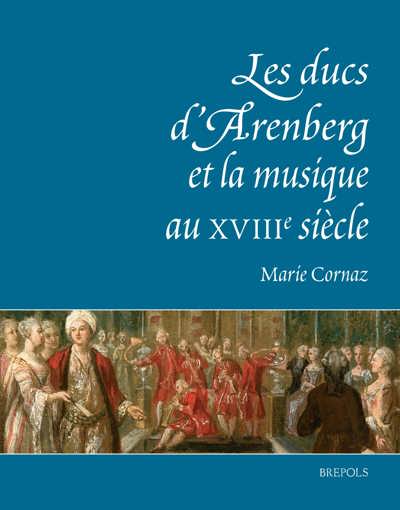
Les ducs d’Arenberg et la musique au XVIIIe siècle. Histoire d’une collection musicale
View publication
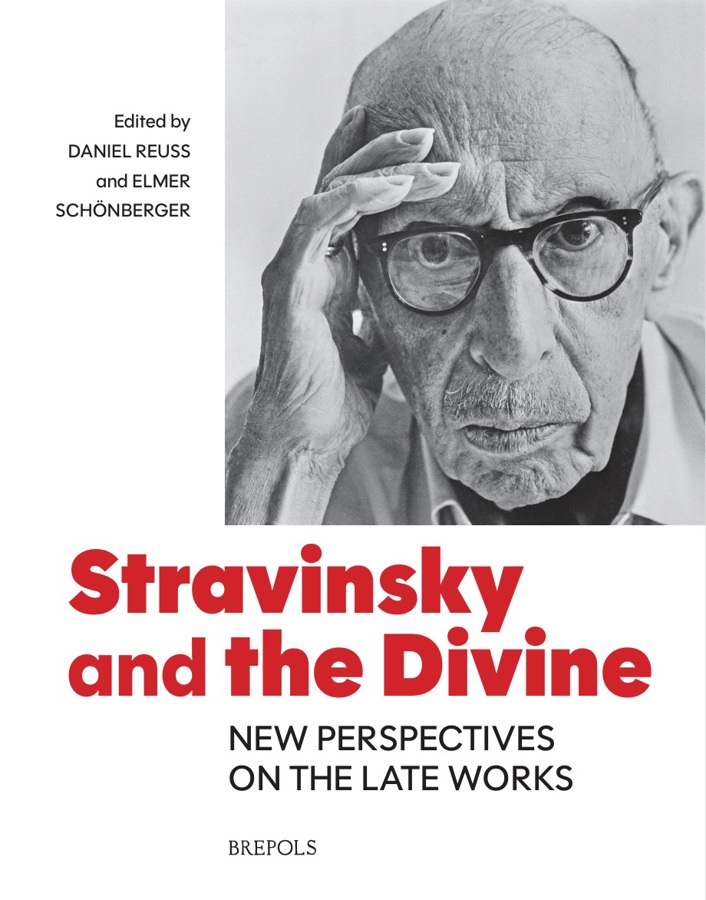
The late music of Igor Stravinsky remains one of the most intriguing and least explored phases of his artistic development. This volume proposes a renewed approach to his late works, examining them within the broader intellectual, philosophical and spiritual horizon that shaped them.
Elmer Schönberger is a writer, composer and musicologist. He publishes essays and biographies about music and composers, writes theatre plays and was for many years a regular contributor to the quality opinion magazine Vrij Nederland. Meulenhoff published his novels Vic, met name and Vuursteens vleugels, and the essay bundle Het gebroken oor (non-fiction about classical music). Of his many books and essays on music The Apollonian Clockwork – On Stravinsky (1982), written together with Louis Andriessen, is considered as a key work on Stravinsky. Schönberger’s most important compositions of the last decade include the dramatic cantata La fuga del tempo, the Giacometti-inspired Achttien dagen, and the vocal-instrumental cycle Gezien Hercules Segers.
Daniel Reuss has been the artistic director of Cappella Amsterdam since 1990. Under his direction, the choir has become one of the most prominent European chamber choirs, winning several prominent prizes (Diapason d’Or 2009 and Edison Klassiek 2000, 2013, 2017 and 2021) for its much-lauded recordings, which range from Brahms’ Ein Deutsches Requiem with the Orchestra of the Eighteenth Century, to Rihm and De Wert, to the works of David Lang. In early 2026, Cappella Amsterdam released a CD of the late works of Stravinsky, recorded together with the Noord Nederlands Orchestra and international soloists. In 2016, in recognition of his work in choral music, Reuss received a knighthood in The Netherlands. He gives masterclasses in choral conducting around the world.
This book grew out of a long-standing fascination with Igor Stravinsky’s late works, music that has often been regarded as austere, enigmatic and even inaccessible. Yet for those willing to enter its world, compositions such as Threni and Requiem Canticles reveal an extraordinary artistic landscape in which order, faith, memory, and eternity are woven together.
For many years these works were discussed mainly in terms of their serial technique and modernist language. Stravinsky himself, however, insisted that his music should be understood as a whole. The essays gathered in this volume explore the wider intellectual and spiritual horizon behind his late style. Philosophy, theology, Russian religious thought, architecture and questions of time and eternity all emerge as vital elements in the composer’s creative universe.
The authors approach Stravinsky’s late works from different perspectives. Some trace the influence of Platonic and Neoplatonic traditions on his ideas of beauty and order; others examine his unique engagement with twelve-tone technique, or the role of memorial music and sacred texts in works written at the end of his life. The volume also reflects on the historical context of these compositions and the aesthetic debates that surrounded them.
Taken together, these essays offer a richer understanding of Stravinsky’s final creative period. They suggest that behind the apparent austerity of this music lies a deeply human search: a search for structure, meaning and even the divine.