The Church and Cistercians in Medieval Poland
View publication
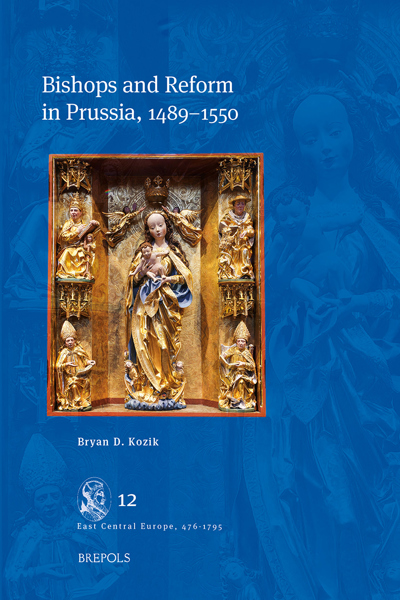
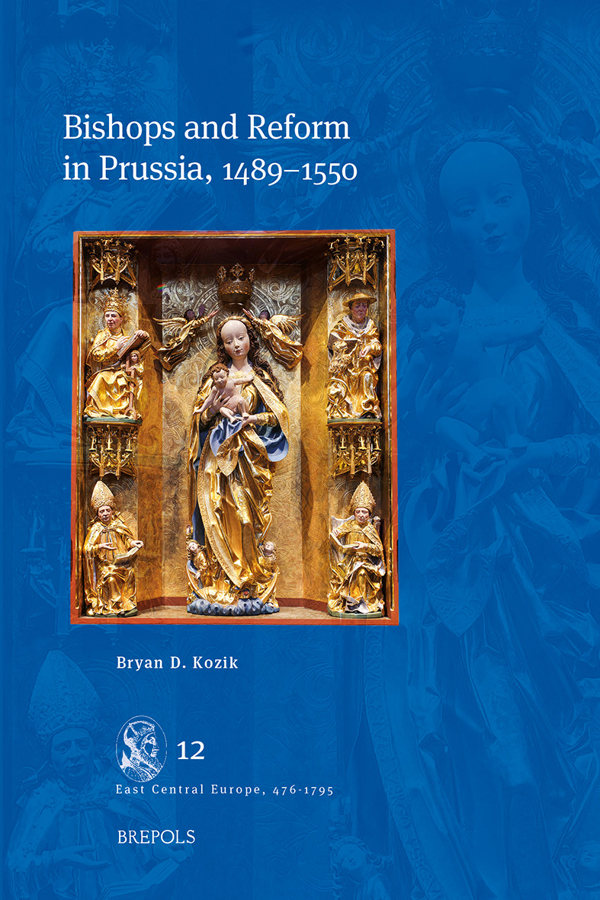
Between 1489 and 1550, Prussian bishops drove reform that propelled the region from late medieval Catholicism into rival Lutheran and Roman Catholic confessions.
Bryan D. Kozik received his PhD from the University of Florida in 2018, specialising in medieval and early modern Central European history. His research has been supported by a Fulbright fellowship in Poland and a postdoctoral fellowship at the University of Warsaw, where he worked as a visiting lecturer and researcher with funding from the Polish National Foundation via the Foundation for Civic Space and Public Policy. He teaches European and World History at Davis & Elkins College in Elkins, West Virginia, USA.
Prussia was not a passive frontier of the Reformation. It was a region in which the Reformation was shaped actively by its bishops. Under Polish suzerainty, the Teutonic Order, and later a secularised duchy, Prussian bishops pursued sustained programmes of pastoral, liturgical, educational, and institutional reform. In the 1520s, these efforts split. The bishops of Pomesania and Samland embraced evangelical teaching; those of Culm and Ermland remained within Roman obedience.
This book examines episcopal reform in Prussia between 1489 and 1550 and traces how these divergent choices reshaped the region’s religious life. It shows that bishops were not marginal figures or reluctant responders to change. They were decisive actors. Their initiatives transformed diocesan practice, influenced political settlements, and helped produce Prussia’s confessional order. By placing bishops back at the centre, this study reframes the relationship between late medieval reform, early evangelical movements, and Catholic renewal. It offers a new way to understand how ecclesiastical change unfolded in Central Europe before the Council of Trent.
Prologue
Introduction
1. Late Medieval Prussia and its Bishops
2. Late Medieval Episcopal Reform (1497–1510)
Clergy and Ministry
Education and Humanism
Religious Communities
Authority and Jurisdiction
Fabrica Ecclesiae
Conclusion
3. Neglect, Loss, and Crisis (1510–1523)
Weakened Authority
Continuing Episcopal Reform
Losses Among the Regular Clergy
The Polish-Teutonic War
Evangelical Reform
Early Official Responses to Evangelical Reform
Conclusion
4. Episcopal Reform Revived and Redirected (1523–1525)
Moving toward Wittenberg
Moving toward Rome
Royal Religious Policy
Revolt in Town and Country
The Secularization of the Teutonic State
Conclusion
5. Emerging Confessional Churches (1525–1530)
Lutheran Reform in the Duchy of Prussia
Catholic Reform in Ermland and Culmer Land
Formation of Future Episcopal Reformers
Conclusion
6. Coordinated Catholic Reform (1530–1537)
Independent Initiatives
Coordinating and Consolidating
Education
Religious Communities
Literature
Considering the Transnational Reformations
Piety and Reputation
Conclusion
7. Reform in a Catholic Confessional Church (1537–1550)
Clergy
Laity
Education
Considering the Transnational Reformations
Religious Communities
Conclusion
Conclusion
Bibliography
Index