Strategies of Writing
View publication
A new perspective on shared reading practices between laypeople and religious professionals in the late medieval Low Countries.
Pieter Boonstra (1992) completed their PhD at the University of Groningen in 2021. Since then, they have branched out into sermon studies with a focus on the preaching act as an event, emphasising dimensions of spatiality and embodiment in medieval Dutch preaching. Their research interests include the connections between laypeople and religious professionals, communication as a dynamic process, and the devotional usage of books and texts.
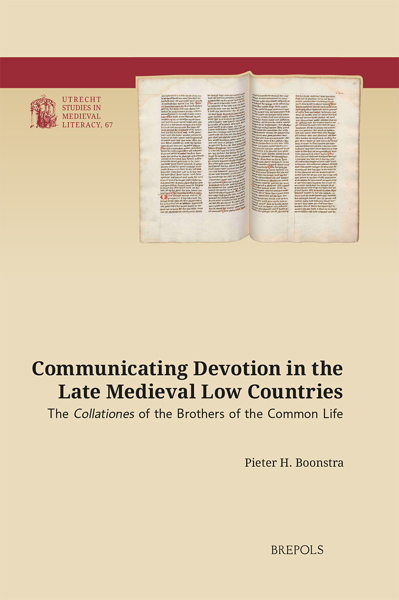
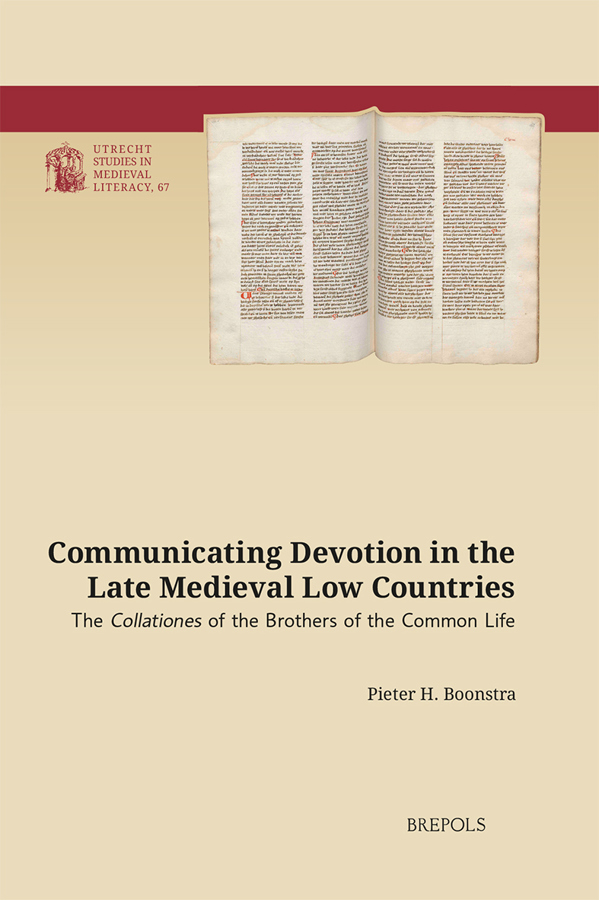
On Sundays and feast days, the Brothers of the Common Life organised their so-called collationes: students and other interested laypeople were invited to visit their house and listen to a devout text being read in the vernacular. With these meetings, they were given an idea of what important religious figures like Augustine, Bernard, or Chrysostom had said on a given topic. But the collatio was not simply a top-down communication of knowledge: participants were actively involved in the process as well, shaping the reading as well as the texts. The Brothers maintained close personal ties with their lay visitors in order to most effectively communicate their message. In doing so, people outside of the Modern Devout movement were offered a model to start reading in the way the Brothers read. They not only learned which texts were of importance, but also how they should be read and subsequently used. They were instructed on how to combine quotations and excerpts to find new and relevant insights. In the collatio, visitors were offered a glimpse into the Brothers’ own library, with an open invitation to join their textual community. Through informal talks guided by selected readings, the spirit of the Modern Devotion was thus communicated to an urban lay audience.
This study explores a medieval devotional practice — the collatio — at the crossroads of oral and textual communication and provides a new perspective on late medieval devotional culture and on the Brothers of the Common Life.
1. Introduction
2. The Collatio in Its Context
2.1 The Geography of Preaching
2.2 Frequent Preaching in the City
2.3 Lay Interest in Quality Sermons
3. People and Places of the Collatio
3.1 Devotion in a Semi-Domestic Setting
3.2 Conversing with the Brothers
4. Lay Participation and Worldly Topics in the Collatio
4.1 The Importance of Personal Interactions
4.2 The Lay Perspective Reflected
5. Shared Devotion
5.1 The Collatio as Religious Education
5.2 Preparing for the Last Judgement
6. An Invitation to the Brothers’ Library
6.1 Joining a Textual Community in the Collations
6.2 Refraining from Vice and Advancing in Virtues
7. Conclusion
8. Appendix: Overview of the Collations by Manuscript
MS Utrecht, UB, 3 L 6 (Dirk van Herxen’s First Book of Collations)
MS Leiden, UB, BPL 2231 (First part of Dirk van Herxen’s First Book of Collations, on the Vices)
MS London, BL, Add. 10287
MS Brussels, KB, 19549
MS Leuven, Maurits Sabbebibliotheek, 5000 12 B I (Book of Wedlock)
Bibliography
Index