Egisto Macchi: The Assassination of Trotsky
View publication
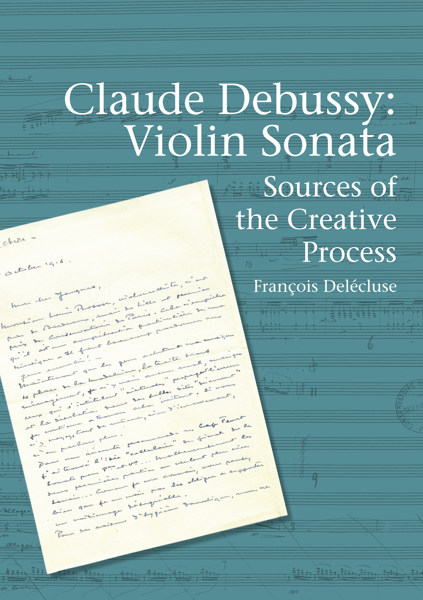
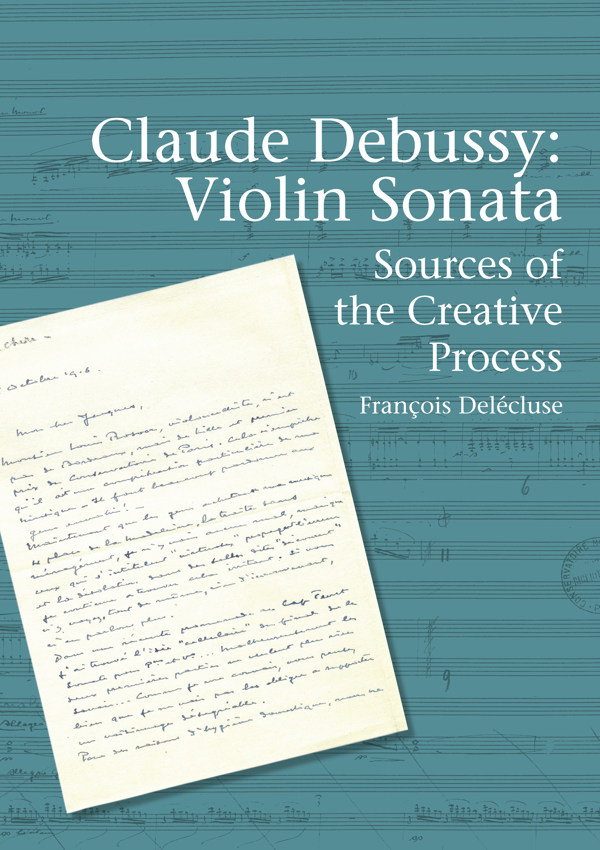
In this study, many facets of Claude Debussy’s creative process are examined, as well as the difficulties through which he toiled for several months before handing over the final manuscript of the work to his publisher.
François Delécluse is a CNRS researcher at the Institut de Recherche en Musicologie. Trained at the École normale supérieure de Lyon and the Conservatoire de Paris, he has taught in several French universities and held a FNRS postdoctoral fellowship at the Université libre de Bruxelles. His work focuses on the study of French music around 1900 and of the creative process in music, with particular attention to the work of Claude Debussy.
Composed only a few months before his death, Claude Debussy’s Violin Sonata was the composer’s final work and the result of a complex process that embraced an unusually large number of musical sources. In this study, many facets of Debussy’s creative process are examined, as well as the difficulties through which he toiled for several months before handing over the final manuscript of the work to his publisher. In addition to musical sources, many other documents bear witness to the Sonata’s progress from the initial draft to Durand’s published edition. The Violin Sonata was written during a period on which the Great War cast a long shadow. It was also influenced by the composer’s challenging compositional crisis and the terrible illness that was to claim his life shortly after the work’s premiere. The Sonata’s finale proved most problematic for Debussy, and thus an examination both of this movement’s sketches and relevant correspondence uncovers several alternate versions, reconstructed here.
Preface
Introductory Essay: ‘What a Sick Man Can Write in Time of War’
Debussy at Work, as Seen by His Friends and Family
Composing During the Great War
The Reception of Debussy’s Music at the End of His Life
History of the Violin Sonata
Chapter I. Compositional Methods
Document 1: ‘Six Sonates ...etc...’ (S1)
Document 2: Sketchbook (S2), fol. 23v
Document 3: Sketchbook (S2), fols 24r-29r, 30v-31r
Document 4: Sketchbook (S2), fols 31v-32v
Document 5: Sketchbook (S2), fols 34r-36r, 38v-39v
Document 6: Letter from Debussy to Jacques Durand, 17 October 1916 (S3)
Document 7: Sketchbook (S2), fols 41v-42r, 44v-45v, 48r
Document 8: Fair Copy (S9), Allegro vivo, fols 1r-8r, Intermède, fols 9r-11r
Chapter II. ‘The Finale That Just Would Not End’
Document 9: Sketchbook (S2), fol. 1r
Document 10: Former Stichvorlage (S5, S5bis), fols 15r-15v
Document 11: Sketchbook (S2), fols 29v-30r, 36v-38r
Document 12: Sketchbook (S2), fols 39v-41v
Document 13: Draft of the Neapolitan Finale (S4), fols 8r-12r
Document 14: Sketches of Alternative Finales (S5, S5bis, S6, S7, S8)
Document 15: Fair Copy (S9), Finale, fols 1r-11r
Document 16: Corrected Proofs (S11)
Conclusion
Appendices
Appendix 1: Sketches of the Alternative Finales
Appendix 2: Fair Copy (S9), ‘Finale’, fols 1r-11r
Appendix 3: Stichvorlage (S10), fols 1r-19r
Bibliography