
Sumer and the Sea
View publication
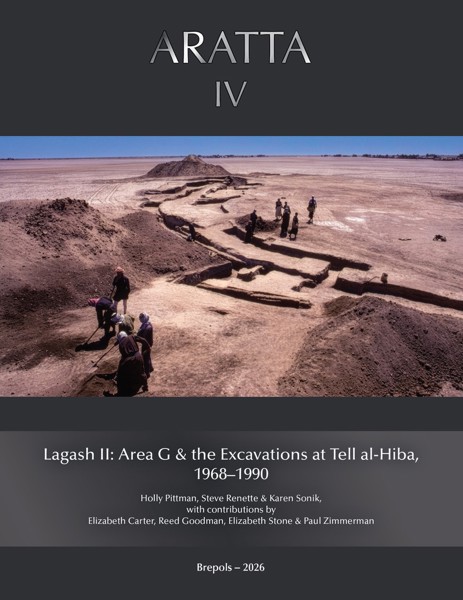
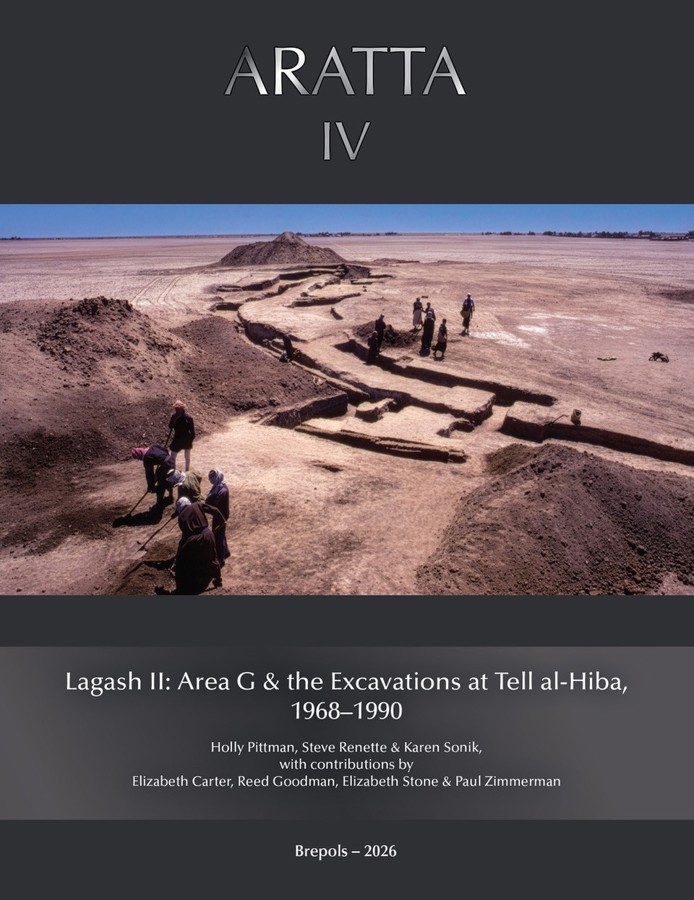
This volume introduces the twentieth century excavations at Lagash (al-Hiba), directed by Donald P. Hansen between 1968 and 1990; publishes the final analysis of Area G; and presents the physical features of the site.
Holly Pittman (PhD, Columbia University) is Professor of the Art and Archaeology of Mesopotamia and Iran at the University of Pennsylvania and Curator in the Near East Section of the Penn Museum. She has published extensively on third millennium BCE seals and sealings and the Early Bronze Age administrative systems of Mesopotamia. She is Director of the al-Hiba Final Publication Project and Director of the Lagash Archaeological Project.
Steve Renette (PhD, University of Pennsylvania) is Assistant Professor of Archaeology at the University of Cambridge. He co-directs the Kani Shaie Archaeological Project and coordinates its publication. He is also a core team member of the Lagash Archaeological Project in southern Iraq where he investigates the emergence of the earliest centralized institutions among previously independent and diverse communities in the Mesopotamian marshlands.
Karen Sonik (PhD, University of Pennsylvania) is Professor of Art History at Auburn University. She is an art and cultural historian, specializing in Mesopotamia, and she has published extensively on the material and visual culture of the region. Among her recent works are Contemporary Approaches to Mesopotamian Literature: How to Tell a Story (ed. with D. Shehata; 2024) and The Routledge Handbook of Emotions in the Ancient Near East (ed. with U. Steinert; 2023).
Ancient Lagash (Tell al-Hiba), one of Mesopotamia’s earliest cities, reached its apex during the second half of the Early Dynastic Period (c. 2500–2350 BCE), at which time it may have been the world’s largest urban centre. The twentieth-century excavations at the site, comprising six seasons led by Donald P. Hansen between 1968 and 1990, exposed four significant architectural complexes (Areas A, B, C, and G) with associated material culture including inscriptions. These allowed scholars, for the first time, to link excavated buildings both to known Early Dynastic rulers and to specific structures mentioned in contemporaneous texts. Hansen published a series of preliminary reports of the excavations at al-Hiba that intimated the significance of the site, but the complete reports are only now being released through the al-Hiba Final Publication Project. This volume introduces the twentieth-century excavations at al-Hiba, publishes the final analysis of Area G, and presents the physical features of the site.
List of Illustrations
Editorial Note
Acknowledgements
Chapter 1. Introduction: The Wolfe Archaeological Expedition to Lagash (1968–1990)
Part I: Area G at Tell al-Hiba
Chapter 2. Stratigraphy and Architecture
Chapter 3. Burials
Chapter 4. Pottery
Chapter 5. Objects
Chapter 6. Sealings
Chapter 7. Conclusion
Part II: The Physical Mound of Tell al-Hiba
Chapter 8. Introduction to Part II: The Physical Features of Tell al-Hiba
Chapter 9. The Geography of Tell al-Hiba and Structure of Ancient Lagash
Paul Zimmerman
Chapter 10. A Surface Survey of Lagash Al-Hiba, 1984
Elizabeth Carter
Chapter 11. The al-Hiba Survey Revisited
Reed C. Goodman, Steve Renette & Elizabeth Carter
Chapter 12. The City of Lagash
Elizabeth C. Stone
Plates
Appendices
1: SU List
2: Area Tables with Pottery Distribution
3: Pottery List
4: Area Tables with Objects Distribution
5: Objects List
Works Cited