Authority and Power in the Medieval Church, c. 1000–c. 1500
View publication
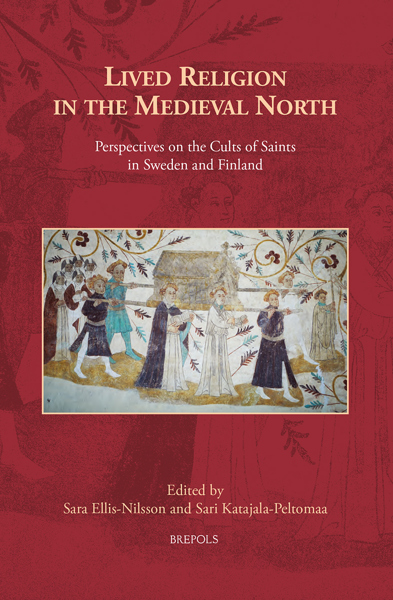
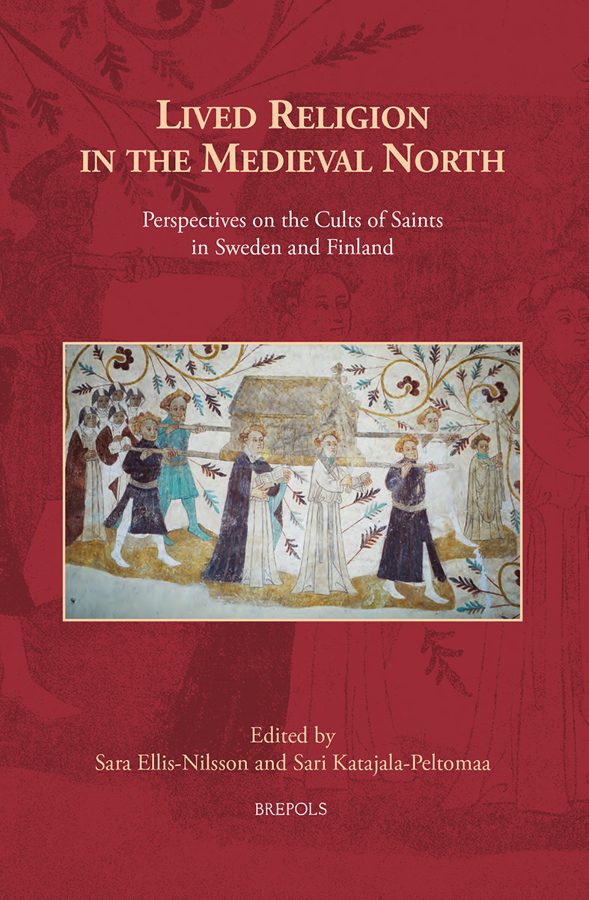
Combining close readings with digital analysis, this volume adds to the growing field of lived religion by exploring the cult of saints in the medieval North.
Sara Ellis-Nilsson is Senior Lecturer in Early History at Linnaeus University and Honourary Reader (Docent) at Lund University, Sweden. Her publications include 'A Mutually Beneficial Relationship. Saints and the Legitimization of Elite Ecclesiastical Institutions in Sweden and Denmark before 1300' in The Cult of Saints and Legitimization of Elite Power in East Central and Northern Europe up to 1300 (2024), and, ed. with Stefan Nyzell, Viking Heritage and History in Europe: Practices and Re-creations (2024).
Sari Katajala-Peltomaa is Professor of Cultural History at the University of Turku, Finland. Her publications include Demonic Possession & Lived Religion in Later Medieval Europe (2020) and, ed. with Raisa Maria Toivo, Histories of Experience in the World of Lived Religion (2022).
The concept of ‘lived religion’ — the social processes involved in faith-based practices — is growing in importance in medieval studies. This volume fills a gap within this field by focusing on the Nordic cults of saints, specifically in Sweden and Finland (c. 1200–1600). The nine contributions to this volume investigate a diverse range of practices and customs through studies of varied source materials, including calendars of feast days, sculpture and other artefacts, altar dedications, miracle stories, sermons, charters, and wills. They also demonstrate how digital tools can be applied in the study of medieval lived religion, in particular the research resource Mapping Saints. In utilizing this resource in their methodology, the authors reveal the potential of combining qualitative close readings with analyses of broader trends evidenced by quantitative data. Throughout the volume, there is a focus on place, space, and spatiality in the understanding of religious practices.
As a whole, the volume thus situates lived religion in the medieval north in a wider European perspective, and introduces the Nordic context and relevant studies to an English-speaking audience.
Preface
Chapter 1. Introduction: Saints and Lived Religion in the Medieval North. The Case of Sweden and Finland
SARI KATAJALA-PELTOMAA and SARA ELLIS-NILSSON
Chapter 2.Theoretical Perspectives on Space, Place, Maps, and Landscape
LENA LIEPE
Chapter 3. Miracles, Pilgrims, and Pilgrimage
ANDERS FRÖJMARK
Chapter 4. Karissimi, libenter debemus visitare loca sancta peregrinando. Pilgrimages in the Birgittine Context: Sermons and Miracles
SARI KATAJALA-PELTOMAA
Chapter 5. Desiring a Good Death in Late Medieval Sweden: Saints Protecting People from mala mors
JYRKI NISSI
Chapter 6. Dating by Feast Day: Saints, Legal Practices, and Lived Religion in Fifteenth-Century Documents from the Åbo Diocese
ANNA-STINA HÄGGLUND
Chapter 7. Festum fori? Saints’ Feast Days and their Impact on Lived Religion
SARA ELLIS-NILSSON
Chapter 8. Enthroning the Saints – Disinheriting the Saints: Side Altars, Saints, and Negotiating Church Space in Sweden and Finland, c. 1400–1600
TERESE ZACHRISSON
Chapter 9. Lost Images and Lived Religion: Images of Saints in Medieval Documents from Åbo Diocese
SOFIA LAHTI
Index