Art as History, History as Art
View publication
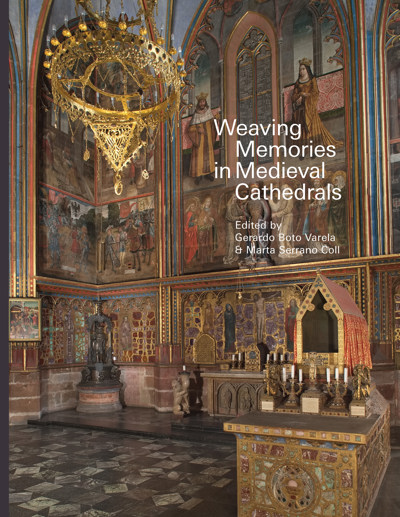
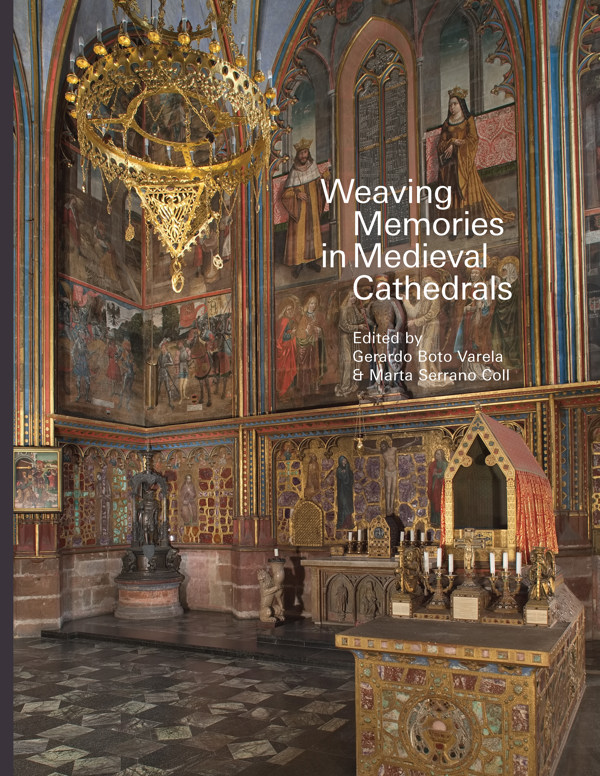
This volume analyzes from a global perspective a selection of medieval cathedrals across Europe.
Gerardo Boto Varela is professor of Medieval art at the Universitat de Girona (Spain), leader of the international research group Templa, and scientic editor of the journal Codex Aquilarensis. Revista de Arte Medieval. His research concentrates on spatial, pictorial, and liturgical aspects of Spanish ecclesiastical architecture from the tenth to thirteenth centuries, as well as on dynastic tombs and memorial culture in Medieval Iberia.
Marta Serrano Coll is lecturer of art history at the Universitat Rovira i Virgili in Tarragona (Spain) and specializes in Medieval architecture and sculpture, particularly in Catalonia. Her research interests include the display of power through artworks and royal patronage in the Iberian Peninsula during the Middle Ages. In addition, she has published in the field of Romanesque sculpture and hagiographical studies.
This volume examines a network of medieval European cathedrals, from the North Sea to Andalusia, to reveal the specific ways in which institutional and civic memories were interwoven in each of these ecclesiastical sees. These pages analyze the plurality of the European landscape through eleven cathedrals, created between the fourth and fifteenth centuries across the European geographical and cultural breadth. The architectural features of each cathedral are the result of a complex process of morphogenesis that is constantly defined by the local conditions of space, building material, etc. For these reasons, each author reveals in the respective case study how the ritual spaces and the cultic and commemorative devices that legitimized their relationship with the past, the particular devotions, the diachronic and synchronic crossroads and their relationships with the secular and religious elites were generated, modified and organized.
Crucial to this integrative process was the movement of patrons and master builders, as well as their ability to adopt new approaches and integrate them into established patterns. The cathedrals studied in this volume were highly innovative centers that exported successful models. In some cases, their proposals were formulated on the substratum of Roman antiquity, often reinterpreted. Furthermore, special attention is given to the memorial competencies of devices and liturgical furnishings, that constituted a large part of the visual and mnemonic experience inside their ceremonial spaces.
Through the study of the selected cathedrals it is revealed that each and every one of them sought to affirm two complementary realities: what role each one aspired to play in the history of Universal Salvation and, at the same time, how to articulate the spaces of the monument to give place and temporality to the memory itself, extolling the most relevant powerful personalities in the framework of the lay community. Thus, the volume offers a panoramic view of the specificities, but also of the analogies generated by artistic intersections and homologous statements.
Introduction: Negotiating Institutional Pasts in European Cathedrals
Gerardo Boto Varela and Marta Serrano Coll
Medieval Cathedrals As Reliquaries Of Memorial Narratives
I Imperial Patronage and Shaped Memories
The Cathedral of Rome in Context: Sacred Spaces, Rituals, and Patrons (Fifth–Fourteenth Centuries)
Manuela Gianandrea and Eleonora Tosti
Cathedral Saint Mauritius and Saint Katharina, Magdeburg
Matthias Untermann
II International Architectures for Secular and Ecclesiastical Hegemonies
1099–1106: The Foundation of Modena Cathedral as a Mirror of the Transition Between Seigneurial Power and Civic Self-Consciousness
Saverio Lomartire
Poitiers, the Cathedral Saint-Pierre-Saint-Paul
Claude Andrault-Schmitt
The Dispute over the Tradition of an Episcopal Church and the Art of the Naumburg Master
Holger Kunde
The Cathedral of Saint Vitus, Wenceslas, Adalbert, and the Virgin Mary in Prague in the Romanesque Period
Jana Maříková-Kubková
Notre-Dame de Lausanne: Socio-Spatial Organisation at the Origins of the Cathedral (Thirteenth–Sixteenth Centuries)
Kérim Berclaz
III Hosting and Proclaiming Cults
“North to Saint Olav”—A Saint and his Cathedral on the Edge of the Christian World
Øystein Ekroll
Canterbury Cathedral and its Holy Archbishops: Weaving Memories Between Continuity and Innovation
Ute Engel
IV Negotiating the Past in Palimpsestic Cities on the Edges of Latinity
The Hard Task of Surrogating Jerusalem: Famagusta Cathedral in Medieval Experience and Modern Scholarship
Michele Bacci
The (In)visible Cathedral: The Major Church of Santa María in Seville from 1248 to 1411
Teresa Laguna Paúl
Index of Names
Index of Places