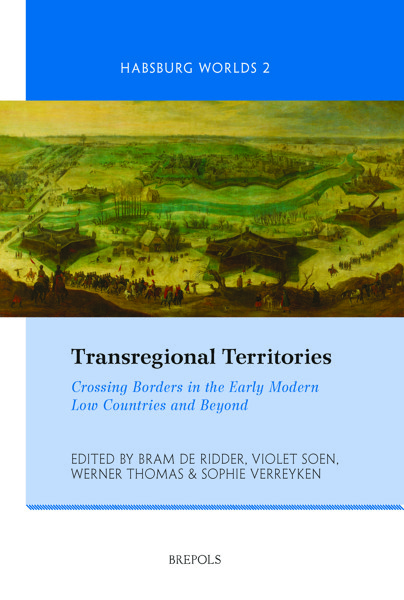
Transregional Territories
View publication
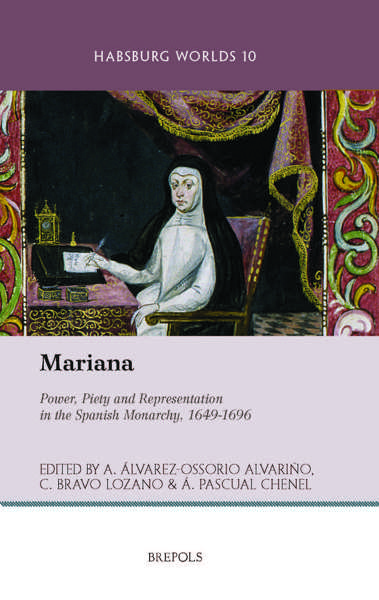
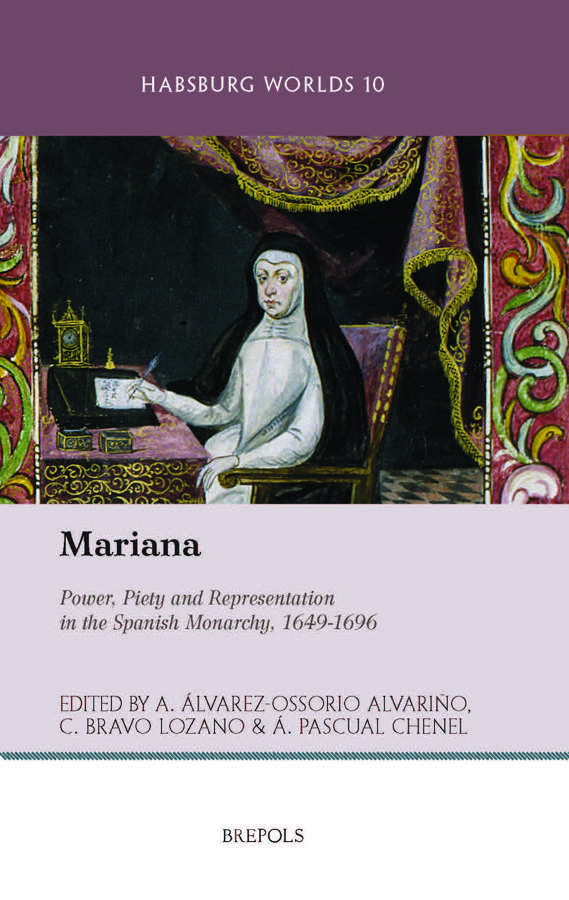
Queen, mother, governor and patron of arts. The faces of Mariana of Austria, 1649-1696
Cristina Bravo Lozano is Associated Professor at the Universidad Autónoma de Madrid. Her research interests include Spanish-Irish relations in the 17th century, the confessional diplomacy of the Spanish Monarchy in Northern Europe, the role of women in political negotiation during the reign of Charles II, and the Spanish monarchy’s response to the Scottish occupation of the Darién.
Antonio Álvarez-Ossorio Alvariño is Professor of Early Modern History at the Universidad Autónoma de Madrid. His areas of research include a comparative analysis of government and political society in the European and American territories of the Spanish monarchy during the early modern period.
Álvaro Pascual Chenel is Senior Lecturer in the Department of Art History at the University of Valladolid. He holds a European Doctorate in Art History and a PhD in History. His main line of research focuses on the image of Spanish art and power of the Early Modern Age.
Mariana of Austria was one of the most prominent queens of the 17th century. In a political world dominated by men, she exercised power as regent for Charles II. During her son’s reign, she maintained a high degree of political influence to prolong her regency and her support for the enormous task of governing the Spanish Monarchy.
The study of her life and her role as queen consort, regent and queen mother traces her own personal and political evolution. Starting with her Viennese origins, this book explores her upbringing, her role as a mother, her palace and court environment, her public image, patronage and support for the arts, and how she projected her image as a Catholic queen through her protection of the Jesuits and the Society’s evangelising efforts in Asia. Pietas austriaca was one of the key legitimising pillars of the regency, through the exaltation of devotion to the Immaculate Conception and the cult of Saint Ferdinand III, which cloaked the faltering crown in an aura of sacredness in the face of movements by the discontented aristocracy.
Responsible for directing the affairs of the Spanish Monarchy following the death of Philip IV, Mariana of Austria sought to continue her husband’s political legacy. Thus, the Regent chose to sideline the high aristocracy from the running of the government and devised a complex system that combined the rise of the Secretariat of the Universal Council and the power of the Councils with the prominent role of some of her own creatures who made their mark on the political scene, such as her confessor Johann Eberhard Nithard and the upstart Fernando de Valenzuela. She sought to strengthen royal authority through new political means, but was unable to prevent John Joseph of Austria and the Grandees from removing her from the helm of government from 1676 onwards. Following her exile in Toledo, the Queen Mother shifted from her active role at the forefront of government in Madrid to exercising a discreet influence over the promotion of royal ministers and the plans for the succession to the Spanish throne.
List of Abbreviations
Preface
Antonio Álvarez-Ossorio Alvariño, Anatomy of a regency: Mariana of Austria and the art of government of the Monarchy of Spain
I. Art of Government
Luis A. Ribot García, From weak woman to conscientious government ruler. Historiography´s treatment of Mariana of Austria
Laura Oliván Santaliestra, Mariana of Austria: Queen mater (1679–1696)
Silvia Z. Mitchell, From Politics to Policy: Mariana of Austria and the Council of State, 1665-1675
Heloïse Hermant, Reina o ruina de España? The Queen Regent Mariana of Austria caught between paper wars and courtly factions
Ondrej Lee Stolicka, The Relationships between Queen Mariana of Austria and the Imperial Ambassador Ferdinand Bonaventura Harrach
II. Politics and piety
Julián J. Lozano Navarro, Queen Mariana de Austria and the Society of Jesus. Between espirituality and politics
Ana Sánchez Casado, A political devotion: the Immaculate Conception and Mariana of Austria
Xavier Baró i Queralt, “Había tomado estas islas bajo su protección”: the evangelisation and conquest of the Mariana Islands (1668-1675)
Judith Farré Vidal, American Funeral Rites for Mariana: cosmopolitan networks in a global culture
Álvaro Pascual Chenel y Ángel Rodríguez Rebollo, Promotion of the Arts under Queen Mariana of Austria
Index