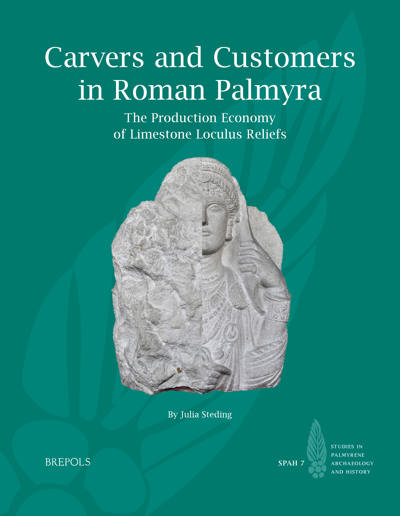
Carvers and Customers in Roman Palmyra
View publication
Olympia Bobou is an assistant professor at Aarhus University and participates in the Circular Economy and Urban Sustainability project and is working on the rich corpus of funerary sculpture from Palmyra.
Aleksandra Kubiak-Schneider is a postdoctoral researcher at the University of Wroclaw, working on the Semitic and Greek epigraphy of the Near East in the Graeco-Roman times.
Rubina Raja is Professor of Classical Archaeology and Art and between 2015-2025 she directed the Danish National Research Foundation’s Centre of Excellence: Centre for Urban Network Evolutions (grant DNRF119), Aarhus University. Currently she heads the Semper Ardens Advanced Grant project Locally Crafted Empires (funded by the Carlsberg Foundation) and the Lost Cities Rediscovered: Re-examining Excavation Histories in Late Ottoman and Mandate Western Asia project (funded by the Gerda Henkel Foundation).
Julia Steding is a research assistant at the Centre for Urban Network Evolutions, Aarhus University. Her research is focusing on the Palmyrene funerary sculpture.
Jean-Baptiste Yon is researcher at the CNRS, Laboratoire HiSoMA
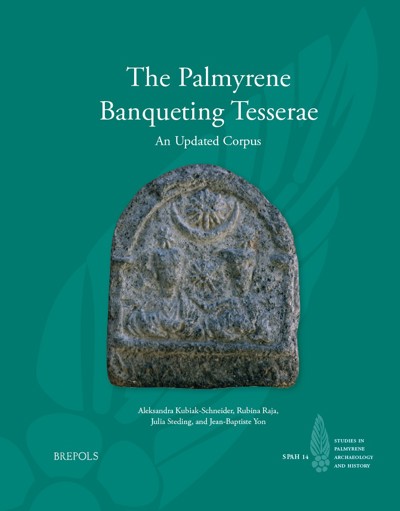
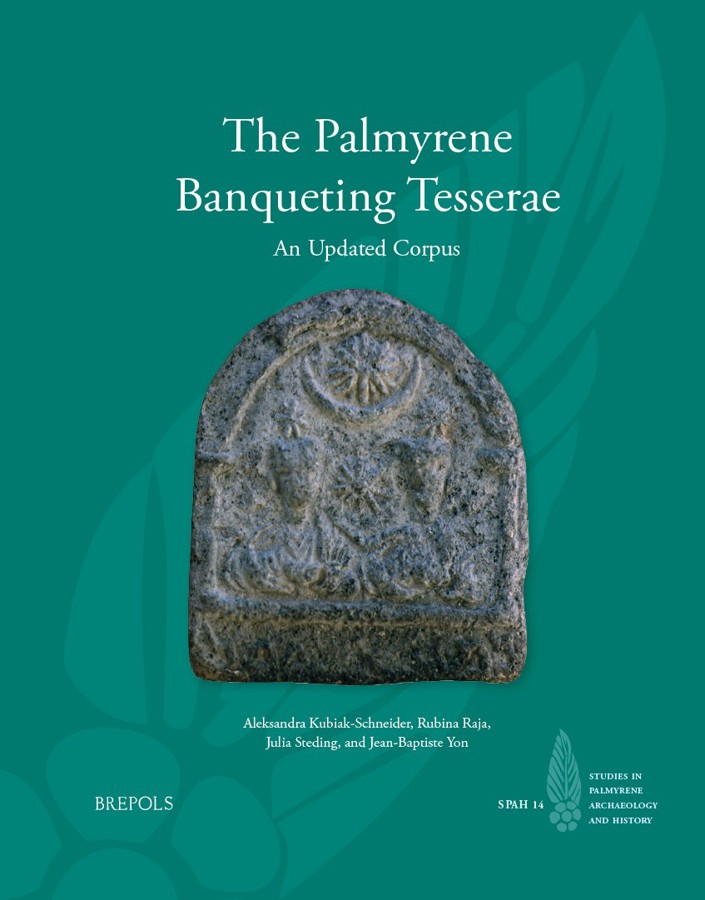
Banqueting tesserae — small, moulded terracotta tokens — were used in the religious sphere of Palmyra in the first three centuries AD, conveying a vivid iconographic language that underpinned sacral banquets held in the city’s sanctuaries and banqueting halls. Found today in those locations, these artefacts offer a rare glimpse into the overwhelmingly rich ritual and social lives of Palmyrene society.
This book and corpus provides the first comprehensive revision to the study of banqueting tokens since the 1955 publication Recueil des tessères de Palmyre, which catalogued 1132 types. Building on that foundational work, this publication updates the original corpus with 168 newly identified tesserae types, including numerous previously unpublished examples from the Palmyra Museum and a private collection in Damascus. Each new type is presented with detailed descriptions of motifs and inscriptions.
The book examines the rich iconographic and epigraphic landscape of tesserae, which feature depictions of priests, deities, animals, and symbolic imagery, while also casting light on some of the individuals who financed these feasts. With extensive indices on the iconography and epigraphy of the new types, as well as a translation of the indices from the Recueil des tessères de Palmyre, this new corpus presents a comprehensive overview and systematic study of this overlooked yet revealing class of material culture, which provides a unique source for our understanding of Palmyrene religious life.
List of Illustrations
The Palmyrene Tesserae — An Updated Corpus
The Palmyrene Banqueting Tesserae
An Addition to the RTP and the Structure of the Catalogue
The First Discoveries and History of Research
Vocabulary and Meaning
From Collections to New Interpretations
Prosopography
Paleography
Inscribed Tesserae
The Iconography of the Tesserae — RTP and New Corpus
Conclusion
Acknowledgements
Catalogue of New Tesserae Types
Unpublished Tesserae
Published since 1955
Abbreviations
Works Cited
Index: Epigraphy of New Types
Index: Epigraphy of New Tesserae Types
RTP Index: Epigraphy
RTP Index: Iconography
Appendix 1: Overview of Tesserae, Unpublished or Published after 1955, Following One of the Types Known from RTP
Appendix 2: Total Count of RTP Types
Plates