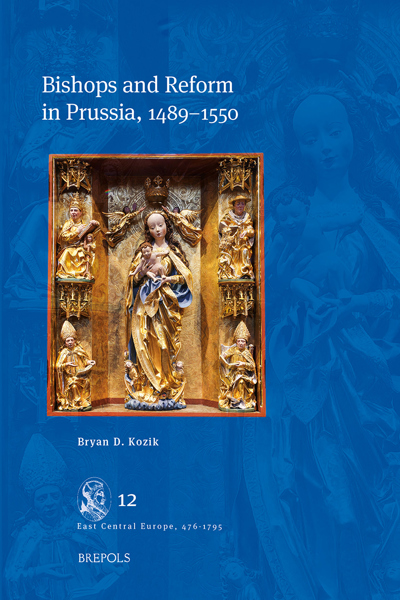
Bishops and Reform in Prussia, 1489–1550
View publication
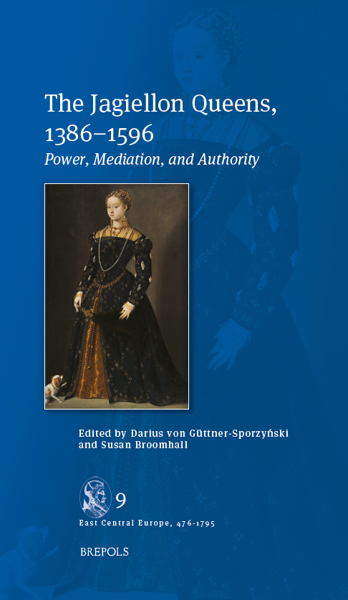
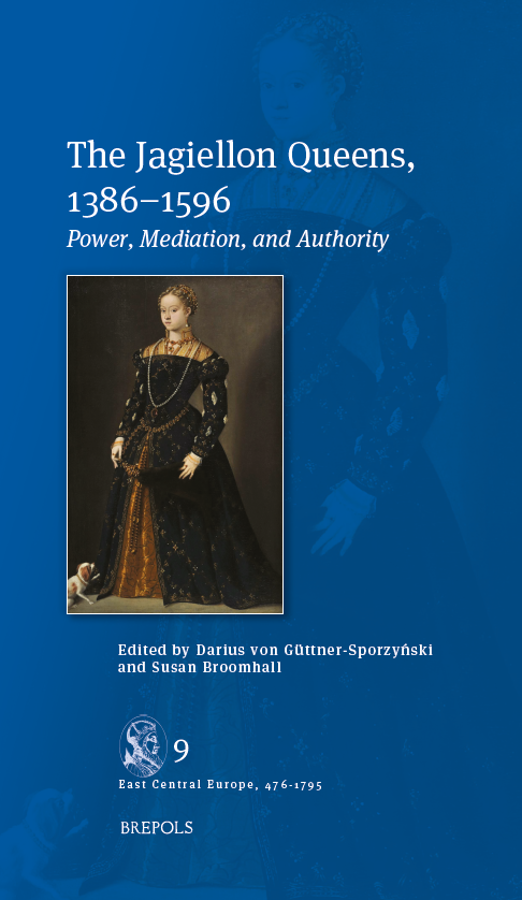
In a monarchy of negotiation, Jagiellon queens exercised power through mediation, ritual, and dynastic networks.
Darius von Güttner-Sporzyński is a historian of East-Central Europe, specialising in the political, cultural, and religious history of the late medieval and early modern periods. His research centres on the Jagiellon dynasty, queenship, and the relationship between power, belief, and material culture in Poland-Lithuania and neighbouring regions. At Australian Catholic University, he is Campus Dean (Canberra) and Professor of History, contributing to teaching, research leadership, and curriculum development. He is actively engaged in shaping interdisciplinary approaches that connect historical inquiry with broader questions of society and culture. He is a Fellow of the Royal Historical Society and the Royal Society of Arts.
Susan Broomhall is Professor of Early Modern Studies at Australian Catholic University and Director of the Gender and Women’s History Research Centre within the Institute for Humanities and Social Sciences. Her research specialises in early modern Europe, with particular expertise in gender history, the history of emotions, material culture, and cultural exchange in global contexts. Her work examines authority, communication, and identity across diverse settings, drawing on textual, visual, and material sources. She has published extensively in leading international venues, including major monographs and edited collections on gender, diplomacy, and cultural encounters. She is General Editor of The Bloomsbury Cultural History of Gender (2025). She is a Fellow of the Australian Academy of the Humanities and the Royal Historical Society.
This volume offers the first sustained study of the queens of the Jagiellon dynasty as political and cultural actors across East Central Europe between the fourteenth and sixteenth centuries. Drawing on new research, it repositions queenship within a region shaped not by centralised monarchy, but by negotiation, plurality, and dynastic union. The women who married into the Jagiellon house ruled across Poland, Lithuania, Bohemia, and Hungary, a political world defined by elective kingship, confessional diversity, and competing elites. Within this setting, queens exercised authority not through fixed institutional office, but through mediation, patronage, ceremony, and the cultivation of dynastic memory. Their power was relational, enacted in courts, households, and networks that connected regions, cultures, and faiths.
Challenging long-standing assumptions that consorts operated only at the discretion of kings, this collection demonstrates that queens were integral to governance. They negotiated alliances, shaped political communication, sustained religious and cultural patronage, and secured dynastic continuity. Their roles as wives, mothers, widows, and at times rulers in their own right reveal a model of monarchy in which authority was shared, performed, and continually renegotiated. The volume introduces the concept of ‘negotiated queenship’ to capture this distinctive form of female authority. In doing so, it places the Jagiellon queens at the centre of European history and shows that the making of one of Europe’s most expansive dynastic formations depended as much on queens as on kings.
Preface
Introduction: Negotiated Queenship of the Jagiellon Queens
DARIUS VON GÜTTNER-SPORZYŃSKI
Preface
MAGDALENA BINIAŚ-SZKOPEK
Introduction – Queenship and Queens Consort in East Central Europe
DARIUS VON GÜTTNER-SPORZYŃSKI (Australian Catholic University)
1. Jadwiga of Anjou (c. 1373–1399)
JAROSŁAW NIKODEM (Adam Mickiewicz University)
2. Anna of Celje, Elisabeth of Pilica, and Sophia of Halshany
BOŻENA CZWOJDRAK (University of Silesia, Katowice)
3. Elizabeth of Austria (1436–1505)
MAGDALENA BINIAŚ-SZKOPEK (Adam Mickiewicz University)
4. Barbara of Brandenburg (1464–1515)
SUSAN BROOMHALL and DARIUS VON GÜTTNER-SPORZYŃSKI (Australian Catholic University)
5. Beatrice of Aragon (1457–1508)
DARIUS VON GÜTTNER-SPORZYŃSKI (Australian Catholic University)
6. Helena of Muscovy (1476–1513)
KRZYSZTOF PIETKIEWICZ (Adam Mickiewicz University)
7. Anna of Foix-Candale (1484–1506)
SUSAN BROOMHALL (Australian Catholic University)
8. Barbara Zápolya (1495–1515)
ROBERT T. TOMCZAK (Adam Mickiewicz University)
9. Bona Sforza (1494–1557)
DARIUS VON GÜTTNER-SPORZYŃSKI (Australian Catholic University)
10. Mary of Austria (1505–1558)
NOELIA GARCÍA PÉREZ (University of Murcia)
11. Elizabeth of Austria (1526–1545) and Catherine of Austria (1533–1572)
URSZULA ZACHARA-ZWIĄZEK (University of Warsaw)
12. Barbara Radziwiłł (1520–1551)
AGNIESZKA JANUSZEK-SIERADZKA (John Paul II Catholic University of Lublin)
13. Anna Jagiellon (1523–1596)
AGNIESZKA PAWŁOWSKA-KUBIK (Nicolaus Copernicus University, Toruń)
Afterword – Queenship in a Global Perspective
ELENA WOODACRE (University of Winchester)
Chronology of Queens’ Lives
Note on Contributors to this Volume
Index