Contest, Translation, and the Chaucerian Text
View publication
Verena Höfig is Professor of Scandinavian Studies with a specialization in Old Norse Studies at Ludwig-Maximilians-Universität München. She received her Ph.D. in Scandinavian Studies from the University of California, Berkeley. Prior to her appointment at LMU München, she was Assistant Professor of Germanic Languages and Literatures, Medieval Studies, and History at the University of Illinois. Her research focuses on the intersection of literature, material culture, and social history in Scandinavia from the Viking Age to the present, with particular interests in myth reception, cultural memory, nationalism, and the contemporary afterlives of Old Norse culture.
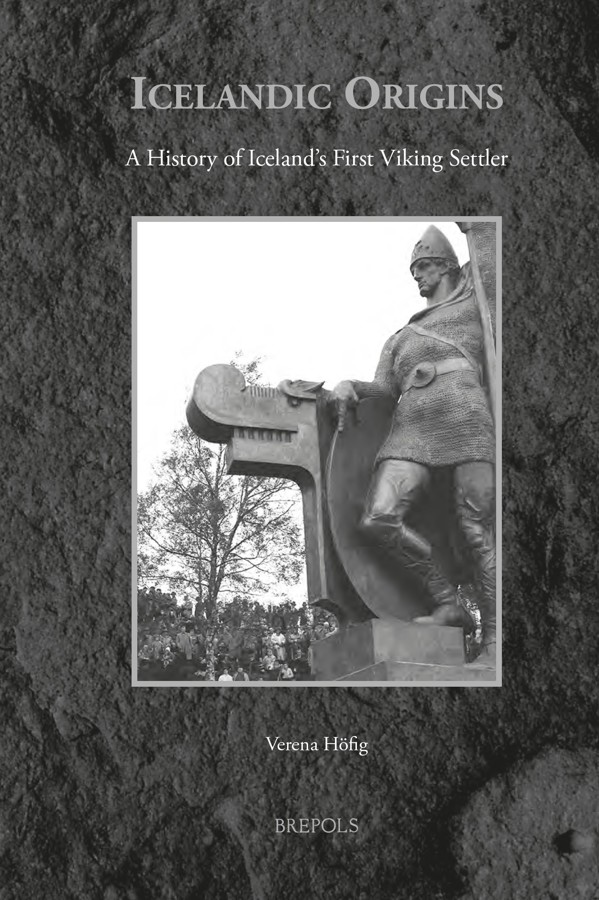
This volume explores the cultural history of Iceland through the central figure of its first Viking settler, the Norwegian chieftain’s son Ingólfur Arnarson. According to written tradition, Ingólfur discovered the island in the year 874 AD, but recent archaeological discoveries and DNA research have raised significant questions about the accuracy of these early settlement accounts.
The book traces the evolving representations of Ingólfur Arnarson across 1200 years of Icelandic history, from the earliest vernacular literary texts to modern scholarly debates and artistic portrayals, alongside the first scientific traces of human habitation in Iceland. By examining a wide range of cultural expressions surrounding Ingólfur the Viking, Icelandic Origins illuminates the man behind the myth of settlement, reveals the motives of those who sought to define him in the centuries after his death, and offers a novel, interdisciplinary perspective on Icelandic history, Scandinavian colonialism, and the country’s renowned medieval literature.
List of Illustrations
Acknowledgements
Introduction: A Descent from Slaves and Criminals?
Chapter 1. Remembering the landnám
Chapter 2. Challenging the landnám
Chapter 3. Depictions of a True Viking? Ingólfur Arnarson in the Visual Arts from the Seventeenth Century until Today
Chapter 4. Finding the First Farm, or: ‘Ingólfur Arnarson Lived on Aðalstræti — Just as we Were Taught in School’
Chapter 5. Memories of a Chosen People
Chapter 6. Forgetting the landnám. Ingólfr and Hjǫrleifr in Landnámabók
Conclusion
Works Cited