The Wedding of Charles I and Henrietta Maria, 1625
View publication
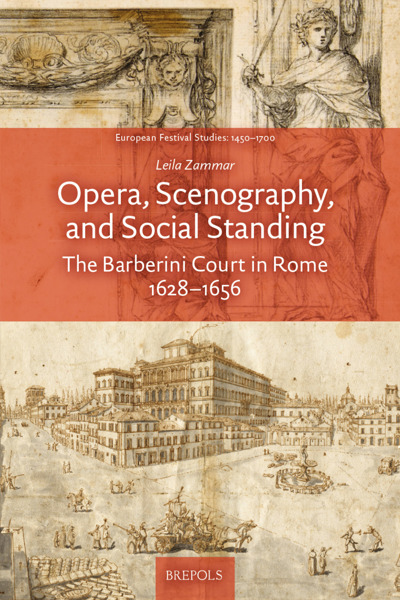
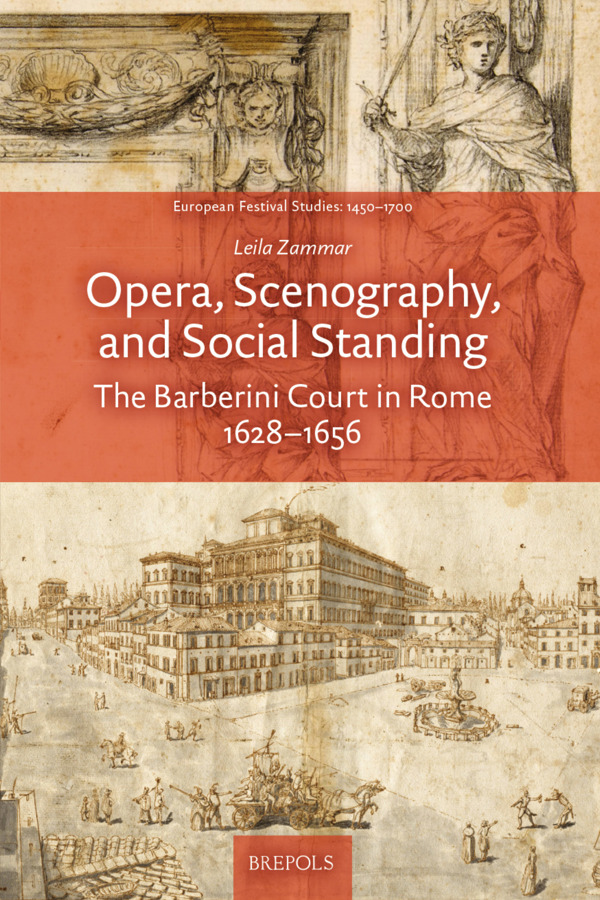
Through the investigation of numerous primary and secondary sources and digital reconstructions, this monograph sheds new light on the interconnections between the Barberini family politics and the development of scenography in seventeenth-century Rome.
Leila Zammar holds a PhD from the University of Warwick and has two MPhils from the University of Rome ‘La Sapienza’ and an MPhil in Lifelong learning from the University of Rome ‘Roma Tre’. She is a tenured teacher at a public high school and has been an adjunct professor at Loyola University of Chicago JFRC since 1995, where she currently teaches Introduction to Opera. She serves on the editorial board of Arti dello Spettacolo/Performing Arts and is a member of the Society for European Festivals Research and of the Renaissance Society of America. She has participated in numerous conferences and workshops, including two Annual Meetings of the RSA (Berlin, 2015 and Boston, 2016). Her research and publications are primarily focused on theatre and scenography.
This monograph concerns the development of scenography and its use as a subtle political tool in festival entertainments at the court of the Barberini during the seventeenth century in Rome. It covers the period 1628–1656, filling a gap in the study of the staging of performances in Rome during that period, and investigates how members of the Barberini family played a key role in the development of staging techniques and theatrical devices, to advance and consolidate their power. A wide range of primary sources, including reports, avvisi, letters, engravings, and contemporary manuals of scenography and theatrical sketches are analysed. A selection of these documents is transcribed and made available for the first time in the Appendix. The book includes computer-aided reconstructions of stage plans for several of the spectacles investigated; these provide a methodological tool for clarifying the hypotheses proposed, through the graphic representation of the scenographic elements of the performances analysed.
Introduction
Chapter 1. Early Performances at the Palazzo alle Quattro Fontane (August 1628 and Carnival 1632)
Chapter 2. Operas Staged by the Barberini with the Collaboration of Francesco Guitti (1633–1634)
Chapter 3. Operas Staged during the Years 1635–1638
Chapter 4. Performances Staged in the Teatro Barberini (1639 and 1642)
Chapter 5. Performances Staged for the ‘Queen’s Carnival’ of 1656
Appendix 1. Performances at the Barberini court in Rome from 1628 to 1656: Genres, spaces, dedicatees and patrons, guests and creative teams
Appendix 2. Transcriptions from Vatican City, BAV, Arch. Barb., ‘Giustificazioni I’
Glossary
Bibliography
Index