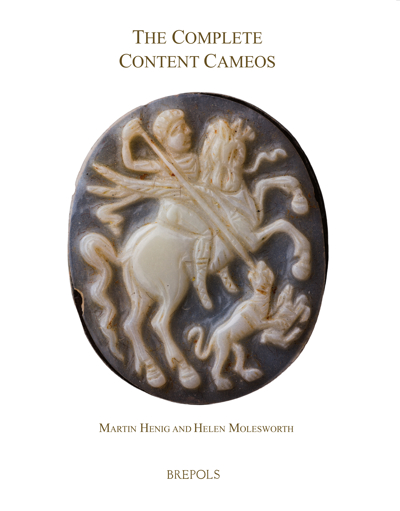
The Complete Content Cameos
View publication
Through multiple incursions into the ancient and early modern iconographic tradition, natural philosophy, medicine, and poetry, Lorenzo Pericolo illuminates the complex meaning of the painting, relating it ultimately to the revolutionary vision of the cosmos developed by the southern Italian philosopher Bernardino Telesio.
Lorenzo Pericolo is the Vincent V. and Agatha Thursby Professor of Art History at Florida State University. He has extensively published in Renaissance and baroque art and architecture. His books include Caravaggio and Pictorial Narrative: Dislocating the Istoria in Early Modern Painting (2011); the critical edition and annotated English translation of Carlo Cesare Malvasia’s Life of Guido Reni (2019, in two volumes); and Deleuze’s Modern Baroque: Leibniz, the Fold, the Formless, and the Objectile (2024).
In 1611, the Bruges born master Louis (or Lodewijk) Finson painted in Naples an atypical allegory of the traditional four elements. In it, Fire, Air, Water, and Earth are represented as four nude bodies: two female and two male, or, equally accurate, two young and two elderly figures entangled in a circular fight. Through multiple incursions into the ancient and early modern iconographic tradition, natural philosophy, medicine, and poetry, Lorenzo Pericolo illuminates the complex meaning of the painting, relating it ultimately to the revolutionary vision of the cosmos developed by the southern Italian philosopher Bernardino Telesio. Finson’s Four Elements no doubt represents one of the most fascinating testimonies of an age of transition at the dawn of the scientific revolution. It is also an “epistemic painting”: an original form of prescientific illustration that Pericolo links to other works by Lavinia Fontana (Portrait of Antonietta Gonzalez) and Jusepe de Ribera (Portrait of Maddalena Ventura with her Husband and Child).