
Catalogue du Fonds Ottoman des Archives du Monastère de Saint-Jean à Patmos
View publication
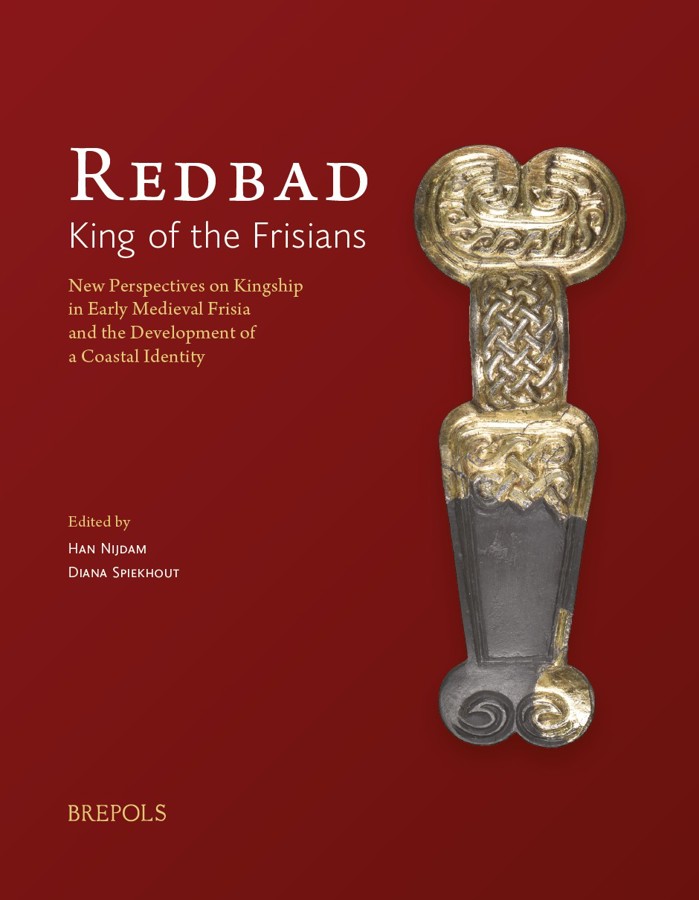
A major interdisciplinary reassessment of King Redbad and the emergence of early medieval Frisia, exploring how kingship, trade, migration, religion, law, and maritime networks shaped the Frisian coastal world between AD 400 and 800 and connected it to the wider North Sea region.
More than thirteen centuries after his death, King Redbad remains the best-known ruler of the Frisians. Remembered in medieval chronicles, saints’ lives, legends, and modern popular culture, he has become a symbol of the Frisian past. Yet the historical Redbad remains elusive, and the world over which he ruled is still poorly understood.
This volume offers a new interdisciplinary study of Redbad and the Frisians between c. AD 400 and 800. Drawing on archaeology, history, legal history, numismatics, and the study of religion, the contributors explore the emergence of the Frisian coastal world that stretched from the Sincfal to the Weser and beyond. Rather than focusing solely on Redbad himself, the volume examines the wider society in which he operated: kingship, warfare, trade, law, religion, identity, migration, and connections across the North Sea.
The book addresses fundamental questions about the formation of early medieval Frisia. How did a Frisian kingdom emerge? What role did kingship play in the expansion of Frisian influence? How were coastal communities connected through trade, mobility, and shared cultural practices? And how did the Frankish conquest transform this world?
Combining new research with a broad comparative perspective, this volume presents a comprehensive reassessment of Redbad, Frisian kingship and early medieval Frisia.
Introduction
I. New Perspectives on Early Medieval Kingship in Frisia
1. Early Medieval Kingship in Frisia
Han Nijdam and Diana Spiekhout
2. Sacral Kingship: A Song of Redbad and Woden
Han Nijdam, Ewoud van Aalst, Petter Jensen, Arjan Sterken, and Hilbert Vinkenoog
3. Kingship, Law and the Legal Community
Han Nijdam
4. Weaponry and Its Meanings in Early Medieval Frisia (400-800 AD)
Diana Spiekhout, Egge Knol, Ulrich Lehmann, Johan Nicolay, Han Nijdam, and Annette Siegmüller
5. Gods and Cosmology in Early Medieval Frisia
Han Nijdam, Ewoud van Aalst, Petter Jensen, Diana Spiekhout, Arjan Sterken, and Hilbert Vinkenoog
II. Archaeological Perspectives on the Development of a Coastal Identity
6. Climate, Vegetation and Plant Use in Early Medieval Frisian Landscapes
Mans Schepers, Felix Bittmann, and Daniel Hepp
7. Depopulation and Migration in the Southern North Sea Area. Towards an Understanding of Regional Variation (c. AD 250-900)
Johan Nicolay and Hauke Jöns
8. ‘Frisian trade’ and Money ca AD 650-900
Hauke Jöns, Gilles de Langen, Katrin Struckmeyer, Selina Pohl, Kirsten Hüser and Ralf Wiechmann
9. Watercraft of the 'Frisian Realm'
Mike Belasus and Jeroen Vermeersch
10. Settlements and Houses
Jan F. Kegler, Menno Dijkstra, and Andreas Hüser
11. People and technology in Motion – Ceramics From the 4th to the 10th Century on the Southern and Eastern Coast of the North Sea. Occupation Along the Frisian Coast From a Pottery Perspective
Jan de Koning, Katrin Struckmeyer, Andreas Hüser, Martin Segschneider, Sonja König, and Ines Reese
12. Textiles and Clothing in the Early Medieval Southern North Sea Region
Christina Peek, Marjolijn Koens, and Katrin Struckmeyer
13. Burials and Burial Traditions in Frisia
Christina Peek, Menno Dijkstra, Egge Knol, and Selina Pohl
Conclusion — Shedding New Light on Redbad and the Frisians
III. Epilogue
14. Frisian Heritage, Identity and Language Today
Anne Merkuur, Simon Hallink, and Christoph Winter