
Catholicisme, culture et société aux Temps modernes
View publication
Étude des dimensions liturgiques, sonores et musicales des cathédrales hispaniques à l’époque post-tridentine.
Albert Recasens is a researcher at the Institute for Culture and Society (University of Navarra) and Artistic Director of La Grande Chapelle and the Lauda record label. He holds a PhD in Musicology from the Catholic University of Louvain and works on interpretative practices in Spanish cathedrals in the early modern period. He is also involved in valorising the sacred musical heritage of the Renaissance and Baroque through recognised research and outreach projects.
Sergi Zauner holds a PhD in Musicology from the Autonomous University of Barcelona. A specialist in sacred music in early modern Spain, he has taught at Saarland University, ESADE (Ramon Llull University), and the Higher Institute of Liturgy of Barcelona. He is a member of the Catalan Liturgical Society (Institute for Catalan Studies) and has published numerous works in scholarly journals and edited volumes.
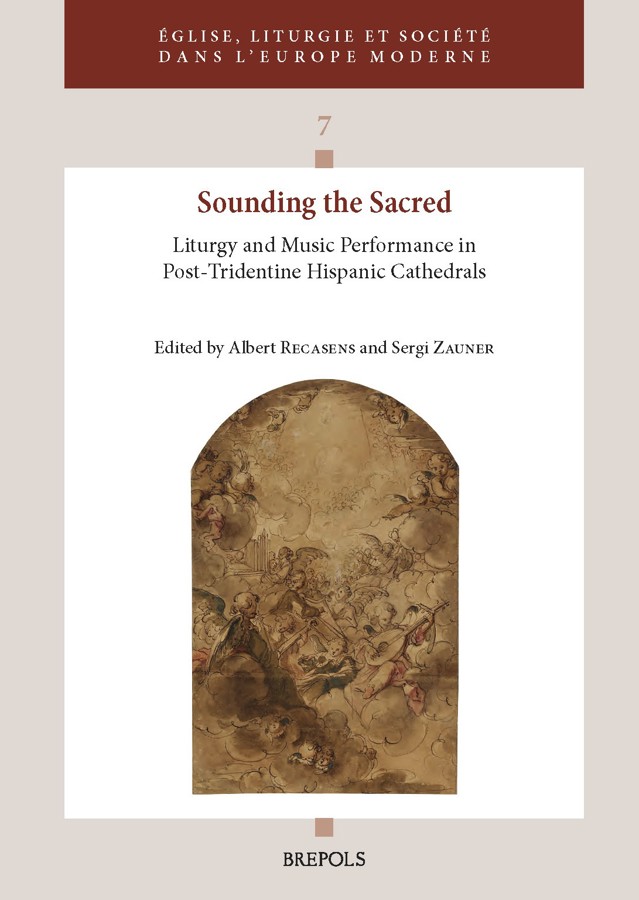
Sounding the Sacred offers a fresh assessment of the role of cathedrals in liturgical, musical, and ceremonial life in the post-Tridentine Hispanic world, from the Iberian Peninsula to colonial Cuba and Mexico, throughout the early modern period. Although these institutions have received less attention in recent musicological historiography, this volume reconsiders them as dynamic spaces in which power, theology, hierarchy, and sound intersected. Comparative studies on France, Liège, and Rome broaden the perspective, bringing together established themes, new approaches, and emerging questions concerning ritual experience.
Organised into four parts, the volume first examines how Tridentine norms were received, negotiated, and adapted locally, with particular attention to ceremonial books as instruments for regulating worship. It then explores how calendars, processions, and cathedral space structured ritual and made ecclesiastical hierarchies visible. The third part focuses on the experience of sound, examining how music, polychoral spatialisation, and the senses contributed to the construction of solemnity. The final part addresses musical practice: improvisation, the training and resources of musical chapels, newly discovered sources, and the possibilities of reenacting these practices today.
This volume demonstrates that music was not merely an addition to ritual but a fundamental language of the sacred. By bringing together ceremonial prescriptions, sound, space, and gesture, it restores cathedrals to their place as vibrant centres of liturgical and cultural production.


