
Visual Histories of the Classical World
View publication
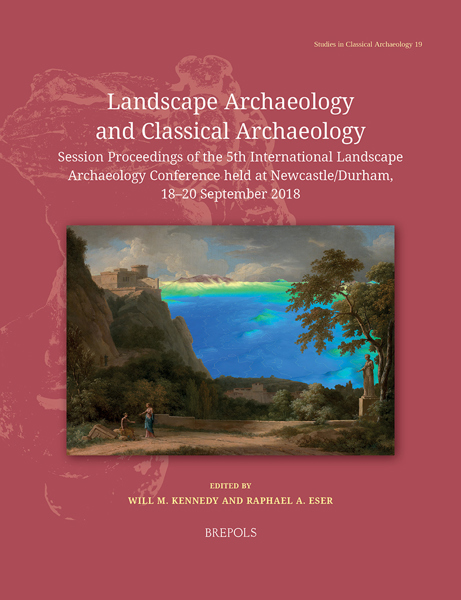
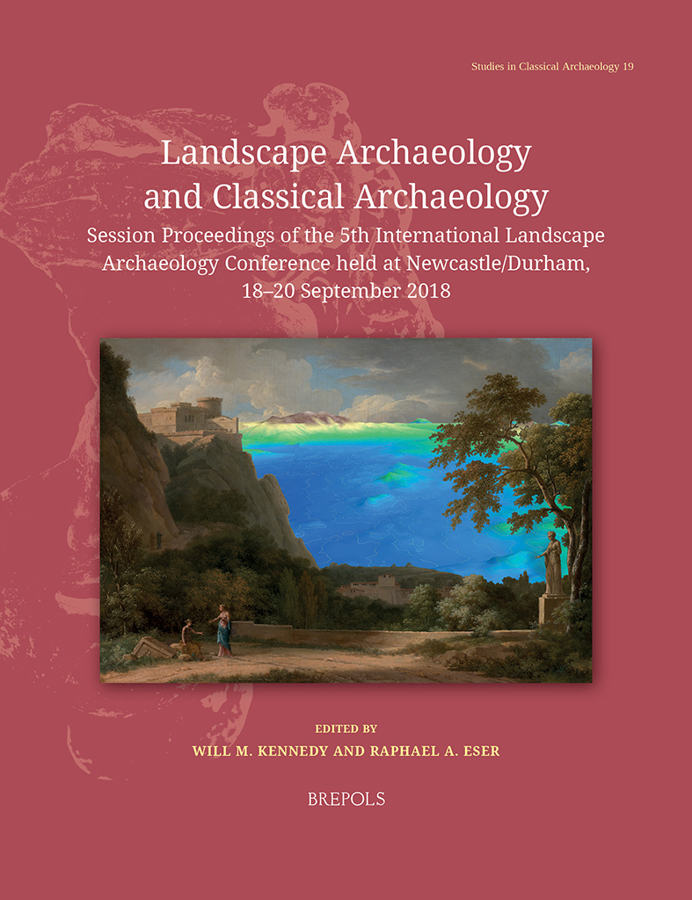
This book highlights the diversity of modern classical archaeology by underlining the importance of incorporating landscape archaeological approaches in the field of classical archaeology.
Dr. Will M. Kennedy studied classical archaeology and ancient history in Berlin and Sheffield. He received his doctorate from Humboldt-Universität zu Berlin in 2018 (Terra Petraea. The Archaeological Landscape of the Petraean Hinterland from the Hellenistic to the Byzantine Period in 2021). After a postdoctoral research fellowship dealing with the spatial organization of ancient Idalion on Cyprus (2018), he served as Assistant Professor at the Institute for Classical Archaeology at the University of Erlangen (2019-2021). He received the Travel Stipend of the German Archaeological Institute (Wülfing-Stipendium) in 2019/20. Since 2021 he is a researcher at the German Archaeological Institute at Athens.
Dr. Raphael A. Eser studied classical archaeology and oriental studies in Munich and Berlin. He received his doctorate from Humboldt-Universität zu Berlin in 2021 (title: Insula scoriae ferax. Studien zur Chronologie, Topographie und Ökonomie der antiken Eisenverhüttung auf Elba). After serving as Lecturer at the Institute for Classical Archaeology at Humboldt-Universität zu Berlin (2022), he was a postdoctoral fellow within the joint DFG-ANR project “Kition-Idalion-Tamassos: Cities and Territories within Cypriot Kingdoms during the First Millennium BC”. Since 2024 he serves as Assistant Professor at the Institute for Classical Archaeology at Martin-Luther-Universität Halle-Wittenberg.
Classical archaeology has traditionally been defined as the study of predominantly Greek and Roman material culture, spanning from the Aegean Bronze Age to Late Antiquity and focusing largely on the Italian and Greek heartlands. In recent decades, however, the discipline has expanded its horizons: neighbouring cultures across the wider Mediterranean have attracted growing scholarly attention, while post-antique periods have been increasingly integrated into longue durée perspectives. At the same time, methodological approaches have diversified, moving beyond an emphasis on elite material culture towards a more nuanced and multifaceted exploration of ancient societies.
Drawing on research first presented at the 5th International Landscape Archaeology Conference (Newcastle/Durham, 2018), this volume highlights the particular potential of landscape archaeology for addressing key questions within a modern understanding of classical archaeology and for demonstrating the field’s methodological versatility and disciplinary diversity. The collected case studies showcase how landscape approaches occupy a central place in contemporary classical archaeology, illustrating a discipline that embraces diverse methods and research agendas while remaining grounded in its traditional foundations.
Foreword by the Editors — Will M. Kennedy, Raphael A. Eser
Introduction: Landscape Archaeology and Classical Archaeology. Some Thoughts — Will M. Kennedy
1. Rural Epigraphic Landscapes: New Approaches to Milestones and Viability in Roman Baetica — Sergio España-Chamorro and María del Carmen Moreno Escobar
2. Exploring the Heuristic Potential of a Landscape Approach to Tombs and Settlements in the Pre-Roman/Roman Transition: Two Case Studies from Italy and Spain — Chiara Botturi and María del Carmen Moreno Escobar
3. Before the Ricefields. Reconstructing the Landscape of the Western Cisalpine, Vercellae Area: The Livorno Ferraris Project — Maria Elena Gorrini, Francesca Garanzini, Benedetta Peverelli, Elena Smoquina, and Filippo Brandolini
4. Riconoscendo le tracce del paesaggio di epoca romana nella pianura a est di Vicenza (Italia): il contributo di un approccio di tipo morfologico-stratigrafico allo studio archeologico del territorio — Michele Matteazzi
5. From Temple to Landscape in Ancient Greece: The Case of the Sanctuary at Berekla (Arkadia) — María Cruz Cardete
6. The Geraki Archaeological Project: Classical Archaeology, Rocks, Plants, Sediments and Soils in Laconia, Greece — Mieke Prent, Sjoerd Kluiving, and Andrea Kay
7. Landscape Archaeology and Digital Approaches in the Pergamon Micro-Region — Daniel Knitter, Gerrit Günther, Wolfgang Hamer, Bernhard Ludwig, Felix Pirson, and Brigitta Schütt
8. Landscape as Artefact and as Agent: The Potentials of a Classical Landscape Archaeology in Arid Landscapes — Anna-Katharina Rieger
9. Conclusion and Outlook: Landscape Archaeology and Classical Archaeology. Afterthoughts — Will M. Kennedy and Raphael A. Eser