
I Don’t Belong Anywhere: György Ligeti at 100
View publication
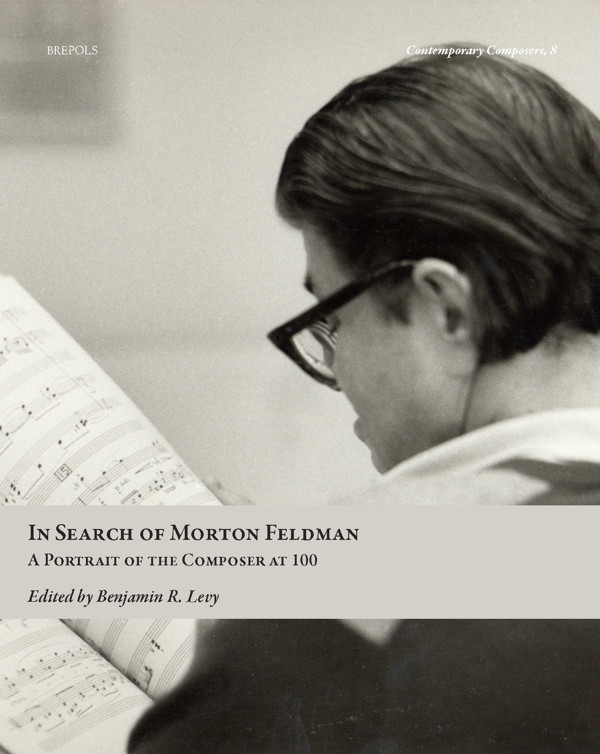
This volume contains analytical and musicological studies that cover Feldman’s entire career and legacy
Benjamin R. Levy is an Associate Professor of Music Theory at the University of California, Santa Barbara. His research focuses on modernist and contemporary music and on connections between music, literature, and the arts. In addition to articles on subjects including Feldman, Xenakis, the Second Viennese School, and the architect Bruce Goff, he has published widely on the music of Ligeti, including the monograph «Metamorphosis in Music: The Compositions of György Ligeti in the 1950s and 1960s».
There is something inscrutable about Morton Feldman. His music resists analysis, first through its indeterminacy and later through its vast scale. His personality was also contradictory — a «fascinating balance» of «tenderness and toughness», as Christian Wolff states in the book’s preface. Familiar biographical narratives, for example his connections to the New York School of composers and artists or his discovery of Turkish rugs, seem to transform as subtly as his music in their frequent retellings. Indeed, the more we examine his life and creative output, the more questions seem to arise. In this spirit of open inquiry, the present volume offers a mixture of analytical and musicological studies spanning the whole range of Feldman’s career, as well as his continuing legacy. The essays cover topics ranging from his literary entanglements with Rilke in «Only» (1947) and Pasternak in «Swallows of Salangan» (1960), to timbre in his free-durations pieces of the 1960s, and ample discussion of the late works, including studies on memory in «Violin and Orchestra», time in «Piano and String Quartet», enharmonic spelling and intonation in String Quartet no. 2, and the defining themes of the Beckett-related works of his final decade. The final two chapters address the reception of Feldman’s ideas in the works of James Tenney and Linda Catlin Smith, prompting a reconsideration of the composer’s important position not just in American music, but in the broader scope of the Western tradition.
Christian Wolff
Preface
Benjamin R. Levy
Introduction: In Search of Morton Feldman
Looking Back Through the Early Works
Brett Boutwell
Feldman’s Only and the Residue of the Past
David Cline
Historical Symbolism and The Swallows of Salangan
Thomas DeLio
Feldman’s Sound: Durations III, No. 3, Revisited
Approaching the Later Music
Roger Reynolds
Considering Morty
Amy C. Beal and Nathan Cobb
Surface, Translation, and Repetition in Morton Feldman’s «Beckett» Works
Benjamin R. Levy
Morton Feldman’s Art of Memory
Jürg Henneberger
Microtonality in Morton Feldman’s String Quartet No. 2: A Hypothetical Attempt at «Decoding» Feldman’s Enharmonic Notation
Ray Fields
Time in Morton Feldman’s Piano and String Quartet
Assessing Feldman’s Legacy
Marilyn Nonken
«Jim You Never Sent Me A Letter»: Feldman, Tenney, and Spectralism
Antares Boyle
«That Second Infinity»: Linda Catlin Smith’s Continuous Variation Technique and Its Precedents in Feldman and Schoenberg
Abstracts and Biographies
Index of Names