Twentieth-Century Music Criticism and Racial Discourses
View publication
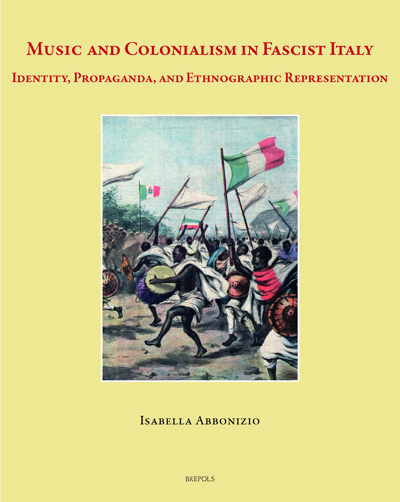
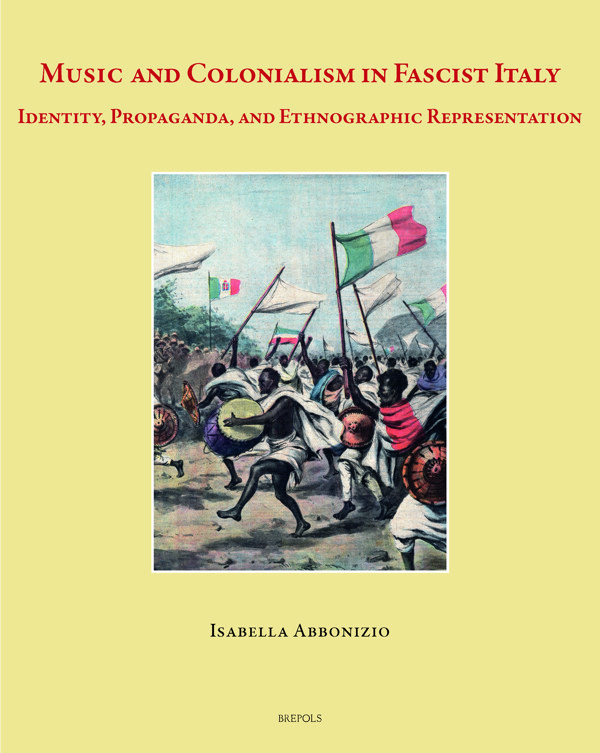
This book investigates the role of music in the context of Italian imperial expansion in Africa
Isabella Abbonizio is a musicologist and classical guitarist who holds a Ph.D. in Musicology from the University of Rome ‘Tor Vergata’ and a Guitar Diploma from the ‘G. B. Martini’ Conservatory of Bologna. She is currently a Research Affiliate at New York University’s Department of Italian Studies and was previously a Visiting Scholar at NYU’s Center of European and Mediterranean Studies. Her publications, including articles, book chapters, and dictionary entries, focus on Italian music and its political intersections in the twentieth century.
This book offers the first comprehensive investigation of the role of music within the context of Italian imperial expansion in Africa, with a particular focus on the Fascist period. While Italy’s colonial project spanned approximately sixty years, it was during the final decades — under Mussolini’s regime — that music emerged as a subtle yet potent instrument of propaganda. Despite its importance, the intersection of Italian music and colonial politics has remained critically underexplored, often eclipsed by postwar narratives that sought to deny or obscure cultural complicity. Drawing on archival sources, colonial newspapers, Italian and international press, published and unpublished scores, and personal accounts, the book examines four domains of entanglement between music and imperial ideology: the projection of Italian cultural identity in Libya through opera houses and concert programming; the colonial staging of Arab musical and dance traditions to satisfy orientalist appetites; the overlooked field of Italian musical ethnography in colonial settings, marked by flawed methodology and rare sonic documentation; and the creation of propagandistic works endorsing imperial ambitions. Special attention is given to Libya under Governor Italo Balbo, including Radio Tripoli’s role in circulating local music, and to compositions by Adriano Lualdi and Alfredo Casella that engaged with imperial themes. These case studies show how music was mobilized to affirm nationalism, legitimize domination, and shape perceptions of the Other. By reintegrating music into the historiography of Italian colonialism, this study reclaims a neglected dimension of twentieth-century culture, challenging enduring silences in both musicological and postcolonial scholarship.
Foreword by Gianpaolo Chiriacò
Preface
Chapter One. Introduction
Chapter Two. Music and Cultural Hegemony in Libya: Theatres as Instruments of Empire
Introduction
Italian Colonialism in Libya in Context
The Politics of Cultural Life in Colonial Libya
Cultural Institutions in Tripolitania and Cyrenaica
Modernity and Local Traditions: The Music Programming of Radio Tripoli
Chapter Three. Musical Ethnography and Colonial Discourse
Introduction
Early Colonial Musical Ethnography and its Later Dissemination
Colonial Knowledge and Musical Ethnography during the Fascist Period
Case Studies: Key Figures and Contributions
Sonic Representations of the Other: Sound Collection and the Display of Musical Traditions from the Overseas Territories
Chapter Four. Italian Composers and Imperial Propaganda: Between Artistic Autonomy and Political Control
Introduction
Awards and Competitions
The ‘Spontaneous’ Response of Composers
Colonial Narratives on Stage
Aural Traces of Italian Colonialism in Postcolonial Italy
Epilogue
Bibliography
Index of Names