The Mediality of Culture and the Emblematic Way of Seeing and Thinking
View publication
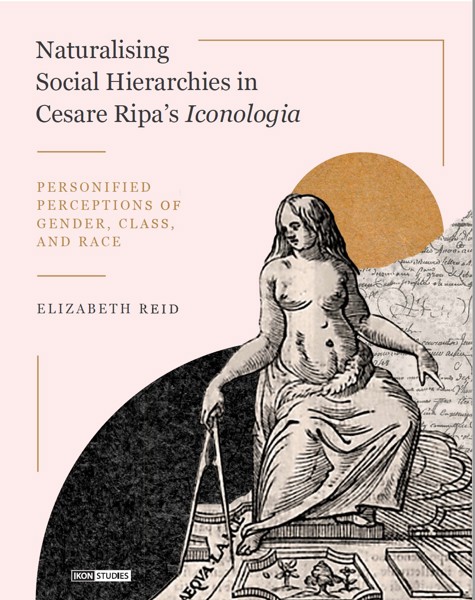
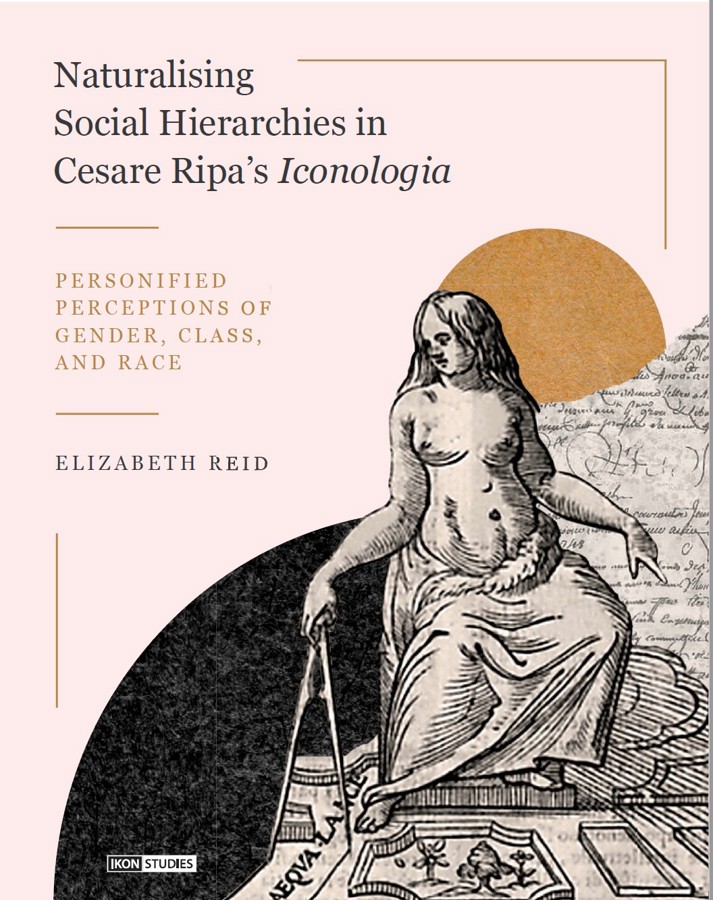
This book provides a wholly new perspective on personification in Early Modern Europe. It argues that in appropriating socialised bodies to contextualise and codify allegorical expression, Cesare Ripa’s Iconologia naturalised and perpetuated historically impactful hierarchies of gender, class and race.
Dr. Elizabeth Reid is an early modern historian specialising in the gendered social implications of allegory and rhetoric. She has lectured and conducted research in the fields of the History of Emotions, Early Modern History, Gender History, Australian History, and Pedagogy.
This book sheds new light on the social impact of personification by applying naturalisation theory to Cesare Ripa's detailed encyclopedia of personifications, the Iconologia. Naturalisation entails the conversion of social representation (through image, rhetoric, or embodiment) into cultural knowledge that shapes society. When social hierarchies are naturalised they become difficult to perceive or challenge despite their profoundly impacting lived experience. Personification is a form of social representation that enhanced early modern peoples’ recognition of social cues encoded in the body; they regularly featured in political, religious, and domestic spaces whose traditions underpinned social structure. Ripa’s codification of the genre influenced allegorical artists throughout the seventeenth and eighteenth centuries, yet it has evaded sustained analysis in English-language scholarship. This book analyses the naturalising process of Ripa’s Iconologia by recognising elite hegemonic masculinity as a standard against which the figures were intended to be read. It argues that Ripa’s use of natural props and classical sources gave a sense of inherent validity to the allegories’ underlying social messages. Its chapters explore Ripa’s engagement with humoral theory as a system that established a pseudo-biological foundation for hierarchy, his treatment of the female body as a symbol of nature's generative capacity but one that required 'masculine' social control, Ripa's positioning of masculinities through agricultural and political labour, and his application of the above theories to generate culturally advantageous representations of the four continents. It offers a valuable new perspective for scholars and students interested in social, art, gendered, and colonial history.