Colinet de Lannoys. Mass and Songs
View publication
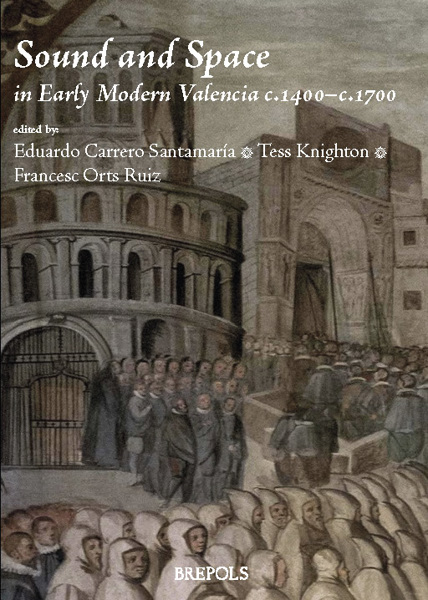
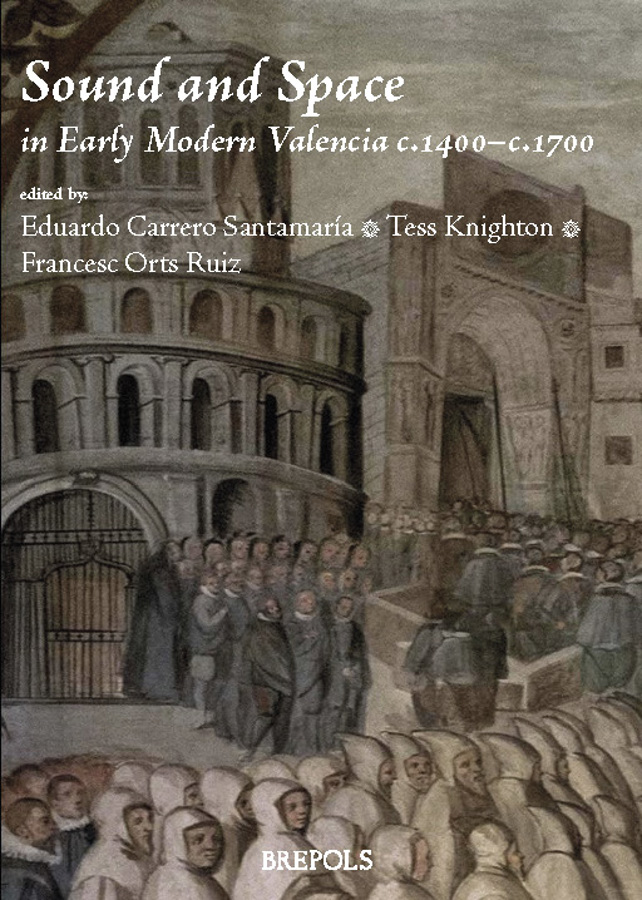
During the fifteenth century Valencia was transformed into an impressive urban complex which over the course of time became renowned for its highly developed ceremonial practices involving emblematic buildings and public spaces that shaped and were shaped by a wide variety of sounds: this dynamic and multifaceted relationship between sound and space created the city’s identity and characterised the daily life of its inhabitants.
Eduardo Carrero Santamaría is Senior Lecturer of Medieval Art History at the Universitat Autònoma de Barcelona. His research focuses on the relationship between space and function in the architecture of cathedrals and monasteries in medieval Europe, changes in their use throughout history, the influence of liturgy on the spatial configuration of architecture, and how we view these aspects from a 21st-century perspective. He is the author of several books and journal articles on these topics.
Tess Knighton is an ICREA Research Professor based at the Universitat Autònoma de Barcelona and an Emeritus Fellow of Clare College, Cambridge. She was Editor of the OUP journal Early Music, and founded the series Studies in Medieval and Renaissance Music for The Boydell Press. Her research focuses on the music and culture of the Iberian Peninsula from the fifteenth to the seventeenth centuries and she has published widely in this field.
Francesc Orts-Ruiz is a postdoctoral researcher in the SOUNDSPACE project at the Universitat Autònoma de Barcelona, combining approaches from art history and musicology to explore relationships between visual culture, sound and urban space. His Ph.D. examined the visual and sonic dimensions of royal entries in late medieval and early modern Valencia. Currently his research focuses on the analysis of different kinds of processions, exploring their sonic and visual impact on the urban environment.
By the later Middle Ages Valencia had become a major urban centre close to the Mediterranean and surrounded by fertile plains. From Jaume I’s conquest of the city in 1238, ecclesiastical and civic institutions were founded in rapid succession and built elegant churches and palaces to reflect their permanence and prestige. From at least the time of Francesc Eiximenis (d. 1409), the city’s authorities became increasingly aware of the importance of opening new public spaces within the web of narrow streets characteristic of Muslim conurbations in the interest of developing the representation of a Christian civic religion. These spaces, notably those in front of the royal palace, cathedral and Dominican and Franciscan monasteries, quickly established themselves as focal points for urban ritual, especially for the processional activity that marked the liturgical calendar and the devotional practices of confraternities and guilds. Sounds of all kinds shaped and were shaped by the urban complex and were generated by both the festive and non-festive events that, whether recurrent or exceptional, held deep significance for the inhabitants of the city. This interdisciplinary collection of fifteen essays explores the relationship between the sounds and spaces of late medieval and early modern Valencia to gain greater insight into how the city’s inhabitants interpreted the soundspace in which they moved and which influenced their daily lives, creating a sense of community – albeit one full of rivalry and conflict – and resulting in a coherent Valencian identity.
A finales de la Edad Media, Valencia se había convertido en un importante centro urbano, abierto al Mediterráneo y rodeado de una fértil huerta. A la conquista de la ciudad por Jaume I en 1238 siguió la rápida fundación de instituciones eclesiásticas y cívicas y la construcción de elegantes templos y palacios que reflejaban su presencia y prestigio. Desde la época de Francesc Eiximenis (m. 1409), las autoridades de la ciudad fueron tomando cada vez más consciencia de la importancia de abrir nuevos espacios públicos dentro de la red de calles estrechas característica del urbanismo musulmán, con el fin de desarrollar la representación de una religiosidad cívica cristiana. Estos espacios, en particular los situados frente al palacio real, la catedral y los monasterios dominico y franciscano, se convirtieron rápidamente en puntos focales para los rituales urbanos, especialmente para las procesiones que marcaban el calendario litúrgico y las prácticas devocionales de cofradías y gremios. Sonidos de todo tipo, generados tanto por eventos festivos como no-festivos, recurrentes o excepcionales, tenían un profundo significado para los habitantes de la ciudad y fueron moldeados a la vez que contribuyeron a configurar el espacio urbano. Esta colección interdisciplinar de quince ensayos explora la relación entre los sonidos y los espacios en la Valencia tardomedieval y moderna para comprender mejor cómo los habitantes de la ciudad interpretaban el espacio sonoro en el que se movían y que influía en su vida cotidiana, creando un sentido de comunidad —aunque lleno de rivalidades y conflictos— y dando lugar a una identidad valenciana coherente.
List of figures
Music examples
Abbreviations
Contributors
Introduction
Tess Knighton
The city / La ciudad
1. Un paisaje en transformación: Valencia en el siglo XV (1391–1521)
Amadeo Serra Desfilis
2. Imagen, música y espacio en la Valencia medieval
Arturo Zaragozá Catalán
3. Valencia Áurea. Paisajes urbanos y espacios sonoros de la ciudad en los siglos XVI y XVII
Víctor Mínguez
4. Teatralidad tradicional y música en la fiesta del Corpus Christi valenciana ca. 1700
Francesc Villanueva Serrano
5. Prácticas devocionales y ambiente sonoro en torno a los oficios de la ciudad de Valencia: La corporación de carpinteros en el siglo XVII
María José Iglesias Pastén
The cathedral / La catedral
6. Rising from the Ashes: The Main Chapel of Valencia Cathedral Between the Thirteenth and Sixteenth Centuries
Eduardo Carrero Santamaría
7. Dignity, Movement and Music: The Choir of Valencia Cathedral in the Mid-Seventeenth Century
Sergi Zauner
8. Processions and Urban Space in the Sixteenth and Seventeenth Centuries According to the consueta of the cathedral of Valencia
Sergi González González
9. A Devotional Network. The Processions of Minor Litanies in Valencia as a Case Study of the Visual and Sonic Modification of the Urban Landscape in the Sixteenth to Eighteenth Centuries
Francesc Orts-Ruiz
Sounds and Spaces of Social Harmony and Conflict / Sonidos y espacios de armonía social y conflicto
10. Orden en desorden: Procesiones tumultarias en la Valencia barroca
Emilio Callado Estela
11. Paisajes sonoros en conflicto: las fiestas por las canonizaciones de San Francisco de Borja y San Luis Bertrán en Valencia (1671)
Ferrán Escrivà-Llorca
12. The Relationship between Space, Sound and Liturgy in the Dominican Church in Early Modern Valencia
Chiara Mazzoletti
13. Processions for the Theft of the Globe from the Convent de Predicadors: Urban Ceremony and the Soundscape of Eucharistic Devotion (Valencia, 1698)
Mireya Royo
14. Duelo y conflicto en las procesiones del Real Convento de Predicadores de València (1647 y 1662)
Andrea Bombi
Bibliography
Index of Names