Wyclif's Mystic Body
View publication
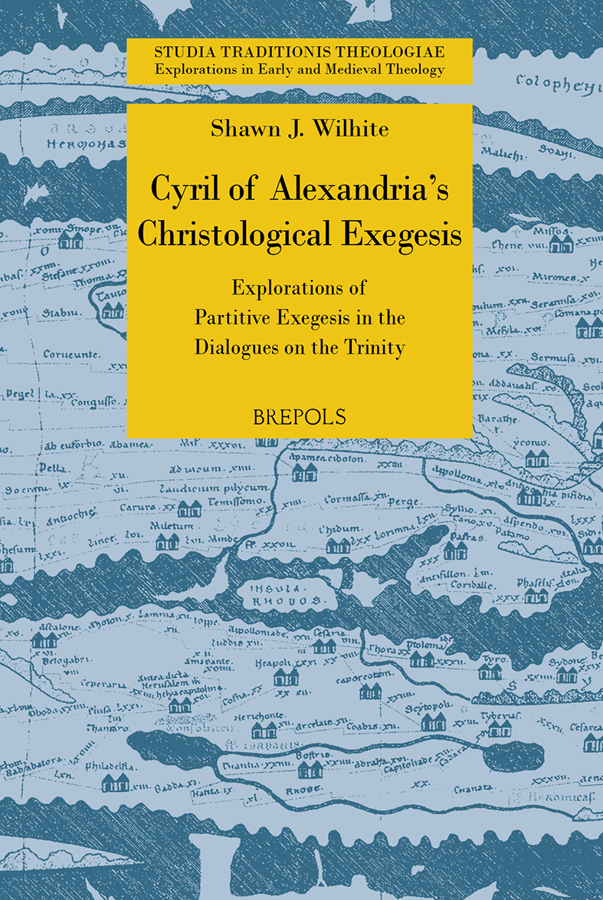
This book explores Cyril’s christological exegesis predominantly in his Dialogues on the Trinity.
Shawn J. Wilhite (Ph.D., Durham University) is Professor of New Testament and Early Christian Theology at California Baptist University and Affiliate Faculty in Early Christianity and Patristic Theology at Gateway Seminary.
Cyril of Alexandria’s scriptural exegesis is markedly trinitarian in scope and christological in focus throughout his writings. This book explores Cyril’s christological exegesis predominantly in his Dialogues on the Trinity. Early Christian reading culture consists of more than simply how one reads, but also considers who reads and to what end. Accordingly, Cyril envisions that an ideal reader undertakes trinitarian and christological exegesis with certain Nicene commitments. Whereas partitive exegesis is generally understood as a reading strategy whereby interpreters identify some texts as speaking of the Son qua divine and others as speaking of the Son qua human, Cyril offers two closely related christological reading strategies in the Dialogues: 1. epochal exegesis, and 2. partitive exegesis.
For Cyril, these methods of reading do not speak of there being two Sons, nor do they intend to divide the ineffable union of the two natures within the single incarnate Word. Cyril’s christological exegesis 1. identifies any given text as speaking about the Son in one of the three stages of the economy (i.e., epochal exegesis), and 2. subsequently identifies whether texts speak about the Son qua divine Word, or the Son qua incarnate Word during His oikonomia with the flesh (i.e., partitive exegesis).
Chapter 1: A Profile of Cyril’s Interpreter
Reading as a Spiritual Practice in Late Antiquity
A ‘Reading Profile in Cyril’s Exegetical Paradigm
Chapter Conclusions
Chapter 2: Epochal Scriptural Exegesis
The Tripartite Formula Before Cyril
Cyril’s Epochal Reading Strategy
Chapter Conclusions
Chapter 3: Trinitarian Discourse and Epochal Exegesis
The Philippian Hymn and the Son’s Career
Hebrews 1:6 and the Firstborn Entering the World
ΚΑΙΡΟΣ and the Economic Season of the Incarnation
Chapter Conclusions
Chapter 4: Partitive Scriptural Exegesis
The Origins and Trajectories of Partitive Readings
Cyril’s Partitive Reading Strategy
Chapter Conclusions
Chapter 5: Trinitarian Discourse and Partitive Exegesis
The Trinitarian Divine Life and the Son’s Incarnation
The Spirit’s Oikonomia and the Son’s Two Natures
Chapter Conclusions
Epilogue