Pre-Christian Religions, Rituals, and Beliefs in Central and Northern Europe
View publication
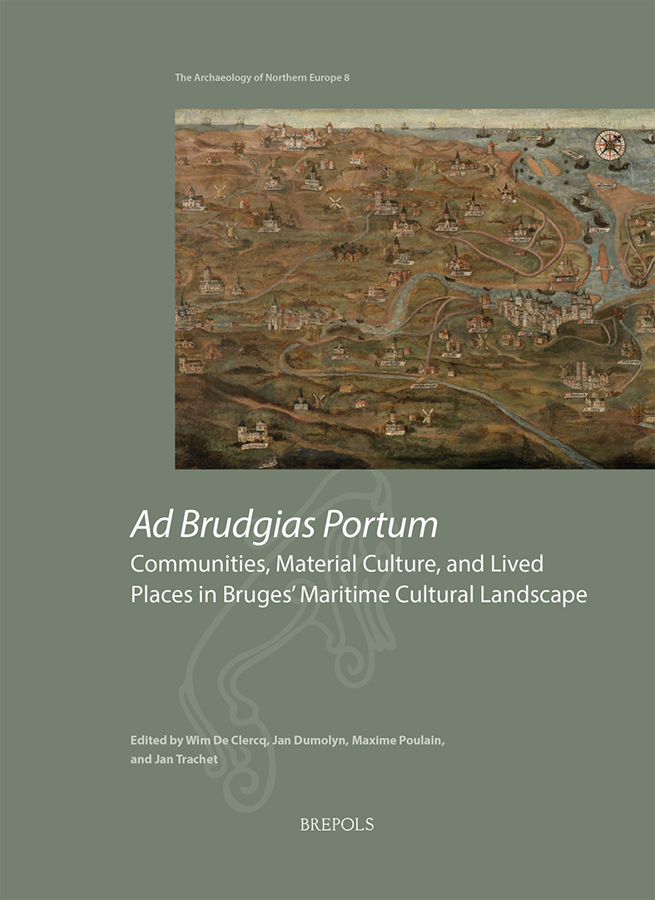
As an international gateway for goods, people and thoughts, the Bruges’ harbour system can be considered as a complex, dynamic maritime cultural landscape, with an interconnected network of small and larger ports, all lined along the Zwin tidal inlet. The interdisciplinary research presented in this book sheds a new light on this specific environment using a wide array of archaeological, historical and geomorphological methods.
Wim De Clercq is a full professor of Historical Archaeology at Ghent University, coordinating several research, PhD and post-doc projects. His research interests focus on the morphology and transformations in historical (Roman to early modern) rural and urban occupation, landscape and material culture in historic Flanders and on exchange-networks in late-medieval and early modern Europe. Furthermore, other interests lie with multidisciplinary methods for assessing and documenting archaeological features and archaeological heritage management policies.
Jan Trachet, after working in Flemish commercial archaeology for 1.5 years, has been part of Ghent University’s Historical Archaeology Research Group (HARG) since 2013. First, as a fellow of an FWO Research Project, he focused on the development of the medieval port zone between Bruges and the Zwin. Now, as a post-doc researcher, he is making a landscape-archaeological study of the painted maps of Pieter Pourbus.
Maxime Poulain completed his PhD titled 'The habits of war: early modern ceramics in Flanders' in 2016. This thesis focused on the archaeology of early modern Flanders, and particularly on the use of ceramics in the construction of identities. After some months in Flemish commercial archaeology, he now works as a post-doc at the Historical Archaeology Research Group (HARG) of Ghent University, continuing his work on medieval and early modern material culture.
Bruges was one of medieval Europe’s most important gateways, linking the North Sea world with the Baltic, the Mediterranean, and, indirectly, the Asian Silk Road. Through a complex port system of engineered tidal channels, outer harbours, and maritime communities, goods, people, and ideas could circulate across these vast distances. Such far-reaching connectivity fostered a distinctive cultural environment, visible not only in art and architecture but also in the material culture of everyday life.
What makes Bruges especially significant is the subsequent trajectory of this maritime environment. As the city gradually lost its central position in international trade, the land- and seascape that had sustained its gateway function fell into disuse, and much of the extensive outport infrastructure was abandoned. For later scholarship, however, this historical rupture has proved an unexpected asset. Just as the city of Bruges is often regarded as an exceptionally preserved jewel of medieval urban architecture, its associated harbour landscape constitutes a rare archaeological time capsule of medieval maritime connectivity, sealed beneath a thin layer of polder clay and largely untouched by later construction.
This volume offers the first interdisciplinary exploration of Bruges’ medieval port system as a maritime cultural landscape. Bringing together archaeology, history, geology, and material culture studies, it explores how ships, landscapes, commodities, and communities together sustained one of the most connected trading environments of the medieval world.
List of Illustrations
Introduction: Studying Bruges’ Outport System in its Wider Context
Wim De Clercq, Jan Dumolyn, Maxime Poulain, and Jan Trachet
1. Medieval Bruges’ Outport System along the Sincfal and Zwin
Wim De Clercq, Jan Dumolyn, Maxime Poulain, and Jan Trachet
2. Oppidum dardenbourg et portum ipsius. Aardenburg’s High Medieval Marine Connection with the Zwin: A status quaestionis
Dante de Ruijsscher
3. Money Deposits and Shipwrecked Saints: The Norwegian Presence in Medieval Bruges
Synnøve Midtbø Myking
4. Cities, Lords, and Merchants: Conflicting Interests in the Zwin Region and the Foundation of Sluis (c. 1280–1324)
Ward Leloup
5. The Application of Criminal Justice by the Water Bailiff and the Aldermen of Mude in Medieval Coastal Flanders
Kristiaan Dillen
6. Monnikerede and Hoeke: A Topographic Analysis of Two Deserted Late Medieval Harbours in Belgium
Jan Trachet
7. Monnikerede: Animal Products for Trade and Consumption in a Late Medieval Port Community in the Zwin Estuary
Anton Ervynck, An Lentacker, Wim Wouters, Wim Van Neer, Bart Damien, and Bieke Hillewaert
8. L bollez et eskelz pris un esterlin et dimi: Imports of Pottery, Glass, and Other Small Artefacts in the Zwin Area (1150–1500)
Bieke Hillewaert
9. New Tracks on Old Paths: New Light on Imported Medieval Spanish Ceramics in Flanders
Jaume Coll Conesa, Koen De Groote, Wim De Clercq, and Maxime Poulain
10. A Fifteenth-century Ship Graffito from Sluis in Context
Jeroen Vermeersch
11. Ballast Business: Ballast Management and Ballast Flows in the Medieval Zwin Harbour System
Wim De Clercq, Kristiaan Dillen, and Roland Dreesen
12. Stony Migrants in Bruges’ Port Landscape during Medieval to Early Modern Times
Roland Dreesen, Michiel Dusar, Vincent Debonne, and Timo G. Nijland