Power in Numbers
View publication
Prof. Yervand Margaryan is a professor of the Department of World History and Area Studies, Russian-Armenian University, Yerevan and Chief Editor of the peer-reviewed scientific journal Urbis et Orbis: Microhistory and Semiotics of the City. His research focuses on History of Hellenism and World-System Civilization Analysis. Several of his recent works on frontier studies are mentioned.
Dr Lusine Margaryan is a Doctor of Historical Sciences. She earned her PhD in 2015 and subsequently spent three years lecturing at the Russian-Armenian University. During this time, she also conducted research on Early Eastern Christianity as a member of the Research Laboratory of World-System and Geocivilization Analysis. Her research focuses on the early history of Christianity, with several of her articles exploring the role of the early Armenian Church in shaping national identity. From 2020 to 2022, she held a Marie Skłodowska-Curie Actions Individual Fellowship at University College Cork (UCC), where she conducted a comparative analysis of early Christianity beyond the traditional Eastern and Western borders of Christendom, particularly in Armenia and Ireland. She currently works as a lecturer at UCC.
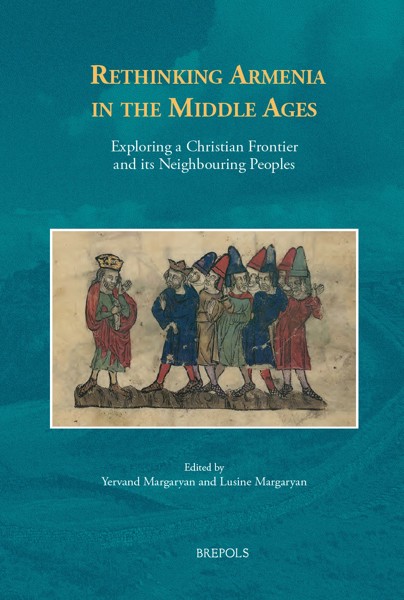
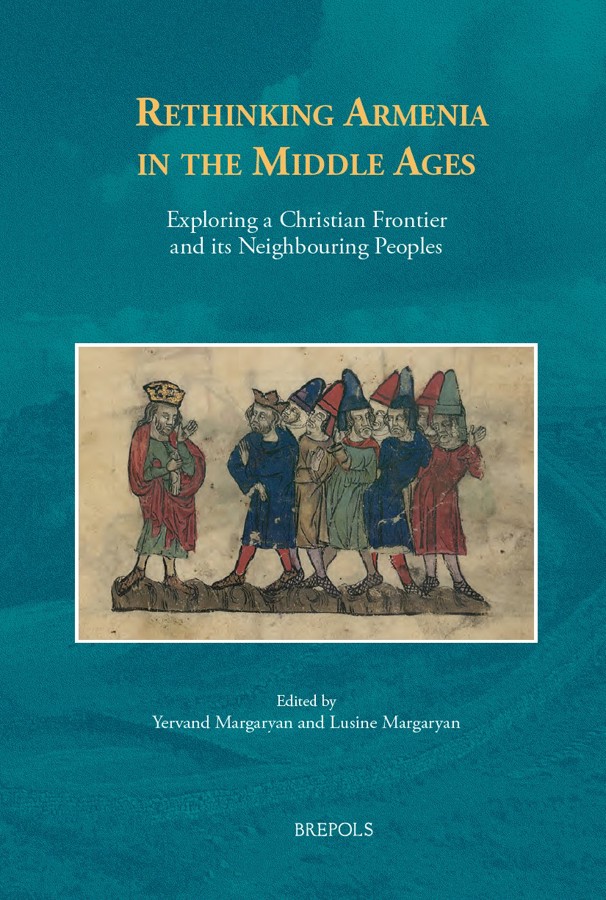
During the medieval period, Armenia occupied a distinctive position at the crossroads of major empires — Byzantine, Arab, Mongol, and Persian. Rather than pursuing territorial expansion, Armenian society developed a civilizational strategy grounded in cultural resilience and intellectual creativity. Through Christianization, the invention of a unique alphabet, and extensive translation movements, Armenians fashioned themselves into a learned culture capable of mediating between competing political and cultural worlds.
This volume explores how Armenia navigated life on the borders of successive empires by deploying what may be described as soft power avant la lettre — mobilizing religious identity, literacy, and cultural production as a means of survival and influence. The collected essays examine three interconnected themes: Armenian self-understanding at the margins of empire; the ways in which imperial centres perceived and engaged with Armenian difference; and comparative perspectives on Armenia alongside other frontier societies confronting similar historical pressures.
List of Illustrations
Author’s Preface
1. Introduction
2. Language and Writing as Political Tool: ‘Smart Power’ Against Barbarism
Yervand Margaryan
3. Paradoxes in the History of Christianity in Abkhazia in Late Antiquity and the Early Middle Ages
Beniamin Mailyan
4. Main Characteristics of Frontier Missionaries in Armenia and in the Other Peripheries of the Roman World
Lusine Margaryan
5. Missionary Activities of Ulfila and Mesrop Mashtoċ in the Peripheries of the Roman Empire: Translation of the Holy Texts into National Languages
Lusine Margaryan
6. Cilician Armenia: The Frontier of the Mediterranean World in the Thirteenth-Fourteenth Centuries
Zohrab Gevorgyan
7. Qarābāgh as a Breaking Point of the Contact Zone in the Middle Ages
Gor Margaryan
8. Composite Monarchy: An Applicable Concept for Medieval Armenia?
Yervand Margaryan and Anastasia Palamarchuk