Journal for the History of Knowledge 6 (2025)
View publication
Special Issue Editors: Joris Vandendriessche, Anna Cabanel, and Kaat Wils
Scholarly codes of conduct – comprising both explicit rules and tacit social norms – play vital roles in shaping ethical behavior, professional standards, and processes of inclusion and exclusion within academic and scientific communities. These codes can be formal, explicitly defined by recognized scientific bodies, or informal, consisting of unwritten expectations that govern scholarly socialization and recognition. Understanding both registers is crucial for analyzing the social fabric of scholarly communities and the situated character of scientific knowledge production.
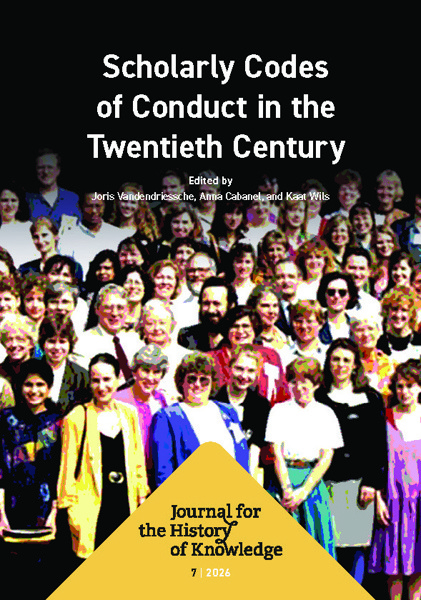
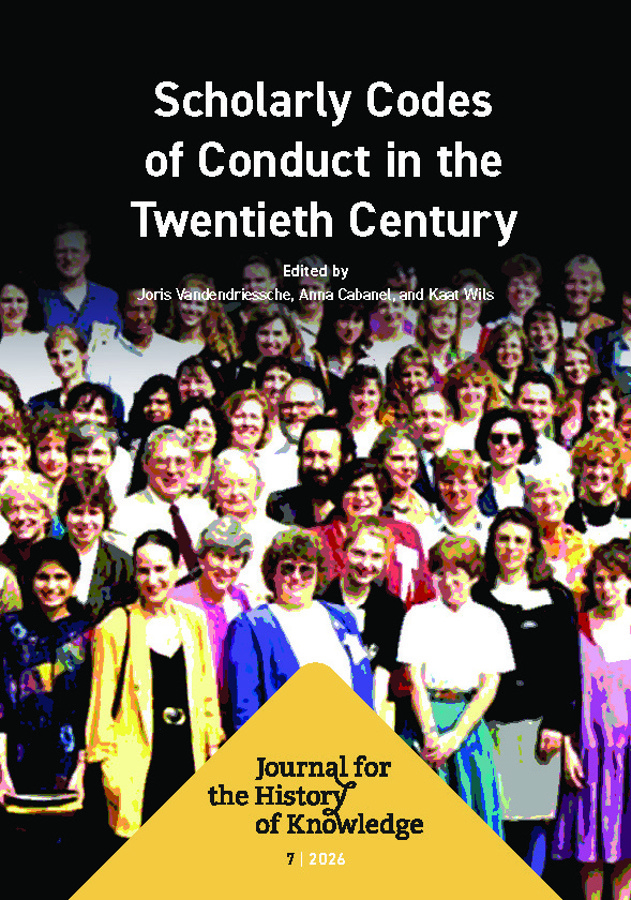
Throughout the twentieth century, as science became more globalized and accessible to new social groups, scholarly codes of conduct evolved in response to broader socio-political transformations – from shifting gender relations and decolonization movements to the rise of transnational scientific institutions. Spanning a wide geographical range, this special issue examines how such codes transcended borders, underwent interpretation, encountered resistance, and were actively contested. Drawing on sources such as conference photographs, institutional charters, and journal author guidelines, the contributions together illuminate how formal and tacit codes of conduct structured scholarly participation and legitimacy across diverse institutional and political contexts.
In doing so, this special issue shifts attention from the content of knowledge to its conditions of production, contributing to current debates in the history of knowledge by bringing into view the formal rules, tacit norms, and acts of contestation through which scholarly communities were, and continue to be, made and unmade.