Languages of Love and Hate
View publication
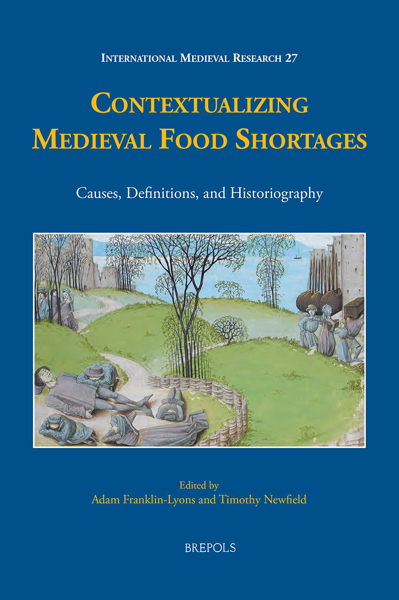
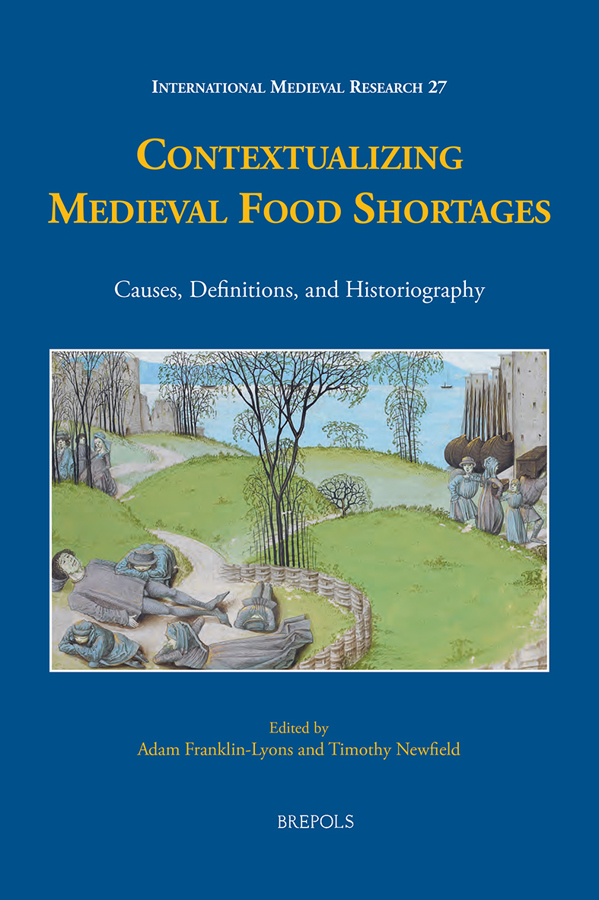
Drawing on history, medieval studies, archaeology, and the natural sciences, this volume presents nine new histories of medieval food shortages and two papers that set the stage for the next generation of work of famine in the Middle Ages.
Adam Franklin-Lyons is Associate Professor of History at Emerson College.
Timothy Newfield is Associate Professor of History and Biology at Georgetown University
Famine is a well-known subject to many medievalists. New approaches and evidence, however, continue to expand our possible knowledge about food shortage in the Middle Ages. The studies in this volume develop medieval famine research along two paths, one new, and one newly expanding. The first investigates how medieval actors themselves described, understood, and hence responded to food shortages, using sources across the timespan of the Middle Ages. The second explores the intersections between historical climatology, paleoclimatology, and food production.
The nine histories of food shortage that the volume presents demonstrate that medieval actors responded according to their understanding of the disasters they faced, in sometimes sophisticated and in sometimes contradictory ways, and that we have much to gain by adopting a rigorous approach to both the written evidence for subsistence crises and weather patterns and to the novel scientific evidence for past climate change. An exhaustive historiographical survey of the subject and an introduction help set the stage for a next generation of work on famine in the Middle Ages. From the crises of Edward II’s reign to those of Charlemagne’s, from Scandinavia to Spain, the volume expands the way we think about substance crises throughout medieval Europe.
Part I. Famine Basics
Introduction
ADAM FRANKLIN-LYONS and TIMOTHY NEWFIELD
Surveying Medieval Famines: Paradigm Shifts and New Developments
PERE BENITO I MONCLÚS
Part II. Interpreting Famine in Early Medieval Texts
Food Shortages, Famines, and Conceptions of Disaster in John Malalas
JONAS BORSCH
Fighting Famine: Environment, Agriculture, Intellectual Knowledge, and Charlemagne’s Crisis Management
STEPHAN EBERT
Drought, Famine, and Plague in Adso of Montier-en-Der’s Miracles of St Mansuy
CONOR KOSTICK
Part III. Interpreting Famine in Late Medieval Texts
Interpreting Famine: Human and Divine Causation in Fourteenth-Century Valencia
ADAM FRANKLIN-LYONS and POL SERRAHIMA I BALIUS
Dearths, Famines, and Mortality Crises in the Crown of Aragon (1200–1275)
ANTONI RIERA I MELIS
Identifying Famine in Medieval Sources: Early Fourteenth-Century England
PHILLIPP R. SCHOFIELD
Part IV. Medieval Famine, Paleoclimatology, and ‘Environmental Triggers’
Food Shortages and Climate in Carolingian and Post-Carolingian Europe, 750–950
TIMOTHY NEWFIELD and INGA LABUHN
Subsistence Crises, Mass Mortality, Epidemic Disease, and Drought in Early Medieval Europe and the Near East, 750–1000 CE
FRANCIS LUDLOW and CONOR KOSTICK
Interlocking Climate and Society: Climate and Harvest Failure in Sixth-Century Scandinavia
INGAR MØRKESTØL GUNDERSEN and EVELIEN VAN DIJK
Index