Strategies of Identification
View publication
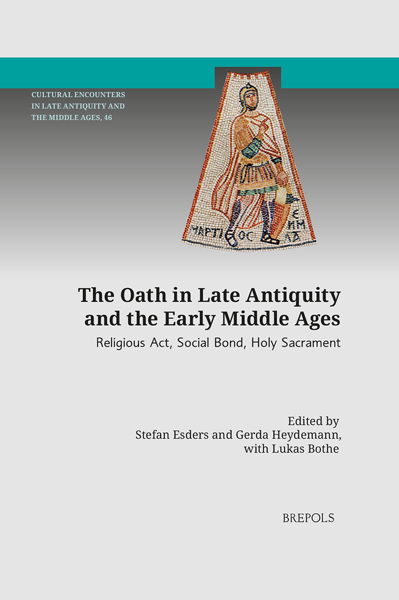
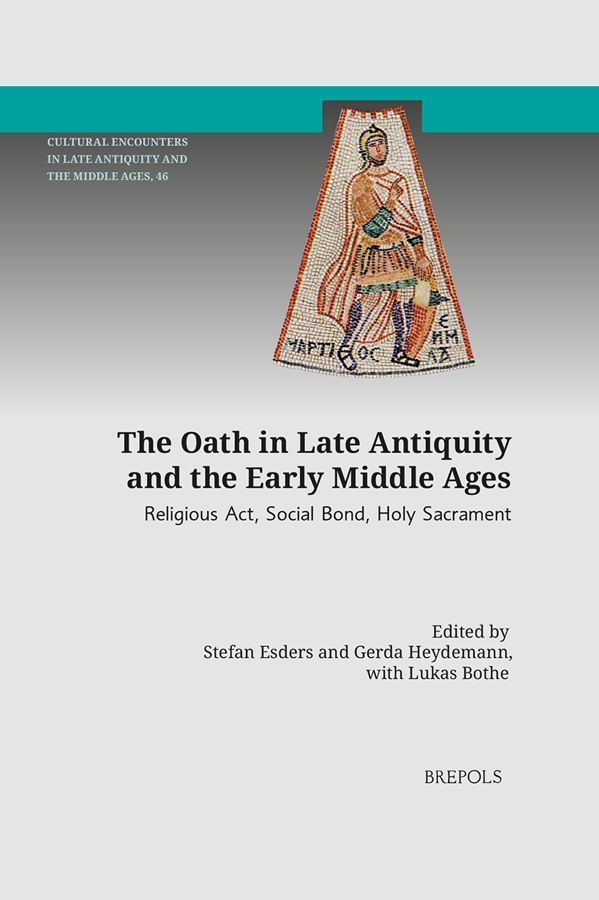
Focusing on the uses of oaths in Christian contexts between the first and eleventh centuries, and on theologians' reflections on swearing of oaths, the contributions to this volume take a closer look into the inner fabric of late antique and early medieval societies and their religiously-shaped conceptions of political loyalty and social cohesion.
Stefan Esders is professor for the history of Late Antiquity and the early Middle Ages at Freie Universität Berlin. His work focuses on the types and legal and social functions of oaths in the late antique and early medieval periods.
Gerda Heydemann is professor of the history of Late Antiquity and the early Middle Ages at Freie Universität Berlin. Her work focuses on the reception of the Bible and the social functions of biblical exegesis.
In societies both past and present, oaths appear to be an almost universal phenomenon and an indispensable tool for creating social relations and obligations. In Christianity, however, their use is characterized by a fundamental tension: in the Sermon on the Mount, its founder explicitly forbade the swearing of oaths. Despite Jesus’ prohibition, the period between the fourth and the eleventh centuries witnessed an enormous spread and diversification in the use of oaths. This process generated a great deal of reflection and debates on the swearing of oaths, on their legitimacy, significance, and meaning, and also on their limits.
This volume provides a history of the oath in the West, from classical Rome to the Carolingian era. The contributions deal with the Biblical foundations of and Patristic attitudes towards oath-swearing, before moving to Late Antiquity, when Christianity came to dominate the discourse on the topic. The volume then focuses on the ninth century, when theologians began to regard the oath as a holy sacrament, discussed its relation to other sacraments, and reflected on oath-bound political loyalty — a topic that played a major role in the Investiture Controversy.
In surveying the use and theory of oaths in Christian contexts between the first and eleventh centuries, this volume offers a new perspective on the inner fabric of late antique and early medieval societies and their religiously-shaped conceptions of political loyalty and social cohesion.
Introduction
STEFAN ESDERS and GERDA HEYDEMANN
I. The Christian Oath in Roman Society
Jesus’ Teachings on Oaths in their Ancient Context
BERND KOLLMANN
The Shape of Early Christian Fidelity: Swearing and Repenting in the Face of Uncertainty
KEVIN UHALDE
II. Redefining Social Relations in an Age of Transition
The Human Condition: Condicio and Origo in Augustine (Letters 10*, 20*, and 24*)
SUSANNA ELM
‘Alien and inappropriate’? Vigilius of Rome, the Council of Constantinople (553), and the Necessity of Swearing Oaths
MICHAEL WUK
Making and Breaking Agreements in Early Medieval Iberia: Oaths, Pacts, and the Failure of Social Consensus
JAMIE WOOD
III. Fidelity and Political Theology
Rethinking the Oath of Fidelity during the Reign of Charlemagne
JENNIFER DAVIS
Oath–Taking and Perjury in the Annals of St. Bertin: Tracing the Political Thought of Hincmar of Reims
HEIKO BEHRMANN
The End of the Carolingian Oath of Loyalty in the Tenth Century
IAN WARD
IV. Framing the Oath in Early Medieval Theology, Exegesis, and Canon Law
Augustine, Wilfrid, and the Priest’s ‘Oath’ in the Laws of Wihtræd
STEFAN JURASINSKI
‘Ego autem dico vobis: nolite omnino iurare’: Carolingian Interpretations of the Prohibition to Swear (Matthew 5. 33–37)
GERDA HEYDEMANN and HEIKO BEHRMANN
Between the Fathers and the Masters: The Centrality of Oaths to the Development of an Episcopal Understanding of Marriage in Carolingian Europe
OWEN PHELAN
Dissolving the Oath (7th–11th centuries)
STEFAN ESDERS