
Altérité et déviance religieuse
View publication
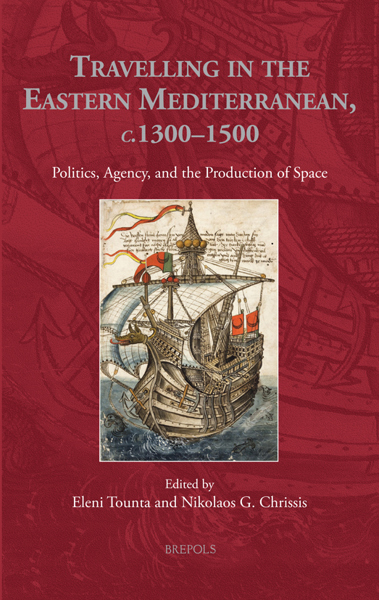
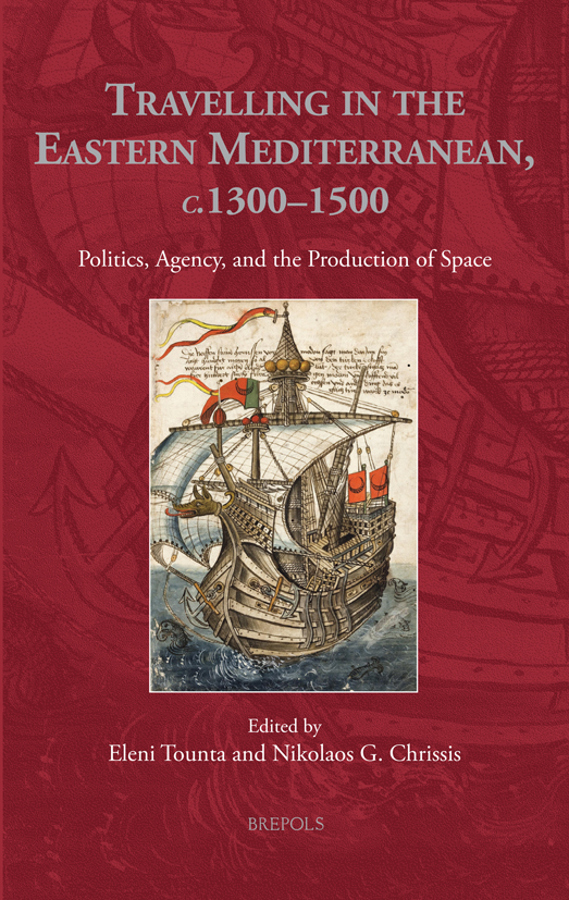
The volume examines the agency of Latin, Byzantine and Muslim travellers to the production of politics, space and cultural memory in the eastern Mediterranean during the Late Middle Ages.
Eleni Tounta, full professor, Aristotle University of Thessaloniki
Nikolaos G. Chrissis, assistant professor, National and Kapodistrian University of Athens
Travel and mobility for political, military, economic, religious, and intellectual purposes were crucial in shaping the medieval eastern Mediterranean through the interaction of travellers with the diverse cultures of the region (Latin, Muslim, Byzantine, etc.). This volume aims to shed light on the agency of travellers to create politics, space, and cultural memory in the period c. 1300 to c. 1500, an era in which transcultural contact in the eastern Mediterranean world was reshaped through developments such as the Ottoman expansion, while new conceptual tools of the Renaissance period allowed both individuals and communities to be perceived and described in different ways.
Bringing together case-studies of travel accounts and other relevant texts by authors with differing backgrounds and wide-ranging life experiences, this volume aims to shed light on this aspect of cultural history through the exploration of four key themes: individuality and the shaping of the self as traveller and author; the production of space, in particular via critical engagement with the modern analytical tools of orientalism and colonialism in medieval studies; the intersections of these themes with the activities of pilgrims and merchants; and the way in which travellers and their narratives interacted with both their own and foreign communities. This approach offers fresh insights in our understanding of mobility, identity, and cultural interaction in the late medieval eastern Mediterranean.
List of Illustrations
Travelling in the Eastern Mediterranean, c. 1300–1500: An Introduction
Eleni Tounta and Nikolaos G. Chrissis
Part I. The Traveller and the Invention of the Authorial Self
1. Niccolò da Poggibonsi and Felix Fabri in Jerusalem: Positionings of the Self in the Sacred Space, and through the Religious Other
Karl Lysén
2. Pero Tafur in the Eastern Mediterrrean, 1437–1438
Jacques Paviot
3. Jean de Tournai, Pilgrim, Traveller, Writer
Marie-Adélaïde Nielen
Part II. Space, ‘Orientalism’, and Early Colonialism
4. Ethnographic Discourse and Colonial Politics: Crete’s Cultural Space in Cristoforo Buondelmonti’s Descriptio Insulae Cretae
Eleni Tounta
5. Propagating the East: Defining and Delimiting the Orient in the Works of Marino Sanudo Torsello and Philippe de Mézières
Νikolaos G. Chrissis
6. French Crusading and the Shaping of the Eastern Mediterranean
Loïc Chollet
7. Cyprus from Inside and Out: Recounting Cyprus during the Late Medieval Period
Malika Dekkiche
Part III. The Experience of Travel in Pilgrim Accounts
8. Seascapes of Medieval Pilgrimages (Thirteenth–Fifteenth Centuries)
Nicola Carotenuto
9. From Mantua and Ferrara to the Holy Land: Mediterranean Itineraries of Princely Pilgrimage in the Late Fourteenth and First Half of the Fifteenth Century
Sebastian Kolditz
10. Remembering the Crusades on the Late Medieval Jerusalem Pilgrimage
Nickiphoros I. Tsougarakis
11. Terra Christianorum Ultima: Pilgrims, Shrines, and Maritime Routes in Cyprus during the Late Middle Ages
Ourania Perdiki
Part IV. Narrativity and Local Identities
12. Physical and Spiritual Dangers of Travelling the Mediterranean: Felix Fabri’s Evagatorium (1486) and Die Sionpilgerin (1492)
Lilli Hölzlhammer
13. Island-Hopping Hospitallers in the South-Eastern Aegean, 1309–1522: A Contribution to the Making of a Dodecanese Identity?
Simon Phillips
14. Travelling through ‘Velachia-Bassa’ in the Second Half of the Fifteenth Century
Alessandro Flavio Dumitrașcu
15. A Humanistic Discourse on Interacting with the Urban Space: Manuel Chrysoloras on Rome
Yannis Smarnakis
Index