Les manuscrits carolingiens
View publication
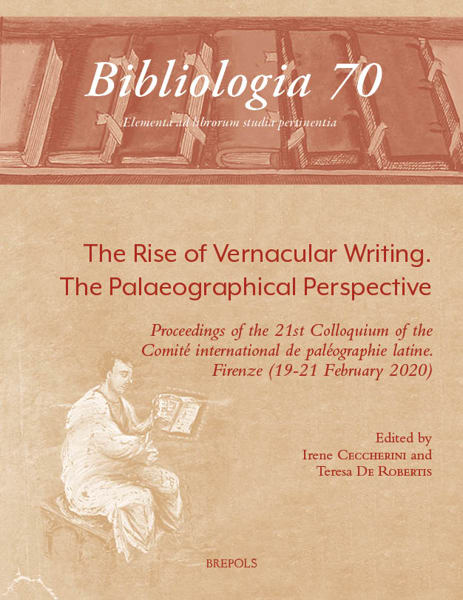
The papers collected in this volume offer an overview of the scripts and material forms that, in different linguistic areas, characterised the earliest and most experimental phases of the process that led the various languages in Europe to acquire a written dimension.
Irene Ceccherini is Associate Professor of Palaeography at the University of Florence
Teresa De Robertis is Full Professor of Palaeography at the University of Florence
The process that led the various languages of Europe to acquire a written dimension was neither simple nor linear: the chronology was different and the occasions, strategies and types of evidence were different. This field of research has always been privileged by language historians and philologists, but palaeographers made and can make an original and decisive contribution not only to dating or localising written evidence, but above all to interpreting the strategies and significance of this conquest. The papers collected in this volume offer an overview of the scripts and material forms that, in different linguistic areas, characterised the earliest and most experimental phases of this process.
Il percorso che ha portato le varie lingue d’Europa a conquistare una dimensione scritta non è stato semplice né lineare: diversa la cronologia e diverse le occasioni, le strategie, le tipologie delle testimonianze. A questo campo d’indagine, da sempre privilegiato dagli storici delle lingue e dai filologi, la prospettiva paleografica ha dato e può dare un contributo originale e decisivo non tanto per la datazione o localizzazione delle testimonianze, ma soprattutto per l’interpretazione delle modalità e del significato di tale conquista. I contribuiti raccolti in questo volume offrono una variegata rassegna delle scritture e delle forme materiali che, in diverse aree linguistiche, hanno caratterizzato soprattutto le fasi più antiche e sperimentali di quel percorso.
Irene Ceccherini, Teresa De Robertis, Premessa / Foreword
Jesús Alturo,Tánia Alaix, Le prime manifestazioni scritte in catalano. Cause, origini, caratteristiche ed espansione di un nuovo sistema grafico
Martina Pantarotto, La scrittura a mosaico: inserti in volgare nei testi della predicazione. Aspetti grafici e perigrafici a confronto
Hana Pátková, Czech language and Latin alphabet in the late Middle Ages
Kathryn Peak, The Boke of Counfort of Bois. Its place in the codex and its role in a shared scholarship
Nicoletta Giovè Marchioli, Carlo Tedeschi, Le scritture esposte in volgare: dalle tracce alla diffusione. Note paleografiche
María Encarnación Martín López, La emergencia de los escritos en lengua vulgar. Factores y actores en las inscripciones hispanas (ss. XI–XIII)
Maria Careri, Dal latino alle lingue romanze. Abbreviare vibranti
Viola Mariotti, Dominique Stutzmann, Les abréviations dans les manuscrits français du XIIIe siècle. Analyses statistiques
Andreas Nievergelt, Zu den Diakritika in der Schriftgeschichte des Althochdeutschen. Der Apex
Marcella Lacanale, Gli accenti nei manoscritti romanzi del XII secolo
Filipa Roldão, Joana Serafim, Les chartes de franchises au milieu de l’émergence du portugais. Aspects graphiques et matériels
Jürgen Wolf, Form – Funktion – Schrift. Buch- und Schriftproduktion in der Lübischen Kanzlei von 1230–1330
Diego Belmonte Fernández, Escribir en latín y en romance. Documentos de don Remondo de Losana, obispo de Segovia y de Sevilla (1250–1286)
Indici