Le bouclier et l'épée
View publication
Roberto Evangelista is researcher at ISPF CNR since November 2017. His scientific production deals with the Early-Modern Philosophy. He is awarded with Ph. D. in Political Philosophy and History of Political Thought at Padua University, with a thesis about the relation between imagination and rationality in Spinoza’s political philosophy. He took part in numerous conferences in Italy and abroad.
Luisa Simonutti is Research Director at ISPF-CNR. She is Research Associate at Centre for Renaissance and Early Modern Studies-CREMS, University of York. Visiting research fellow at the Department of Mathematics and Computer Science of the Chapman University, Orange, CA. Member of the Executive Committee of The John Locke Society. Associate editor of Studi lockiani. Ricerche sull’età moderna. She has been Visiting professor at EPHE, Paris, at ENS, Lyon, and at IHR University of Geneva, and Visiting research fellow at the Bodleian Library, Oxford and at the FMSH, Paris.
The aim of the volume is to publish a selection of the most significant contributions on a topic that, although central to Locke's thought, lacks a cross-cutting look that touches on various disciplines that not only interested the philosopher, but were also central themes analysed in his works.
The selection will present the most innovative research on John Locke's thought on epistemology and various sciences and will collect studies on aspects of his philosophy and political thought. Some chapters will be devoted to the philosopher's ideas on chemistry, botany, economics, etc. in the 17th and 18th centuries.
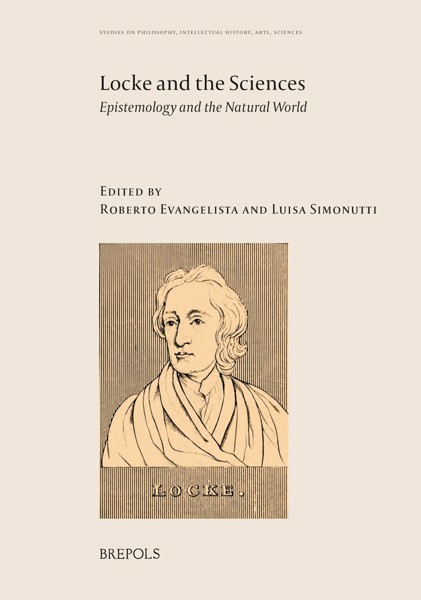
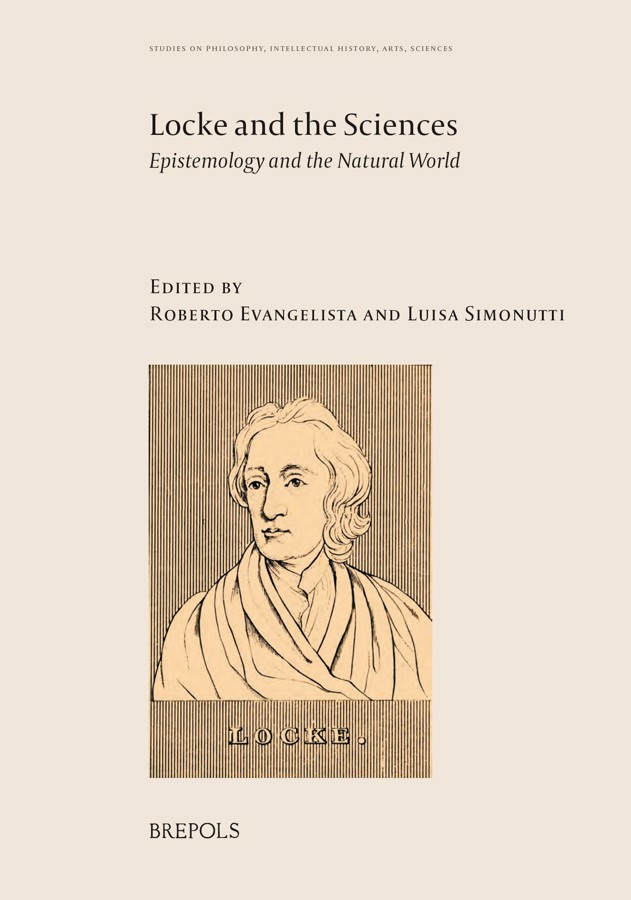
Roberto Evangelista and Luisa Simonutti, Locke and the Sciences
Part 1: Locke, Ontology, and the Life Sciences Shelley Weinberg, Descartes and Locke on the Certainty of Knowledge
Michael Jacovides, Locke and Descartes on Unavoidable Thoughts of Essence
Igor Agostini, Descartes and Locke between Scepticism and Egoism
Catherine Dromelet, Kathryn Tabb, Charles T. Wolfe, Locke and Early Modern Doctrines of the Association of Ideas
François Duchesneau, Locke on the Epistemic Conditions of a Science of Living Beings
Konstantinos Bizas, John Locke’s Remedial Use of Language
Part 2: Locke and Natural Philosophy Patrick J. Connolly, Locke on the Proper Use of Hypotheses in Natural Philosophy
Silvia Parigi, Locke’s Theory of Vision: What Molyneux’s Blind Man Saw and Locke Missed
Anat Schechtman, Locke, Humboldt, and the Science of Colour
Edward Slowik, The Evolution of Locke’s Theory of Absolute Space
Part 3: Locke, Epistemology, and Empirical Science Philippe Hamou, Locke et la chymie
Fabrizio Baldassarri, John Locke’s Philosophical Botany
Graziano Gentili, Luisa Simonutti, Vincenzo Vespri, Locke on the Epistemology of Money and Economics
Nikola Krestonosich, The Epistemological Counterpart of Locke’s Defence of Religious Toleration
Roberto Evangelista, Law of Nature without Science of Nature: Locke’s Political Epistemology
Conclusion: Roberto Evangelista and Luisa Simonutti, Locke and the Plurality of Knowledge
Index