Rhetoric and Renewal in the Latin West 1100-1540
View publication
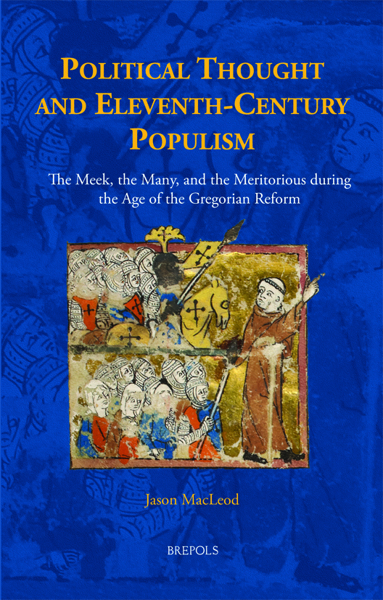
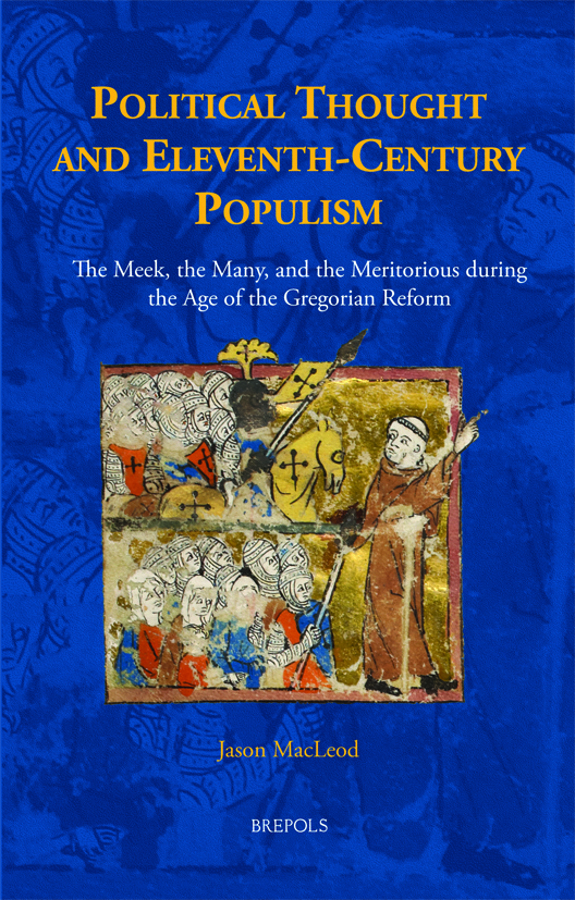
The first comprehensive study to analyse the eleventh century populist movements in the context of medieval political thought, revealing the earliest textual basis of political power for so-called common peoples in the medieval West.
Jason MacLeod earned his Ph.D. in European History at Boston University in 2024, with a focus on medieval political thought and the history of the medieval church. He earned his master’s degree in military history at Norwich University in 2010. He is also a twenty-year veteran of the United States Marine Corps. Jason lives in New Hampshire with his wife and five children
The populist movements of the eleventh century (the Peace of God, Gregorian Reform, and the First Crusade) did not simply mark an important pivot in the greater history of the West. Taken together, they also represent a fascinating phenomenon unto themselves. R. I. Moore characterized them as the products of a ‘bizarre but temporarily effective’ alliance of the clergy and people, while Richard Landes and Thomas Head claimed that they heralded the ‘emergence of the crowd on the stage of European affairs.’ This book is the first comprehensive study to consider the textual records of that alliance/emergence from an intellectual perspective. Through an in-depth analysis of ten eleventh-century writers, the author Jason Macleod argues that a distinctive strand of political thought entwines its way through the textual legacy of these movements.
From relatively obscure monastic hagiographers such as Letaldus of Micy to Pope Gregory VII to ‘best-selling’ crusade chroniclers like Robert the Monk, eleventh-century clergymen framed the populist fervour of their age in discernible patterns for contemporary consumption, while leaving a textual legacy rich with political implications for the future. While optimistic reformers romanticized the empowerment of the Meek and the Many in shades of vox populi, vox Dei, more sceptical observers pragmatically recast such activity as dangerous exemplars of God’s wrath employed to correct elites’ behaviour. Ultimately, this book contends that the body of political thought considered herein represents the earliest textual legitimization of political power for those inherently disempowered by lack of noble birth, wealth, or education in the medieval West.
Introduction
Part I. The Peace of God Literature c. 975–1050
Chapter 1. Letaldus of Micy
Chapter 2. Ademar of Chabannes
Chapter 3. Rodulfus Glaber
Chapter 4. Andrew of Fleury
Part II. The Gregorian Reform Literature c. 1050–1095
Chapter 5. Humbert of Silva Candida
Chapter 6. Gregory VII
Chapter 7. Andrew of Strumi
Part III. The First Crusade Literature c. 1095–1125
Chapter 8. Raymond of Aguilers
Chapter 9. Robert the Monk
Chapter 10. Guibert de Nogent
***
Conclusion
Bibliography
Index