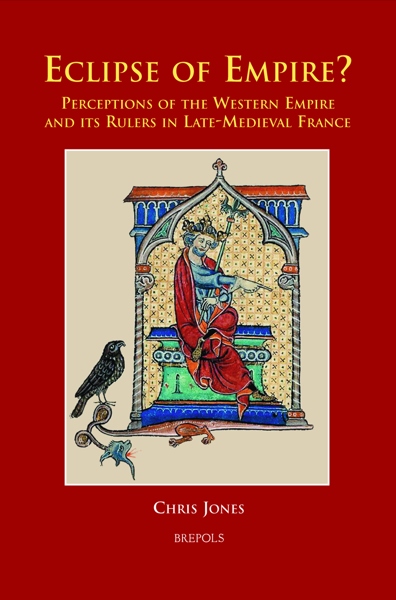
Eclipse of Empire?
View publication
This volume brings together a diverse group of essays that evaluate the state of research regarding the evolving inter-relationships of Christians, Jews, Muslims, and 'pagans' within premodern Iberia, North Africa, and the Atlantic World.
Thomas W. Barton is Professor of History at the University of San Diego and a Fellow of the Medieval Academy of America. His publications have received awards from the Medieval Academy of America, American Historical Association, Association for Jewish Studies, and the Association for Spanish and Portuguese Historical Studies. His next two books, Constructing Christendom: Conquest and Diocese Formation in Medieval Iberia and Diocesan Dominion: The Quest for Episcopal Authority in Medieval Iberia, are in press with Penn Press and Penn State University Press, respectively.
This volume brings together nine essays that critically assess the current state of research on the evolving interrelations among Christians, Jews, Muslims, and ‘pagan’ non-Christians in late medieval and early modern Iberia, North Africa, and the emerging Atlantic world. Drawing on a range of local contexts, analytical approaches, and methodologies, two groups of essays examine how ethno-religious groups coexisted within Christian-ruled societies — while also offering provocative comparative insights into Muslim-ruled contexts. These essays explore the factors that sustained such pluralistic systems, the forces that precipitated their transformation or collapse, and how later generations interpreted these histories to shape subsequent policies. A third group focuses on the wider implications of these developments, particularly in Iberia’s expanding North African and Atlantic frontiers, where Christian agents selectively invoked shared historical experiences to construct classificatory systems used to justify the appropriation, conversion, or enslavement of non-Christian peoples. Collectively, the volume interrogates issues of diversity, inclusion, and exclusion that remain as relevant today as they were in the premodern Mediterranean.
Introduction
THOMAS W. BARTON
Part I. Coexistence and Cataclysmic Violence
From Generation to Generation: Jewish Inheritance Practices and Christian Notarial Culture in the Crown of Aragon, 1250–1391
SARAH IFFT DECKER
Big Trouble in Lower Aragon: Mudéjar Confidence and the Limits of Royal Authority
BRIAN CATLOS
Inter-Communal Violence and Human Contagion: 1391 and its Precedents
MICHAEL SCHRAER
Cataclysmic Comorbidities: Muslims and the Contagious Violence of 1391
THOMAS BARTON
Part II. Crafting Discourses about Ethno-Religious Identity and Interaction
Rebels and Renegades: Lisān al-Dīn ibn al-Khaṭīb (d. 1374) and the Christians of Medieval Granada
MOHAMAD BALLAN
Ávila for the Queen: War and Fiscal Violence against Ethno-Religious Minorities in Late Medieval Castile
TEOFILO F. RUIZ
Reimagined Cityscapes: Sites of Exchange, Urban Expansion, and Expunged Diversity in Iberian Chapbooks
ROXANNA COLÓN-COSME
Part III. Interactions and Ruminations on the Edges of the Known World
Cities of the Sun: West African Urban Spaces, Commerce, and Ibero-African Interaction
ANDREW DEVEREUX
Demanding Justice ‘for the natives of the island of La Gomera’: Contested Slaving Zones and Canary Islander Communications Networks across the Mediterranean Atlantic
DEBRA BLUMENTHAL
Index