Equal Temperament in the Eighteenth Century
View publication
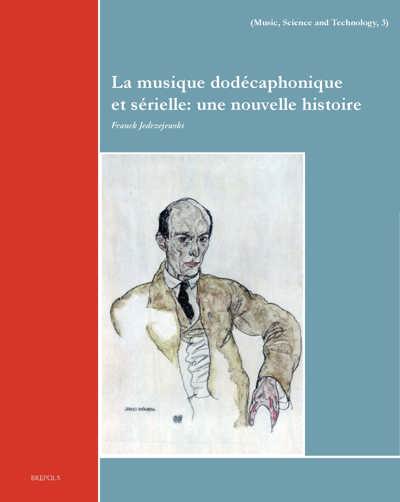
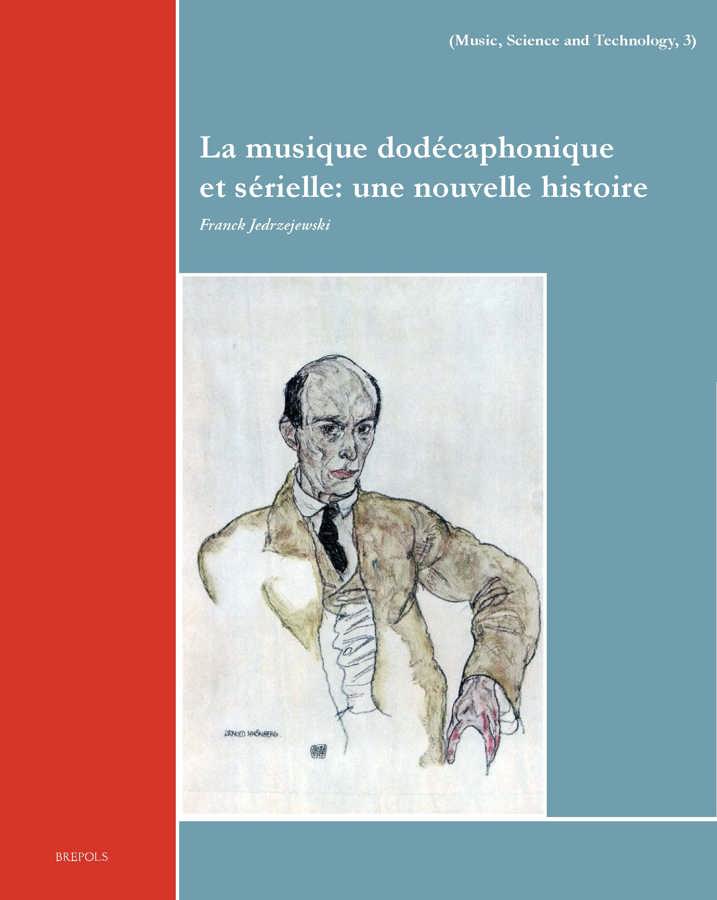
Une histoire de la musique dodécaphonique et sérielle, initiée par Arnold Schönberg en 1921 lorsqu'il propose une série de douze sons égrenés dans la Cinquième pièce pour piano.
"Jedrzejewski’s Une nouvelle histoire stands out as a rare and substantial intervention in musicological discourse in the third decade of the twenty-first century. This ambitious, single-authored retrospective on the history of twelve-tone and serial music is striking not only for its conceptual scope but also for its remarkable geographical breadth, which spans Europe, North America, South America, the former Soviet Union, East Asia, and Africa, mentioned in a minimalist brushstroke." (Diau-long Shen, in Revue de Musicologie, 111/2, 2025, p. 471)
Franck Jedrzejewski is a mathematician and has doctorates in philosophy and musicology. A researcher with the French Atomic Energy Commission, he has been the Vice-President of the International College of Philosophy, where he is now the director of programs. He has published twenty books in philosophy, and in music theory His research is highly interdisciplinary and encompasses topics in music theory, mathematics, atonality and Russian avant-garde music. He currently teaches at Université de Paris-Saclay.
At the beginning of the twentieth century, Arnold Schönberg proposed a new way of composing in his Five Pieces for Piano that proceeded from a “series of 12 tones which have no relation to each other”. A twelve-tone composition by René Leibowitz that was popularized in France originated from the small town of Mödling — a suburb of Vienna where Schönberg lived, and the site of a musical revolution. Composers who used this technique appropriates the series and adapted the principles of composition to suit their own sensibilities. While some divided the series into (more or less) autonomous fragments, others extended the series to include all musical parameters; still others constructed series of more than twelve tones or invoked matrix-based calculus. This book chronicles a technical history of serialism and highlights narratives that have not yet appeared in published literature by examining theoretical texts in numerous languages, some by composers whose works are translated here for the first time. This book constitutes the first major synthesis of the history of serialism published in French.
Introduction. Une nouvelle histoire
Chapitre 1. La série dodécaphonique
Chapitre 2. Naissance du sérialisme
Chapitre 3. Combinatoire et algèbre des séries
Chapitre 4. Diffusion de la série
Chapitre 5. Métamorphoses de la série
Chapitre 6. Propagation du sérialisme
Conclusion
Annexe A. Répertoire des séries
Annexe B. Tropes de Josef Matthias Hauer
Annexe C. Séries omni-intervallaires
Annexe D. Séries de Link-Carter
Annexe E. Nœuds dodécaphoniques
Bibliographie
Index