
Holy Laboratory
View publication
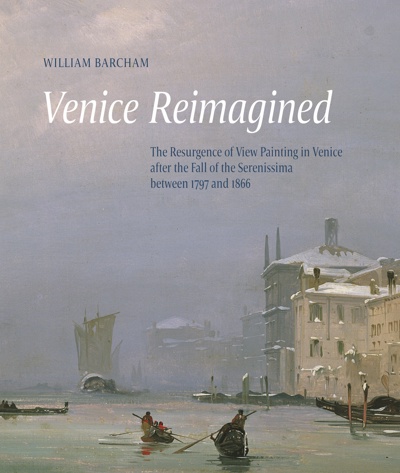
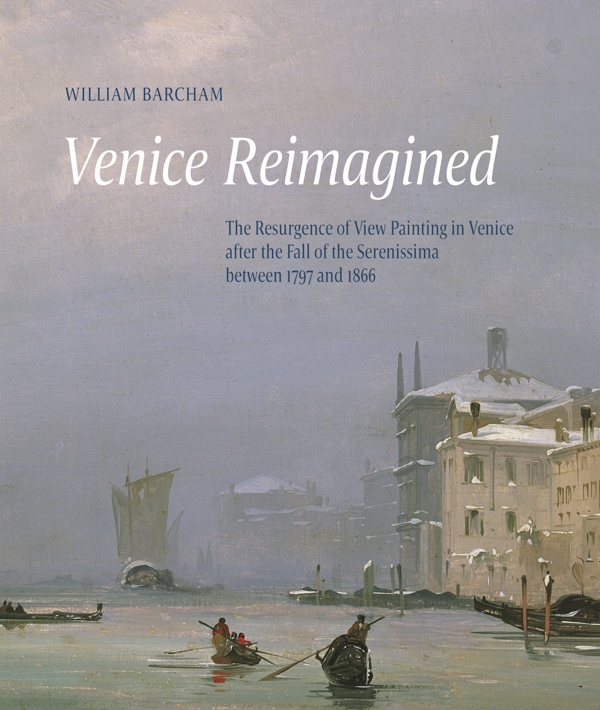
This book explores how nineteenth-century Venetian viewscapes deviated from those of Antonio Canaletto and Francesco Guardi of the preceding one hundred years.
William Barcham has written books, articles and exhibition essays on eighteenth-century art in Venice, especially on Giambattista Tiepolo, Antonio Canaletto and their contemporaries. Author of a biography of the Venetian cardinal Federico Cornaro, Bernini’s patron for the St. Theresa Chapel in S. Maria della Vittoria, Rome, he also collaborated with Catherine Puglisi on a monograph on the figure of the Man of Sorrows in the Venetian artistic tradition (Brepols 2019).
This book is the first comprehensive study of Venetian viewscapes painted between 1797, when the Republic of Venice fell to Napoleon’s armies, and 1866, the date of the city’s annexation into the new Kingdom of Italy. By examining the works of an international array of artists—nearly sixty men and one woman—from Venice and Europe, the U.S. and South America, and studying their art against Venetian political history of the period, I open a vivid panorama onto the artistic response to one of the world’s unique cities during foreign occupation, an era of national uprisings and the Industrial Revolution. Departing from Canaletto’s and Guardi’s viewscapes of the previous century, those of the nineteenth century yield many surprises. Some artists like Richard Bonington depicted old sites but from novel vantage points; Ippolito Caffi and others portrayed neighborhoods never before considered; watercolors of anonymous bridges and small corners of the city by James Holland and William Callow attracted collectors as did their oil paintings of famous monuments; and a number of foreign painters such as Peter Christian Skovgaard and Edward William Cooke ventured into the remote Venetian lagoon to capture its loneliness. Lastly, the advent of the railroad and the invention of photography reshaped the genre after mid-century. Yet despite the popularity through most of the period of what I call depictive views, they began to disappear after c.1870. Questioning why they were replaced by pictorially novel and affectively charged images concludes my book’s account of the view tradition in nineteenth-century Venice.
Preface
Introduction
Chapter One: The Beginnings, 1797–c. 1820
Chapter Two: The First Foreigners Arrive, c. 1820–c. 1835
Chapter Three: The 1830s
Chapter Four: The Late 1830s into the Mid-’40s: Artists Returning and Artists Arriving for the First Time
Chapter Five: Artistic Renewal amidst Revolution and Defeat, c. 1845–c. 1855
Chapter Six: Changing Viewscapes and Changing Styles, 1855–c. 1865–1875
Conclusion
Bibliography