
Venice Reimagined
View publication
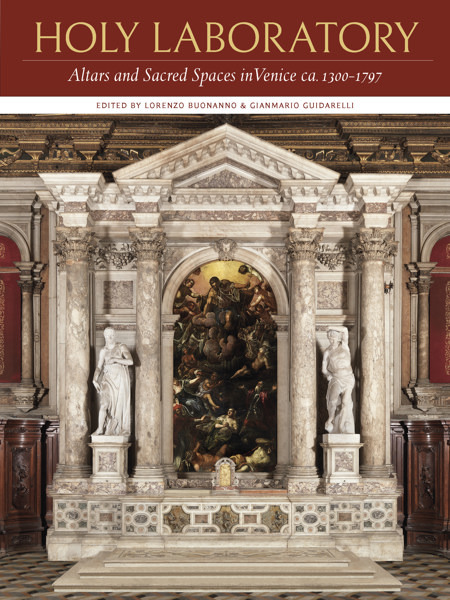
Examining liturgy and popular piety, morphology and patronage, mobility and cross-pollination, as well as the afterlives of altarpieces themselves, these studies reveal Venice, the nexus of European and Mediterranean culture and commerce, as a laboratory for holy spaces and objects.
The editors specialize in early modern Venetian art and architecture.
Buonanno (PhD, Columbia University) is Associate Professor, University of Massachusetts Boston. He is the author of The Performance of Sculpture in the Renaissance Venice (2022).
Guidarelli (PhD, Istituto Universitario di Architettura di Venezia) is Associate Professor, Università di Padova. His books include Tintoretto and Architecture (with Marcel Grosso, 2018), and I patriarchi e l’architettura: la cattedrale di San Pietro di Castello nel Rinascimento (2015).
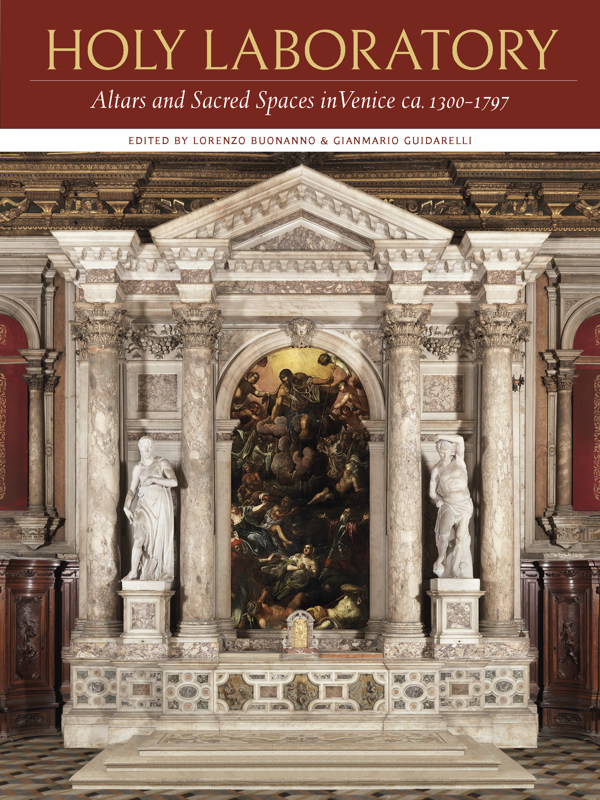
Spanning the later Middle Ages through the fall of the Venetian Republic (1797), the essays collected in this volume examine the status of Venice as an incubator—a laboratory, effectively—of artistic innovations linked with the sacred spaces, altarpieces, and ornament around the altar. The church altar not only dominated Renaissance devotions, in Venice it provided a site of vertical social integration, a place for different social, professional, and/or national groups to gather. Altars were at the center of spatial networks within the urban fabric of Venice, connecting interior and exterior spaces and serving multiple functions (from the liturgical and funerary to the artistic and the civic). Although Venetian craftsmen were largely separated by guild regulations, they would be brought together when working on altar complexes. The altar, therefore, constituted an essential site for collaboration, exchange, and reflection upon the arts in Venice. By their very nature, altarpieces are interdisciplinary objects, and these studies will interest scholars of religious studies, urban studies, media and materiality, and literature. Through comparative studies of different altar types and spaces, the authors examine liturgy and popular piety, morphology and patronage, mobility and cross-pollination, as well as the afterlives of these magnificent objects.
Introduction: A Holy Laboratory
Lorenzo G. Buonanno and Gianmario Guiderelli
Holy Nature and the Art of Devotion in Lorenzo Lotto’s San Nicola Altarpiece
April Oettinger
Reinterpreting Tintoretto in the Presbytery of San Giorgio Maggiore in Venice
Marsel Grosso
Counter-Reformation Artistic and Religious Patronage: The Altars of the Venetian Church of the Minims
Giulia Zanon
Sacristy Altars in Early Modern Venice c. 1480–1620: Allegory and Invention
Francesco Trentini
Interpreting the Venetian Laboratory on the Mainland: Altars in Early Modern Vicenza
Michele Guida Conte
Light, Altars, and Architecture in the Work of Baldassare Longhena
Martina Frank
Saints’ Altar-Tombs in Padua between the Thirteenth and the Fourteenth Century: Typological Interferences, Multifunctionality, Ornamental Strategies
Cristina Guarnieri
The Altars of the Scuole Grandi: Typological Contamination and Spatial Configurations
Gianmario Guidarelli
An Early Modern Meta-Altarpiece? Marco Basaiti’s Calling of the Sons of Zebedee in Vienna
Lorenzo G. Buonanno