Comme il importe au bien de l’Église et de l’État…
View publication
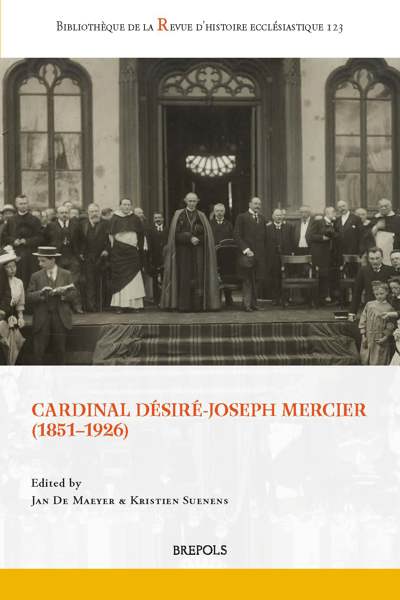
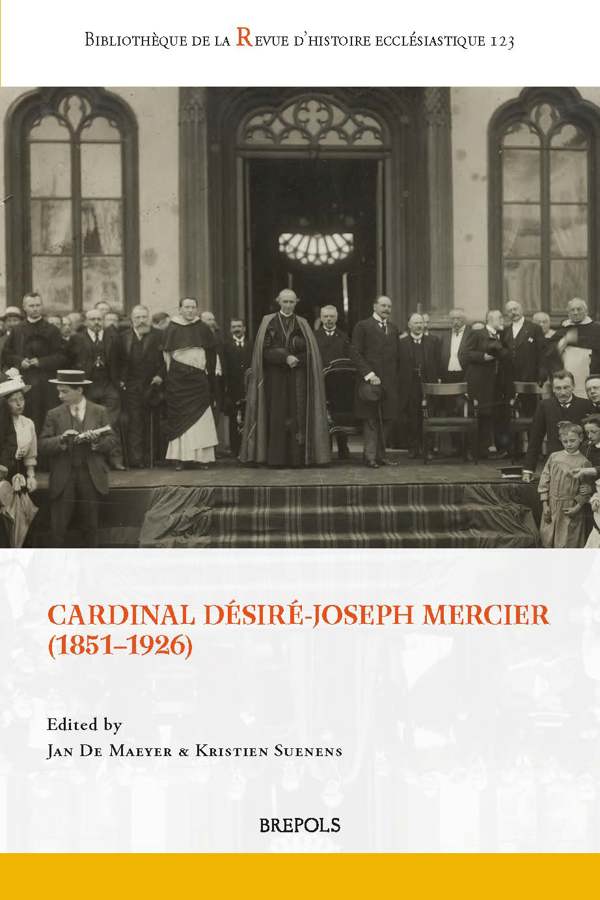
Bringing together contributions from leading scholars, this volume explores Cardinal Désiré-Joseph Mercier’s role as intellectual, church leader, war hero, educational reformer, and pioneer of dialogue between faith and modernity.
Jan De Maeyer is Emeritus Professor at KU Leuven, focusing on the interaction between religion, culture, and society in nineteenth- and twentieth-century Europe. He has published extensively on political and social Catholicism, material Christianity, and the development of religious institutes.
Kristien Suenens is a researcher and head of the department Creation, Communication and Participation at KADOC–KU Leuven. Her work specializes in the history and heritage of religious institutes at the intersections of gender, religion, and modernity.
In 2026, the centenary of the death of Cardinal Désiré-Joseph Mercier, archbishop of Mechelen (1906–1926), will be commemorated. Mercier is regarded as an exceptionally multifaceted figure: a leading intellectual, a church leader of international stature, a war hero and a central figure in Belgian (church) history. During his lifetime, he aroused both admiration and opposition, a tension that continues to shape his historical legacy.
This collection brings together a series of innovative and critical contributions that re-examine both well-known and less-studied aspects of his life, work and influence. Together, they open up new perspectives on a complex figure: Mercier was a determined strategist who tirelessly sought ways to reconcile the Church with modernity. He combined intellectual passion and spiritual ambition with a pronounced sense of hierarchy and authority. His conduct was often courageous and visionary, yet at the same time elitist, authoritarian and, in certain respects, ambiguous.
Contrary to the image of a staunch prélat d’avant-garde that has long been associated to him, this book presents him rather as a perceptive, culturally pessimistic and conservative church leader, who carefully and strategically explored how modernity could, in fact, be harnessed in the service of the Church and the faith.
Introduction
Jan DE MAEYER and/et Kristien SUENENS
Part I: Youth, studies and personality/Jeunesse, études et personnalité
La jeunesse de Désiré Mercier à Braine-l’Alleud (1851-1863)
Xavier CAMBRON (Collège Mercier Braine-l'Alleud) et Luc COURTOIS (UCLouvain)
Les débuts de Désiré Mercier à Malines. Les années au Collège Saint-Rombaut, au Petit et au Grand Séminaire (1863-1873)
Gerrit VANDEN BOSCH (Archdiocese Mechelen-Brussels)
Désire Mercier. Étudiant à la Faculté de théologie de Louvain (1873-1877)
Leo KENIS (KU Leuven), avec la collaboration de Luc COURTOIS (UCLouvain)
La spiritualité personnelle du cardinal Mercier, examinée à travers la vénération des saints
Joris GELDHOF (University of Notre Dame/KU Leuven)
Part II: Mercier and the Church/Mercier et l’Église
Perfection in Practice. Mercier and the Apostolic Life for Clergy and Laity
Maite DE BEUKELEER (KU Leuven) and DRIES BOSSCHAERT (KU Leuven)
“My Most Powerful Helpers”. Mercier and Women Religious: Between Admiration and Subordination
Kristien SUENENS (KADOC-KU Leuven)
« Les religieux eux-mêmes […] doivent avoir les yeux et le cœur fixés sur l’évêque ». Mercier et les religieux masculins
Eddy LOUCHEZ (KU Leuven/UCLouvain)
Le cardinal Mercier (1851-1926) et la liturgie
André HAQUIN (UCLouvain)
Cardinal Mercier, Mary and the Sacred Heart
Hans GEYBELS (KU Leuven)
The Holy See’s Authorisation to Mercier for the Malines Conversations. New Findings from the Vatican Archives
Saretta MAROTTA (-)
Part III: Mercier, politics and society/Mercier, la politique et la société
Une mission manquée. Le cardinal Mercier et le mouvement flamand avant la Première Guerre mondiale
Lieve GEVERS (KU Leuven)
Lophem, le cardinal, le roi. L’attitude du cardinal Mercier dans les premiers mois après l’armistice de 1918
Emmanuel GERARD (KU Leuven)
Mercier and the Catholic Women’s Movement. Mentorship, Authority, and Control
Kristien SUENENS (KADOC-KU Leuven)
“A Perverted World”. Mercier, Neo-Malthusianism, and the Moral Order
Leen VAN MOLLE (KU Leuven)
Updating Social Catholicism. Désiré Mercier and the International Union of Social Studies (1919-1927)
Peter HEYRMAN (KADOC-KU Leuven)
La position du Cardinal Mercier vis-à-vis l’État Indépendant du Congo et le Congo belge. Les enjeux entre État et Église et les missions catholiques (1906-1926)
Dries VANYSACKER (KU Leuven)
The Strategic Networker in Désiré Mercier. An Analysis of His Contacts Abroad
Jan DE VOLDER (KU Leuven)
Cardinal Mercier and the Russioan Emigration
Wim Coudenijs (KU Leuven)
Part IV: Mercier, science, art and sports/Mercier, la science, l’art et le sport
Mercier et les sciences
Luc COURTOIS (UCLouvain), avec la collaboration de Leo KENIS (KU Leuven)
Honouring Science as a Religious Performance. Désiré Mercier and Modern Psychology
Kaat WILS (KU Leuven)
Serious and Seductive. Mercier and the Evolution Debate
Raf DE BONT (Maastricht University)
Dante in 1921. A Path Towards Mercier’s Aesthetics
Rajesh HEYNICKX (KU Leuven)
“Omnes currunt, sed unus accipit bravium”. Cardinal Mercier’s Attitude to Gymnastics and Football in the Belgian Catholic Education System and His Address to the Athletes at the 1920 Antwerp Olympic Games
Dries VANYSACKER (KU Leuven)