Faustina the Younger
View publication
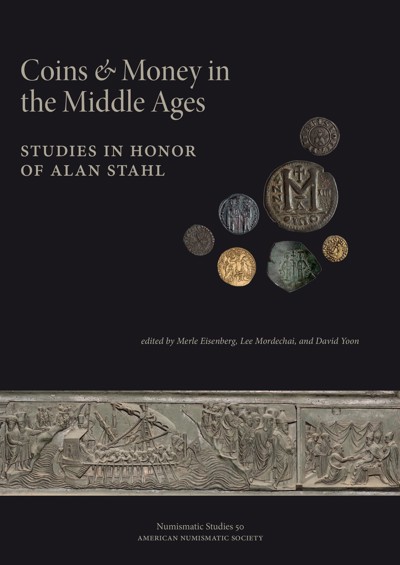
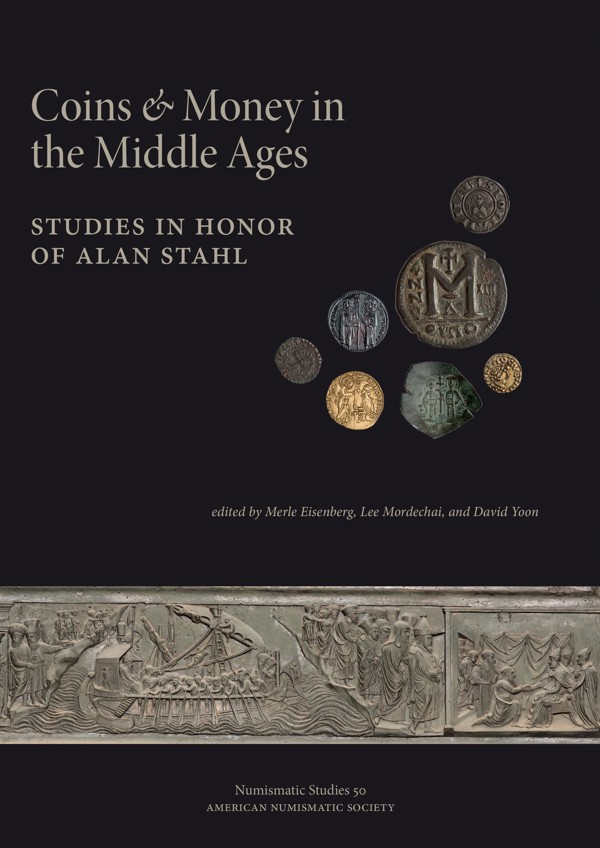
Alan Stahl’s distinguished career in numismatics has ranged over numerous topics in the study of coins, monetary history, and medallic art, from antiquity through the Middle Ages and into the modern era. This volume brings together cutting-edge scholarship from three overlapping groups of scholars to honor him: former students from the American Numismatic Society Graduate Summer Seminar whom Stahl taught during the 1980s and 1990s, colleagues and former students at Princeton University where he has taught since 2005, and collaborators in the Framing the Late Antique and Early Medieval Economy research project he has directed since 2014. The broad scope of the articles reveals how widely Stahl has influenced numismatics and numismatists over the last five decades, through his research, teaching, and training of generations of students. Some articles focus on specific aspects of coinage, but far more show how thinking with coins, as a medium, transforms how scholars write the histories of the monetary world, economic life, and social relations. Like Stahl himself, the volume’s contributors go beyond technical numismatic details and place coins and money in a broader framework that helps transform our understanding of how people lived in the premodern world.
Acknowledgments
Merle Eisenberg, Lee Mordechai, and David Yoon. Introduction
1. Victor Revilla and Alejandro G. Sinner. Peasant Economy in Late Roman Northeastern Spain: Diversification, Adaptation, and Recycling
2. David Yoon. The Beginning of the Merovingian Moneyer–Mint Coinage as Seen from Central Spain
3. Andrew Kurt. Forging a New Minting Apparatus under Leovigild and His Son Reccared
4. Paolo Squatriti. Stahlian “Stuffgeschichte,” Carolingian Coins, and the Material Eucharist
5. Ildar Garipzanov. Minuscule Texts on Weights and Measures in Carolingian Manuscripts
6. Florin Curta and Lance Maulsby. Renaissance or Recycling? Roman Coins in the Early Middle Ages (Eighth and Early Ninth Centuries)
7. Razieh Taasob. Reassessing the Lifespan of the Heraios Coinage: Insights into the First Kushan Ruler’s Enigmatic Tetradrachms
8. Jane Sancinito. 33, 12, 6, 3, and 1: Examining the Byzantine Bronze of Alexandria ad Aegyptum
9. Andrei Gandila. Army Pay or People’s Money? The Propontic Mints and the Mediterranean Economy (Sixth and Seventh Centuries)
10. Aikaterini Peppa. Islets and the Shifting Economic Landscape from the Sixth to the Beginning of the Ninth Century
11. Kirstin Ohrt. Saving the Antioch Coin Record from the Margins: Dorothy Waagé’s Epic Struggle
12. Pavla Gkantzios Drápelová. Comparative Analysis of the Weight of Byzantine Folles: Antioch vs. Constantinople (Sixth to Early Seventh Centuries)
13. Andrea U. De Giorgi and A. Asa Eger. Anazarbos: Transformations of a Late Antique Capital to an Early Islamic City
14. Tasha Vorderstrasse. Archaeology of Aksumite Coin Circulation in Ethiopia and Eritrea
15. Elena Baldi. A Hoard of Hyperpera of Manuel I from the John Max Wulfing Collection, Washington University in St. Louis
16. Ilia Calogero Curto Pelle. “Coinage and Money in the Latin Empire of Constantinople” Revisited: What Is a Coin in the Early Thirteenth-Century Balkans and Anatolia?
17. James J. Todesca. Striking Dissimilarities: The Gold Dinars of León and Portugal, ca. 1173–1272
18. Sarah M. Kampbell. The Imitation Andrea Dandolo Ducats in the Benjamin Bell Collection at Princeton University
19. William R. Day, Jr. Chequeens, Gubbers, Ibrahimis, and Moorish Ducats: Venetian Gold Ducats and Their Imitations in India, 1300–1800
20. Peter van Alfen. Brief Observations on Ships on Dutch and English Medals of the Seventeenth Century