Foundation
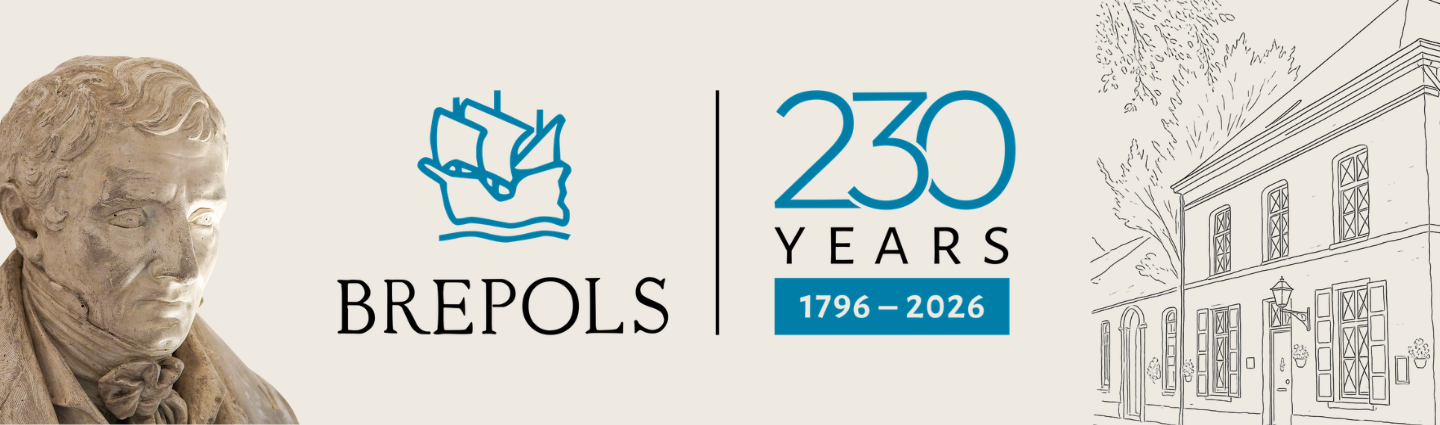
Philippe Jacques Brepols had a passion for paper. At the age of 17, he apprenticed under the Leuven printer-publisher Pieter Corbeels. When Corbeels, who had previously worked as a printer for the university in his hometown, fled the French occupation, the young apprentice accompanied him to Turnhout in the quiet Kempen region in northern Belgium. In 1796, the foundations were laid for what would grow into Turnhout’s paper-processing industry, eventually setting in motion a true industrial revolution in the region.
P.J. Brepols became known as a versatile merchant-manufacturer of prayer books, devotional and popular prints, and playing cards, as well as wrapping paper, writing paper, decorative paper, notebooks, pencils, pens, leather goods, fabrics, and hats. Female members of the family, especially his daughter Antoinette Brepols and her daughter-in-law Josephina Dessauer, played a crucial role in preserving and strengthening the family name despite fierce competition and changing economic circumstances. By the turn of the twentieth century, the company employed approximately 1,000 workers.
Modernization and International Growth
In 1911, the family business acquired a solid financial and legal foundation through the creation of the Société Anonyme Établissements Brepols. Its various activities, including printing, bookbinding, publishing, playing-card production, and decorative paper manufacturing, were organized into three factories. François du Four, son of Josephina Dessauer and long-serving mayor of Turnhout, guided the company through wars and economic crises until his death in 1945.
During this period, the publishing program remained largely religious in nature, consisting mainly of missals and prayer books published not only in Latin and European languages but also in numerous missionary languages. At the same time, the first dictionaries and reference works appeared, while specialization in diaries and notebooks continued successfully. The company also maintained its long-standing tradition of producing playing cards and board games. In 1970, Brepols helped found Cartamundi.
The transition to scholarly publishing truly began with the publication of the critical text editions of the Corpus Christianorum from 1953 onwards, followed by a pioneering role in the publication of lexicological instruments and textual databases, particularly for Latin, from the 1970s onwards.
As one of the pioneers of CD-ROM publishing from the early 1990s onwards, the company played a key role in making scholarly resources more accessible through innovative digital formats. Recently, Brepols celebrated 25 years of online databases now hosted on the online BREPOLiS platform, marking a quarter-century of continuous innovation, technological development, and commitment to supporting research worldwide.
Since 1998, Brepols Publishers and the Brepols diary-manufacturing and bookbinding business have operated as independent companies. Harvey Miller Publishers, a London-based publishing house of richly illustrated, well-designed, and meticulously edited books in medieval art was acquired in 2000. Through the Harvey Miller imprint, Brepols has expanded both the scope and range of these publications, placing art in the context of the cultural history, while continuing to publish high quality, academic volumes written by authors in the forefront of worldwide art historical scholarship.
Publisher in the Humanities, Providing a Future for the Past
Today, Brepols Publishers has developed into an internationally renowned academic publisher in the humanities. Through Brepols and its imprints the company specializes in printed and digital scholarly resources, studies, and reference works in fields such as ancient languages, history, art history, musicology, and archaeology. Our main office is located in a seventeenth-century building in the historic beguinage of Turnhout, Belgium. We also have an editorial presence in France, the US, and Australia and an office in Greece.
With launching the Perspecti dabase in 2027, Brepols continues to be at the forefront of academic publishing. It will capture the unique publication fingerprint of research in the arts and humanities, and offer reliable perspectives for researchers, librarians, institutions, governments, and funders; supporting the humanities and fostering its bibliodiversity.
As a family-owned company since our establishment 230 years ago, we aim to play an active role in the scholarly community whilst remaining independent from any institute or publishing conglomerate. We believe in academic freedom as a key principle of a healthy and diverse scholarly ecosystem, and are committed to achieving this both by retaining our own independence, and by increasing the visibility and diversity of academic research within the humanities and beyond.