We are delighted to announce that Reconsidering Consent and Coercion. Power, Vulnerability, and Sexual Violence in Medieval Literature (edited by Jane Bonsall and Hannah Piercy) has been awarded the 2026 New Chaucer Society prize for 'Best edited collection on a topic dealing with late-medieval literature'.
The New Chaucer Society announces multiple publication prizes, fellowships, and scholarships during its Biennial Congress. These awards seek to recognise, support, and promote scholarship that advances the Society’s mission to provide a forum for teachers and scholars of Geoffrey Chaucer, his literary contemporaries, and late‑medieval culture. The committee for the Best Edited Collection on a Topic dealing with Late-Medieval Literature unanimously agreed that the award should go to Reconsidering Consent and Coercion: Power, Vulnerability, and Sexual Violence in Medieval Literature.
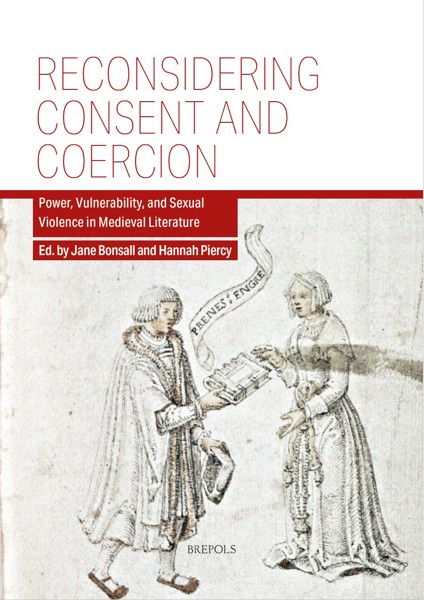
Review of the New Chaucer Society:
"The volume had its origins in the 2022 discovery, by Euan Roger and Sebastian Sobecki, of two new documents relating to Cecily Chaumpaigne’s quitclaim freeing Chaucer from the accusation of rape, a discovery that fostered the editors’ desire to reconsider sexual violence in the context of employment and servitude, across a range of later medieval literary texts. The editors have done a first-class job of considering “the broader links between intersectional disadvantage, abduction, and sexual violation, … given that female servants were vulnerable to 2 sexual abuse from their masters, mistress’s sons, and others” (19). They assembled an outstanding group of 15 contributors, in addition to themselves, and ensured the originality, quality, scholarly rigor, and interest of every contribution. The essays range widely over different historical periods, literary genres, and geographical and linguistic cultures: Middle English, Middle and Sixteenth-Century Scots, Middle and Old French, Old Norse, Middle High German, Old Irish, Italian, Latin, Persian, and medieval-era Bengali. They include attention to resistance to patriarchal violence and to men’s experience of sexual coercion and rape. We particularly commend the editors for the success of their collaborative, feminist publishing practice. Contributors were encouraged to discuss their work in progress and to contribute to the development of each other’s chapters. This practice has not only created a sense of community among participants but has enriched the individual essays. All the essays speak to each other, emphasizing shared concerns as well as differences."
This volume is also available in Open Access.