Mes meilleures heures de Nostre Dame
View publication
"The resulting three-volume box set, is a milestone. (...) Detective story and visual archive, the 'Bruegel box' is now the standard reference on the technique and copying practices of Pieter Bruegel and his first-born son. (...) - a jewel-box for anyone who loves Bruegel." (Odilia Bonebakker, in: Historians of Netherlandish Art, www.hnanews.org/hna/bookreview/current/16_currie-allart1012.html)
"The value of this study is immense. (...) the hundreds of close-ups set against various replicas (...) represent an unmissable object lesson in the difference between a great painter and a whole host of bad ones." (David Ekserdjian, in Apollo, March 2013, p. 182-183)
"This lavish, three-volume gift box is only for specialists, but is a milestone of patient, persistent visual research. (...) Its boxed three volumes provide a weighty reference - the gift that keeps on giving - for any future Bruegel (and Brueghel) appreciation." (Prof. Larry Silver, in Cassone, April 2013)
"The book is the culmination of over a decade's research by Christina Currie and Dominique Allart into the painting techniques of Pieter Bruegel the Elder and his son Pieter Brueghel the Younger. The text is lavishly illustrated and buyers of the book can also access a website with more than 2000 extra illustrations which substantiate the author's theories. It is a must-read for any Bruegel enthusiast or those interested in the context of sixteenth and seventeenth century painting practice and production. (...) This excellent study is an exemplary demonstration of how useful technical analysis can be when the research is so thorough and cohesive; the book can be relied upon by conservators and art historians to reassess existing works that were not part of the present study and to help attribute copies which might be unearthed in the future." (Alice Tate-Harte, in: The Picture Restorer, N° 42, Spring 2013, p. 55-58)
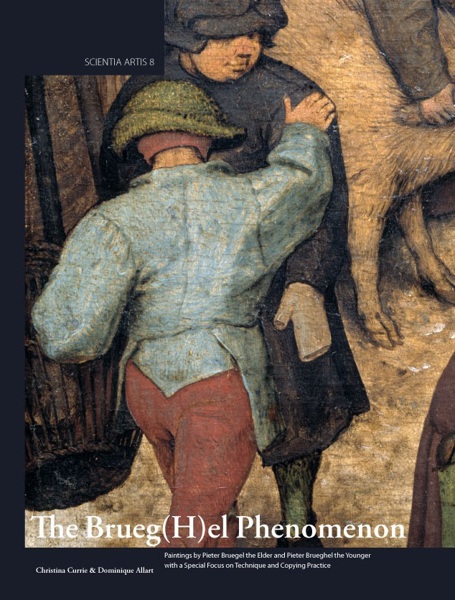
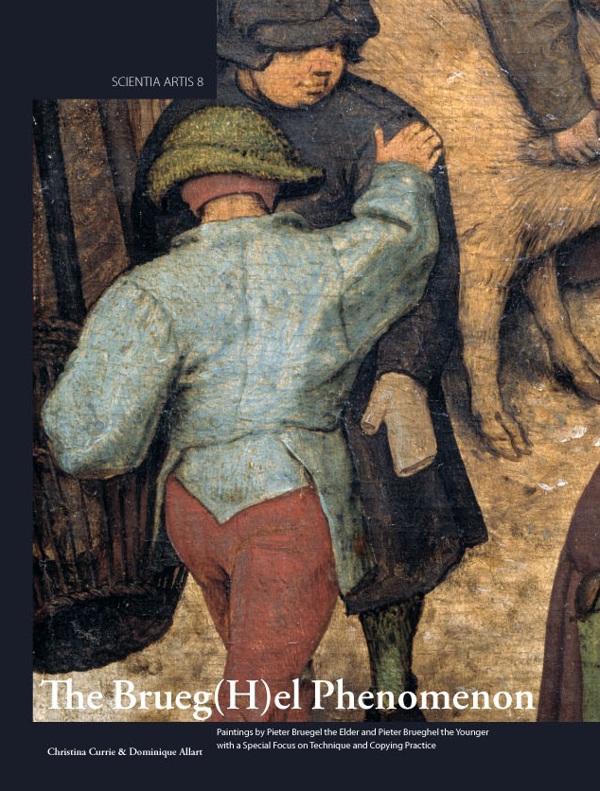
The fascination exerted by the works of the illustrious Pieter Bruegel the Elder in the decades following his death in 1569 is matched only by the intense interest they generate today. At the end of the sixteenth century and in the first half of the seventeenth, the most ambitious art collectors fought over the few paintings by the master that were still on the market. This setting was the catalyst for the appearance of copies and pastiches – and even deliberate forgeries. It was then that the elder son of Pieter Bruegel, known as Pieter Brueghel the Younger (whose name is spelled ‘Brueghel’ here, conforming to the signature that he adopted during the initial phase of his career) emerged as a legitimate successor, producing astonishingly faithful replicas of his father’s paintings. This was all the more surprising given that they were often made after works that were by then dispersed in diverse and sometimes inaccessible private collections. Operating within the context of a sizeable workshop, Brueghel supplied the market with hundreds of copies of variable quality according to demand. This enterprise merited re-evaluation from a technical point of view: how were such vast numbers of copies produced in practice?
This three-volume book explores the intriguing Brueg[H]el phenomenon through the two artists’ painting practices. The technical aspects of their works are investigated in a detective-like manner and are strikingly elucidated with a wealth of colour illustrations. The reader will come to understand the accomplished practitioner behind the genius that is Bruegel the Elder and the working procedures of his foremost emulator’s workshop. Furthermore, Brueghel the Younger’s exceptional qualities as a painter are singled out from those of his workshop production. The book also reveals fresh discoveries on the father’s creative process through the study of his son’s copies.
Volume I
Foreword
Preface
Acknowledgements
Notes to the Reader
Abbreviations
Introduction
1. A Great Painter of the Renaissance, his Heir and Copyist and the Antwerp Art Market
A Brilliant Dynasty of Painters
Pieter Bruegel the Elder: his Life and Work
Pieter Bruegel the Elder’s Posthumous Fame
The Proliferation of Copies after Pieter Bruegel the Elder at the End of the Sixteenth Century
Pieter Brueghel the Younger: his Life and Work
Inique facis nisi Patrem in Filio nosci: Pieter Brueghel the Younger as Continuator of his Father
The Art Market in Antwerp at the Time of Pieter Brueghel the Younger
Reconstructing the Organizational Practices of Antwerp Workshops
Rechte princepalen! The Rise of Connoisseurship
The Works of Pieter Brueghel the Younger in Seventeenth-Century Antwerp Inventories
Signatures and Dates in the Works of Bruegel the Elder and Brueghel the Younger
2. The Painting Technique of Pieter Bruegel the Elder:
Four Case Studies
Status Quaestionis
Preliminary Note on the Paintings Examined
Case Study 1. The Census at Bethlehem (Brussels, Koninklijke Musea voor Schone Kunsten van België
Musées royaux des Beaux-Arts de Belgique)
Provenance
Inscriptions
Painting Support
Format and Construction - Barbes and Unprepared Lateral Borders – Condition
Preparatory Layers
Underdrawing
Form and Function - Drawing Medium - Position of Underdrawing in the Layer Structure - The Role of the Underdrawing in the Creative Process
Paint Layer
Condition - Palette - Layer Structure and Pigment Analysis - Sequence of Painting - Brushwork and Handling - Modifications during Painting
Conclusion.
Case Study 2. The Sermon of St John the Baptist (Budapest, Szépmüvészeti Múzeum)
Provenance.
Inscriptions
Painting Support
Format and Construction - Barbes and Unprepared Borders – Condition
Preparatory Layers
Underdrawing
Form and Function - The Role of the Underdrawing in the Creative Process
Paint Layer
Condition - Palette - Pigment Analysis - Sequence of Painting - Brushwork and Handling - Gesture and Expression - Modifications during Painting
Conclusion
Case Study 3. The Winter Landscape with Bird Trap (Brussels, Koninklijke Musea voor Schone Kunsten
van België
Musées royaux des Beaux-Arts de Belgique)
Provenance, Rediscovery and Early Controversy
Inscriptions
Fingerprint
Painting Support
Format and Construction - Provenance of the Wood and Dating – Condition
Preparatory Layers
Underdrawing
Form and Function - The Place of the Underdrawing in the Evolution of the Composition - An Early Drawing of the Composition
Paint Layer
Condition - Palette - Sequence of Painting - Brushwork and Handling
Conclusion
Case Study 4. The Adoration of the Magi (Winterthur, Dr Oskar Reinhart Collection ‘Am Römerholz’)
Provenance
Inscriptions
Painting Support
Format and Construction – Condition
Preparatory Layers
Underdrawing
Paint Layer
Condition - Palette - Sequence of Painting - Brushwork and Handling
Conclusion
3. Pieter Bruegel the Elder’s Painting Technique: a Reassessment
Painting Supports
Format and Construction.
Barbes and Unprepared Borders
Preparatory Layers
Ground
Imprimatura
Underdrawing
Drawing Materials
Position of Underdrawing in the Layer Structure
Underdrawing Styles and Modifications during Drawing and Painting
Painting Techniques
Pigment Analysis and Layer Structure
Sequence of Painting
Brushwork and Handling
Conclusion
Volume II
4. The Painting Technique of Pieter Brueghel the Younger and his Workshop:
Ten Case Studies
Status Quaestionis
Preliminary Note on the Paintings Examined
Case Study 1. Copies of the Battle between Carnival and Lent after Pieter Bruegel the Elder
Inscriptions
Painting Supports
Format and Panel Construction - Provenance of the Wood and Dating - Barbes and Unprepared Lateral Borders
Preparatory Layers
Transfer of the Design to the Prepared Panel Surface: Evidence for the Use of Pricked Cartoons
A Series of Smaller Cartoons rather than a Whole Sheet
Underdrawing
Form and Function - Modifications in Relation to the Pounced Design – Style
Paint Layer
Condition - Palette - Sequence of Painting - Brushwork and Handling
The Original Model and the Cartoon
The Possible Whereabouts of the Original Version at the Time of Brueghel the Younger - The Original Version and the Five Copies: a Comparison - The Christie’s New York Version - The Portland Version - A Hierarchy of Copies
The Source of the Cartoons
Conclusion
Case Study 2. Copies of the Census at Bethlehem after Pieter Bruegel the Elder
Inscriptions
Painting Supports
Format - Panel Construction and Tool Marks - Provenance of the Wood and Dating - The Panel-maker and Branding - Barbes and Unprepared Lateral Borders
Preparatory Layers
Underdrawing
Form and Function - Modifications during Underdrawing and Painting - Stylistic Variation and the Question of Attribution
Paint Layer
Condition - Palette - Layer Structure and Pigment Analysis - Sequence of Painting - Brushwork and Handling - Reflections on Attribution - Style and Brushwork in Comparison to Bruegel the Elder’s Original Version
The Model for the Copies
Key Elements in Bruegel the Elder’s Original Painting that are Missing in the Copies - Key Elements Transformed in the Copies - Misinterpretation of Original Motifs - Elements in the Underdrawing of the Original Dropped during
Painting but Repeated in the Copies - Colours - Placement of Signature - Pre-conclusion
Variants among the Copies
Five Variants and a Possible Sub-variant - Motifs Varying According to Group - Dating - Secondary Models - Pre-conclusion
Copying Process
The Use of Cartoons - Transfer Process - The Source of the Cartoons
Conclusion
Case Study 3. Copies of the Sermon of St John the Baptist after Pieter Bruegel the Elder
Inscriptions
Painting Supports
Format - Panel Construction and Tool Marks - Provenance of the Wood and Dating - Branding - Barbes and Unprepared Lateral Borders
Preparatory Layers
Underdrawing
Form and Function - Style and Attribution
Paint Layer
Condition - Palette and Paint Layer Structure - Sequence of Painting - Brushwork and Handling – Attribution
The Model for the Copies
Comparison of the Sons’ Copies with Pieter Bruegel the Elder’s Budapest Version - Possible Working Relationship between Pieter Brueghel the Younger and Jan Brueghel the Elder - Two Variants
Copying Process
Use of Cartoons and Transfer Process - Partial Correlation with Pieter Bruegel the Elder’s Budapest Version
Conclusion
Case Study 4. Copies of the Winter Landscape with Bird Trap after Pieter Bruegel the Elder
Inscriptions
Painting Supports
Format - Panel Construction and Tool Marks - Provenance of the Wood and Dating – Branding
Preparatory Layers
Underdrawing
Form and Function – Attribution
Paint Layer
Condition - Palette and Paint Layer Structure - Sequence of Painting - Brushwork and Handling – Attribution
The Model for the Copies
Bruegel the Elder’s Version in the Koninklijke Musea voor Schone Kunsten van België
Musées royaux des Beaux-Arts de Belgique - The Case of the Painting in the Former M. A. Hassid Collection
Copying Process
Use of a Cartoon and Transfer Process - Two Additional Motifs in the Mayer van den Bergh and Coppée-le Hodey Versions
Brueghel’s Competition: Contemporary Copies and Variants Produced by Other Workshops
Excursus: a Late Nineteenth- or Early Twentieth-Century Copy
Conclusion
Case Study 5. Copies of the Adoration of the Magi after Pieter Bruegel the Elder
Inscriptions
Painting Supports
Format - Panel Construction and Tool Marks - Provenance of the Wood and Dating – Branding
Preparatory Layers
Underdrawing
Form and Function – Attribution
Paint Layer
Condition - Palette, Paint Layer Structure and Pigment Analysis - Sequence of Painting - Brushwork and Handling – Attribution
The Model for the Copies
Differences between Bruegel the Elder’s Original Version and the Copies - Two Faithful Copies
Copying Process
Use of a Cartoon and Transfer Process - Differences among the Copies - A Copy from outside Brueghel the Younger’s Workshop
Conclusion.
Case Study 6. The Magpie on the Gallows: a Unique Copy after Pieter Bruegel the Elder
Inscription
Painting Support
Format - Panel Construction and Tool Marks
Preparatory Layers
Underdrawing
Paint Layer
Condition - Palette - Sequence of Painting - Brushwork and Handling
The Model for the Copy
Bruegel the Elder’s Original Version - A Version in the Former Bruno Donath Collection
Copying Process
The Original Version and the Copy: a Comparison
Conclusion
Case Study 7. Copies of the Wedding Dance in the Open Air probably after a Lost Painting by Pieter Bruegel the Elder
Inscriptions
Painting Supports
Format - Panel Construction and Tool Marks - Provenance of the Wood and Dating – Branding
Preparatory Layers
Underdrawing
Form and Function - Drawing Notations – Attribution
Paint Layer
Condition - Palette - Layer Structure and Pigment Analysis - Sequence of Painting - Brushwork and Handling -
Adjustments in Design during Drawing and Painting – Attribution
Copying Process
Use of a Cartoon and Transfer Process - Motifs not Included in the Cartoon – Colour
Regarding the Model
The Engraving by Pieter van der Heyden - The Peasant Wedding Dance in the Detroit Institute of Arts - Evidence for a Lost Painting by Pieter Bruegel the Elder: Versions by Jan Brueghel the Elder and a Variant by Maerten van Cleve
Conclusion
Case Study 8. Copies of the Crucifixion probably after a Lost Painting by Pieter Bruegel the Elder
Inscriptions
Creation of a Compositional Variant and Collaboration with Joos de Momper the Younger
Painting Supports
Format - Panel Construction and Tool Marks - Provenance of the Wood and Dating - Branding - Barbes and Unprepared
Lateral Borders
Preparatory Layers
Underdrawing
Form and Function – Attribution
Paint Layer
Condition - Palette and Paint Layer Structure - Brushwork, Handling and Attribution - Sequence of Painting
Copying Process
Common Cartoons for the Figures - Townscape and Landscape Backgrounds: no Evidence for a Common Cartoon - Colour Correspondence in the Figures
Regarding the Model
A Lost Crucifixion by Pieter Bruegel the Elder: Source Documents - The Vienna Version of the Crucifixion by Jan Brueghel the Elder - Searching for the Appearance of a Lost Original by Pieter Bruegel the Elder
Conclusion
Case Study 9. Copies of the Massacre of the Innocents probably after a Lost Painting by Maerten van Cleve
Inscriptions
Painting Supports
Format - Panel Construction and Tool Marks - Provenance of the Wood and Dating
Preparatory Layers
Underdrawing
Form and Function – Attribution
Paint Layer
Condition - Palette - Layer Structure and Pigment Analysis - Sequence of Painting - Brushwork and Handling – Attribution
Copying Process and Reflections on the Model
Original Model - Transfer Process
The Version in the Koninklijke Musea voor Schone Kunsten van België
Musées royaux des Beaux-Arts de Belgique: Evidence of a Cover-up
The First Painting - Re-use of Panels in the Sixteenth Century - Why this Re-use in Brueghel’s Workshop?
Conclusion
Case Study 10. Copies of the Peasant Lawyer after an Anonymous Model
Inscriptions
Painting Supports
Format - Panel Construction and Tool Marks - Provenance of the Wood and Dating – Branding
Preparatory Layers
Underdrawing
Form and Function – Attribution
Paint Layer
Condition - Palette and Pigments - Sequence of Painting - Brushwork and Handling – Attribution
Copying Process and Reflections on the Model
The Lost Prototype - Two Variants - Use of Cartoons and Transfer Process
Copies by Pieter Brueghel the Younger’s Contemporaries and Later Imitators
Conclusion
Volume III
5. Demystifying the Process:
Pieter Brueghel the Younger’s Workshop Practice
Painting Supports
Format and Provenance of the Wood
Barbes and Unpainted Lateral Borders, with Corresponding Rebates on the Reverse
The Antwerp Brand and Panel-makers’ Marks
Quality
Preparatory Layers
Ground
Imprimatura
The Role of Cartoons
The Transfer Process
Single or Partial Pricked Cartoons
The Nature of the Cartoons: an Original Master Cartoon and Working ‘Substitute Cartoons’
Underdrawing
Graphite and Black Chalk as Underdrawing Media
The Position of the Underdrawing in the Layer Structure
The Extent and Character of the Underdrawing
Cartoon Transfer and Underdrawing Step-by-Step
Painting Techniques
Palette
Pigment Analysis and Layer Structure
Sequence of Painting
Brushwork and Handling
Mimicking his Father’s Brushwork
Late Additions
6. Searching for the Hand of Pieter Brueghel the Younger
The Underdrawings
A Core Group of Underdrawings by the Master
Underdrawings outside the Core Group
The Attribution of Independent Drawings to Pieter Brueghel the Younger
The Painting Stage
A Core Group of Paintings by the Master
Paintings outside the Core Group
Significance of a Signature
7. Pieter Brueghel the Younger’s Models and Variants
Brueghel the Younger’s Models
Paintings for which Bruegel the Elder’s Original Versions still Survive
Paintings Presumed to be after Lost Works by Bruegel the Elder
Paintings after Missing Works by Other Artists
Variants and Variation in Brueghel the Younger’s Production
Compositional Variants
Variation in the Later Years
Organizational Practices under Brueghel the Younger’s Direction
8. Outside Brueghel the Younger’s Workshop
Deceptive Resemblance: Copies in the Manner of Pieter Brueghel the Younger
Distinctive Features in Copies by Jan Brueghel the Elder
Solving a Famous Controversy: Two Versions of the Fall of Icarus
The Version in the Koninklijke Musea voor Schone Kunsten van België
Musées royaux des Beaux-Arts de Belgique
Provenance - Support - Radiocarbon Dating - Underdrawing - Paint Layer – Conclusion
The Version in the Van Buuren Museum in Brussels
Provenance - Support - Underdrawing - Paint Layer – Conclusion
Last Word
9. Understanding the Father through the Son:
Lost Secrets of Pieter Bruegel the Elder’s Working Practice
Evidence from the Copies: Bruegel’s Lost Compositional Drawings
Evidence from the Copies: Bruegel’s Lost Cartoons
Evidence from the Originals: the Nature of the Lost Cartoons
Other Preparatory Material Employed by Bruegel
Record Copies?
Model Drawings and Preparatory Cartoons in the Southern Netherlands
From Drawing to Painting: Bruegel’s Creative Process Reconstructed
Conclusions
Bibliography
Appendices
I. Paintings by Pieter Bruegel the Elder and from the Workshop of Pieter Brueghel the Younger:
Inscriptions and Key Technical Features
II. Historical Copying Techniques
Cartoons - Squaring-up - Pouncing - Tracing - The Counterproof Method - The Proportional Compass -The Pantograph
III. Practical Reconstructions (Christina Currie and Bob Ghys)
Preparation of Test Panels and Drawing Materials - Squaring-up - Tracing - Pouncing - Pantograph -Alternative Methods - Discussion
IV. Identifying Pieter Brueghel the Younger’s Underdrawing Media (Christina Currie and Steven Saverwyns)
Historical Context
Black Chalk - Graphite – Metalpoint
Identification of Underdrawing in Paint Samples
Analysis of Underdrawing in Brueghel the Younger’s Paintings
Experimental Conditions - Crucifixion - Massacre of the Innocents (medium format) - Wedding Dance in the Open Air - Massacre of the Innocents (large format) - X-ray Fluorescence Analysis of Two Small-format Paintings by Brueghel the Younger
Conclusion
V. Dendro-archaeological Examination of Paintings by Pieter Brueghel the Younger (Pascale Fraiture) Provenance of the Wood, Mechanical and Technical Characteristics - Planks from the Same Tree in Different Paintings - Dating - Pieter Bruegel the Elder and Pieter Brueghel the Younger: a Changed Economic Context
VI. Attribution in Pieter Brueghel the Younger’s Production
Core Group of Underdrawings by Brueghel the Younger
Core Group of Paintings by Brueghel the Younger
VII. Charts of Variants
a Variable Motifs and Colours in the Census at Bethlehem Series
b Variable Motifs and Colours in the Sermon of St John the Baptist Series
c Variable Motifs and Colours in the Peasant Lawyer Series
Index of Works
Illustration Credits